Bali Wildlife
Every Spices Matter


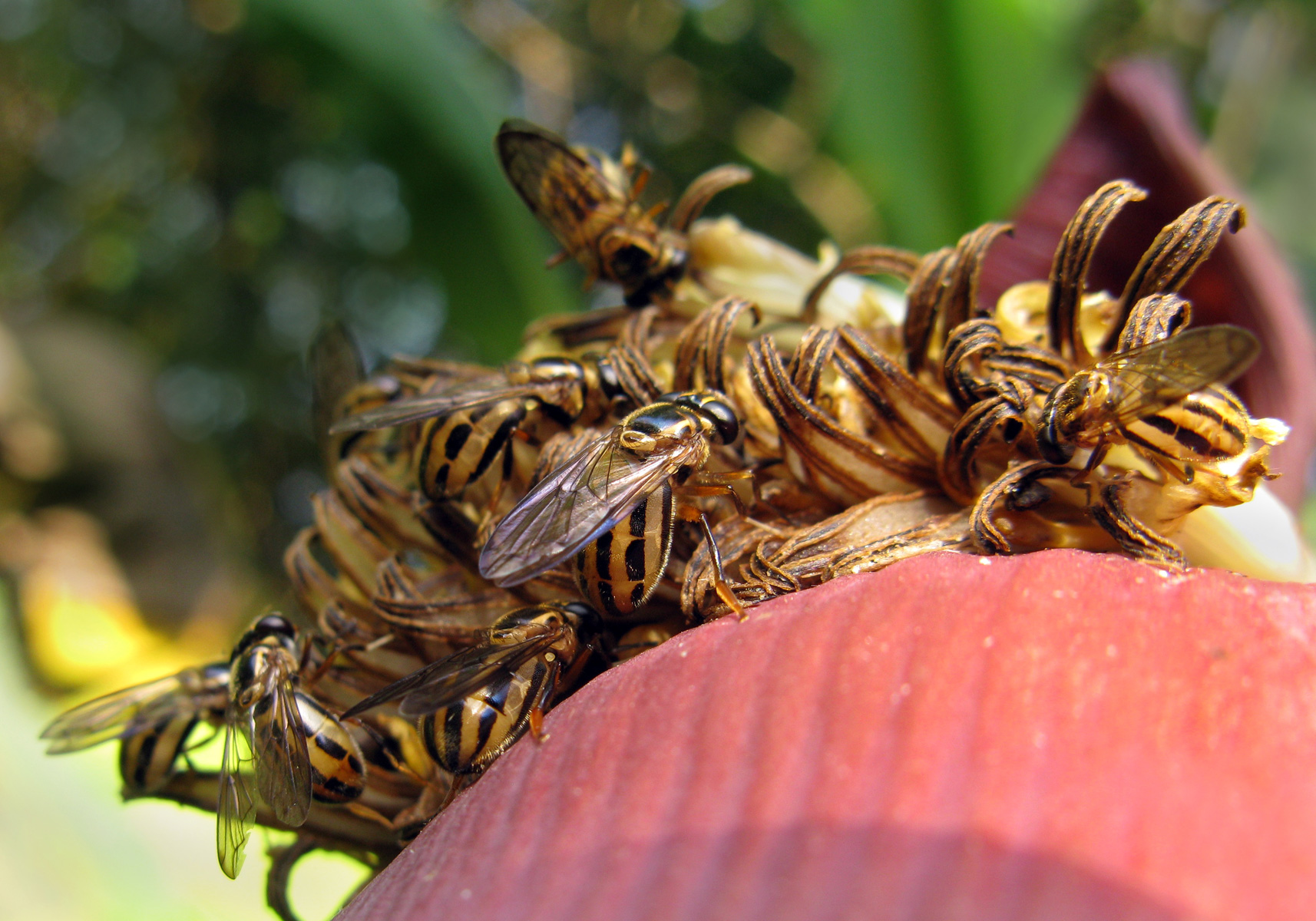
Volucellini is a tribe within the subfamily Eristalinae (Family Syrphidae, Order Diptera), comprising a group of hoverflies notable for their strong resemblance to bees and wasps. Members of this tribe are widely distributed across the world, particularly in tropical and temperate regions, and are commonly found in forests, gardens, and areas with abundant flowering plants.
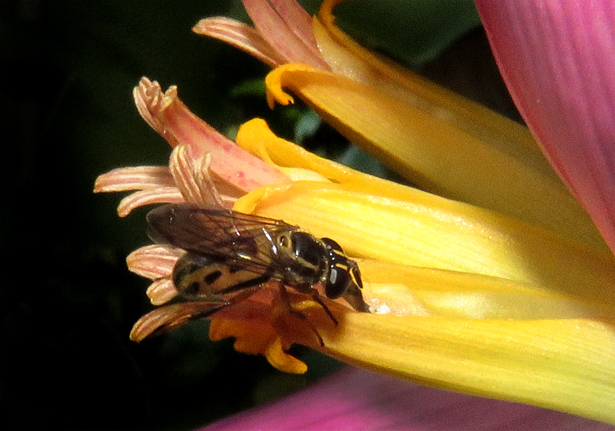
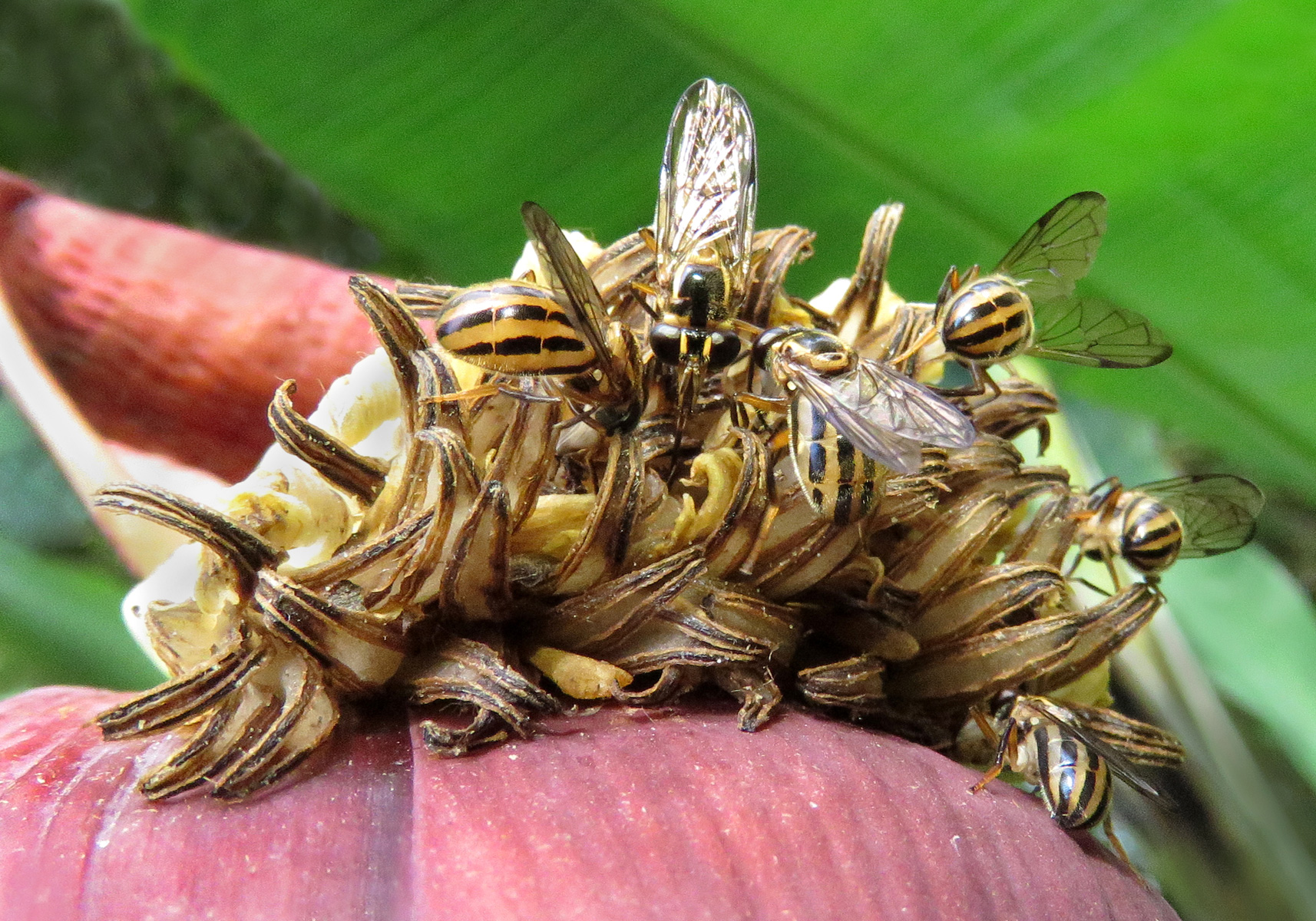
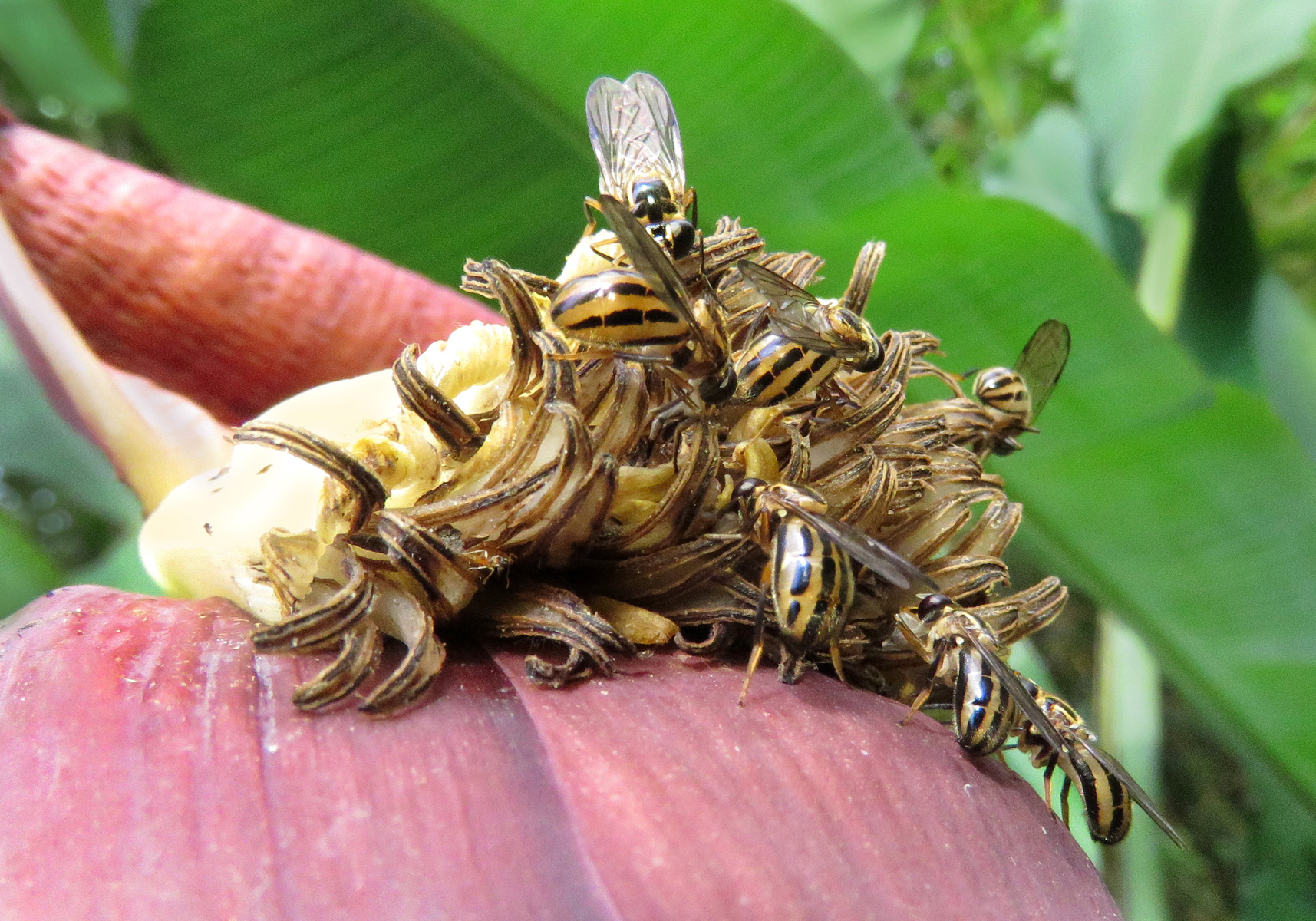
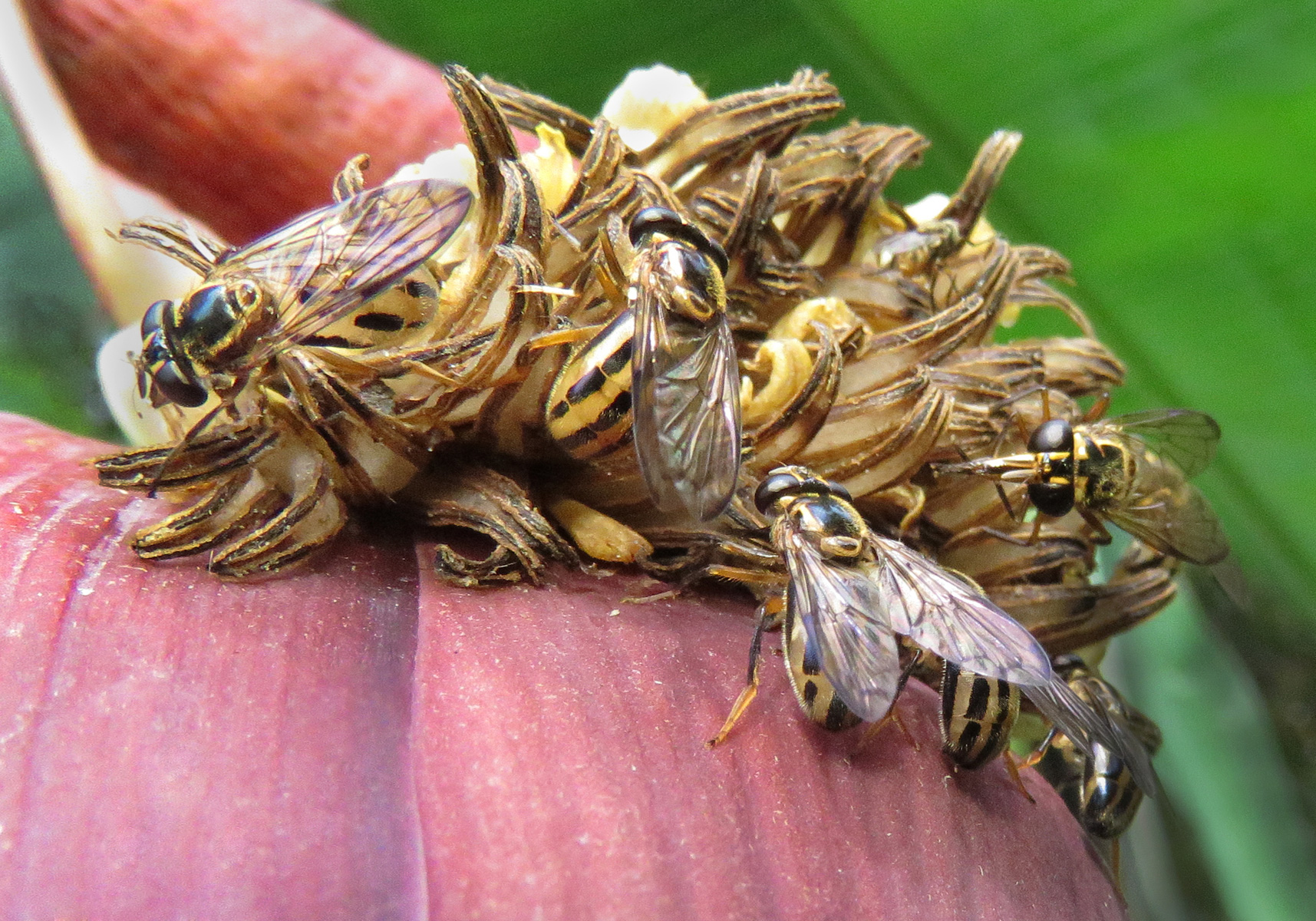
Adult Volucellini are typically medium to large hoverflies with a robust and often densely hairy body. Many species exhibit remarkable mimicry of bees, bumblebees, or wasps, with similar coloration and body shape, providing effective protection from predators. The head is large with well-developed compound eyes, and the antennae are short with an arista. Like other hoverflies, they are capable of precise hovering flight.
Adults are frequently observed visiting flowers, where they feed on nectar and pollen, making them important pollinators. Their behavior and appearance often lead them to be mistaken for stinging insects, although they are harmless.
The life cycle involves complete metamorphosis. Larvae of Volucellini are often associated with the nests of social insects such as bees and wasps. Depending on the species, larvae may act as scavengers, feeding on organic debris within the nest, or as predators or parasitoids of host larvae. This specialized lifestyle allows them to exploit protected and resource-rich environments.
The tribe includes genera such as Volucella, which contains many well-known species recognized for their mimicry and ecological interactions with social insects.
Ecologically, Volucellini plays a dual role. Adults contribute to pollination, while larvae participate in complex ecological relationships within the nests of bees and wasps, including decomposition and population regulation. Their mimicry, behavior, and ecological interactions make them a fascinating and important group within hoverflies.