

Common Water Monitor (Varanus salvator)
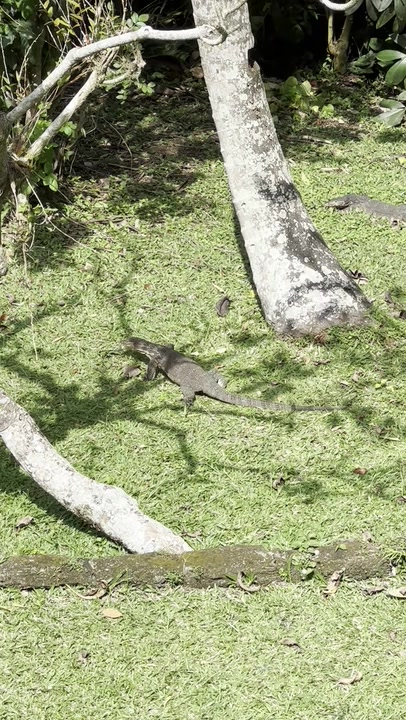
Varanus salvator, commonly known as the Asian water monitor, is a large semi-aquatic monitor lizard in the family Varanidae, genus Varanus, and subgenus Soterosaurus. It is one of the most widespread and adaptable monitor lizards in South and Southeast Asia, occurring in a variety of freshwater, coastal, forest, agricultural, and urban environments. The species is particularly characteristic of lowland habitats with reliable access to water.
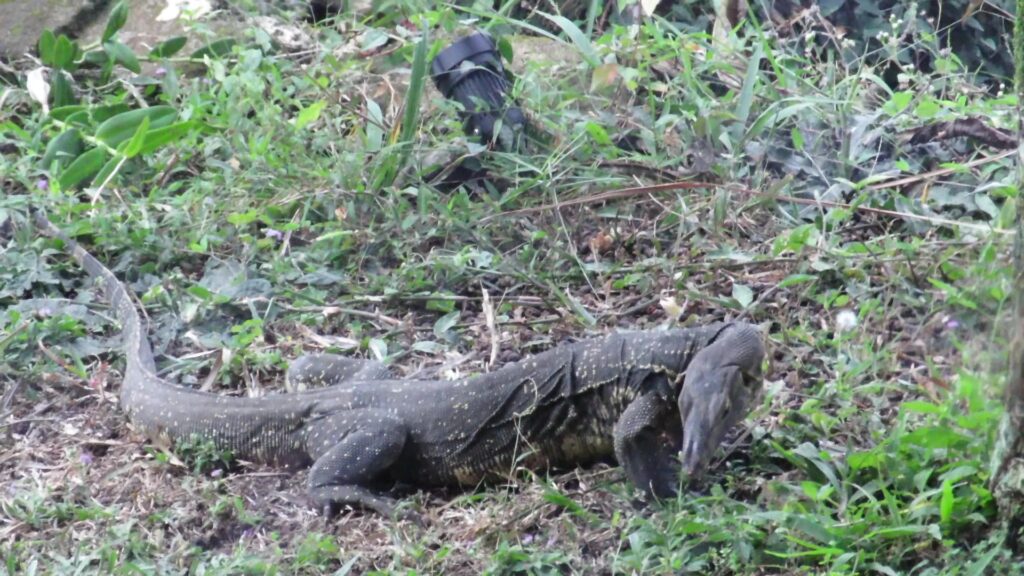
The Asian water monitor has a long, muscular body, powerful limbs, a long laterally compressed tail, and an elongated head and neck. Adults can become very large, with total lengths commonly exceeding 1.5 m and exceptionally large individuals approaching or exceeding 2 m. The tail constitutes a substantial portion of the total length and is an important swimming organ. Strong claws aid in climbing, digging, handling prey, and defense.
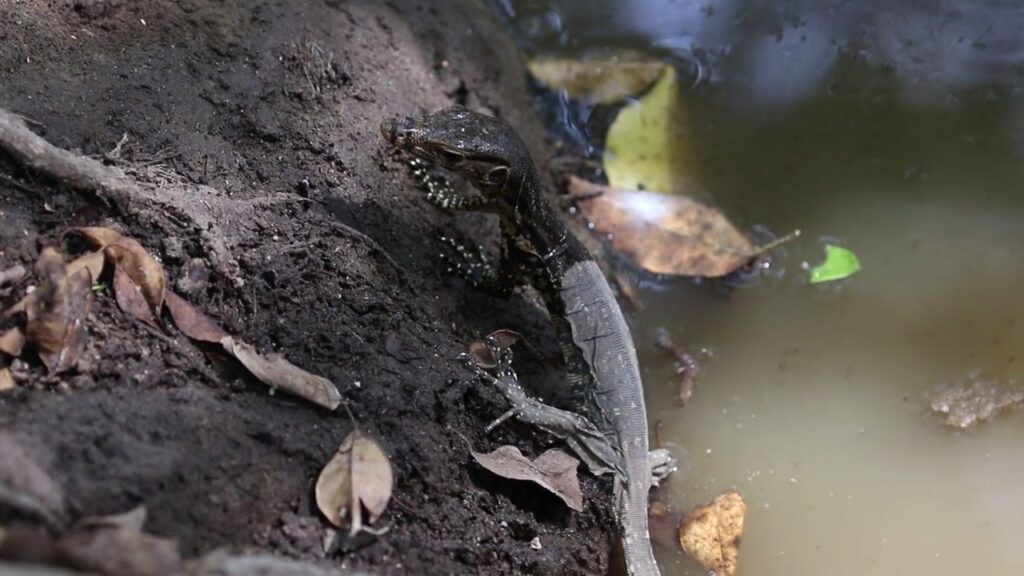
Its coloration is generally dark brown to black, often marked with yellowish, cream, or gray spots, bands, and reticulated patterns. The pattern varies geographically and with age. Juveniles are typically more vividly marked than adults, with stronger yellow or cream coloration. The dark coloration provides effective camouflage in muddy banks, shaded vegetation, forest floor, and other environments where the species commonly forages.
As its common name suggests, V. salvator is strongly associated with water. It occurs along rivers, streams, lakes, ponds, canals, swamps, mangroves, estuaries, rice fields, and coastal areas. However, it is not restricted to pristine wetlands and can thrive in highly modified landscapes. Asian water monitors are frequently encountered around villages, agricultural areas, reservoirs, and even densely populated urban environments where food and suitable refuge are available.
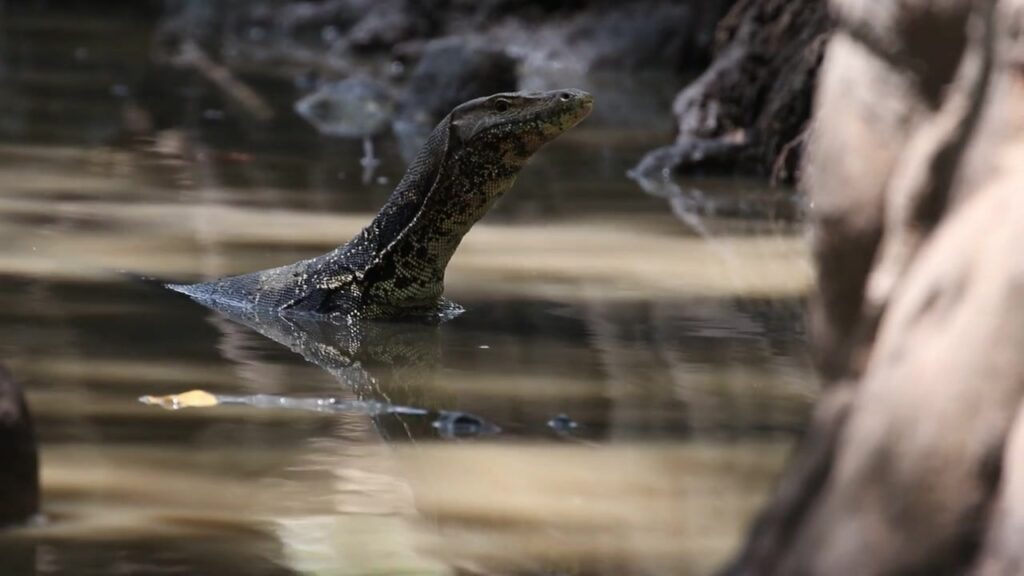
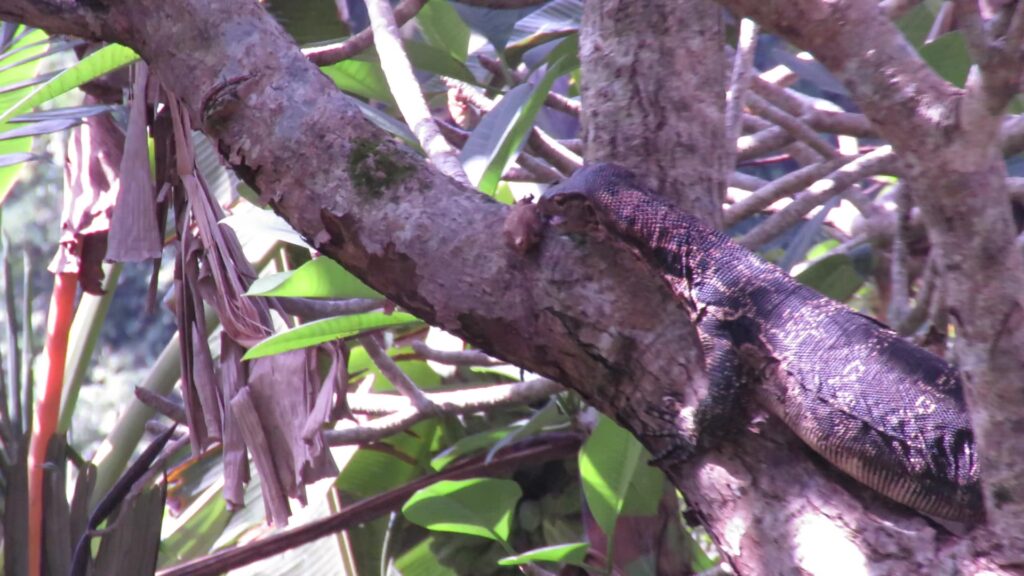
The species is an excellent swimmer and capable diver. When threatened, an individual may rapidly enter the water and swim away using powerful lateral movements of its tail. It can remain submerged for substantial periods and may use underwater habitats to escape predators or human disturbance. On land, it is an agile and surprisingly fast runner, while its strong claws also allow it to climb trees, embankments, and other structures.
Like other monitor lizards, V. salvator possesses a long, deeply forked tongue that plays an important role in chemical sensing. The tongue collects chemical particles from the environment and transfers them to the vomeronasal organ, helping the lizard detect prey and environmental information. Its keen vision and strong sense of smell complement this system, making the Asian water monitor an effective active forager.
Its diet is highly opportunistic and diverse. It consumes fish, frogs, crustaceans, insects, mollusks, reptiles, birds, eggs, rodents, and other small vertebrates. Carrion is also readily consumed, and individuals may exploit discarded food around human settlements. This dietary flexibility is one of the major reasons for the species’ success in disturbed environments. Juveniles tend to consume proportionally more small invertebrates, while large adults can take substantially larger prey.
Asian water monitors are primarily diurnal, spending daylight hours basking, traveling, swimming, and searching for food. Individuals may move considerable distances while foraging and frequently investigate riverbanks, mudflats, vegetation, and human refuse sites. They are generally solitary outside reproductive interactions, although several individuals may congregate where food is abundant.
Reproduction is oviparous. Females lay clutches of eggs in protected locations, including soil, vegetation, burrows, and other suitable nesting sites. In some populations, nesting may involve structures such as termite mounds that provide favorable thermal conditions. After hatching, young monitors are independent and rely on their own camouflage, climbing ability, swimming ability, and rapid movements to avoid predators.
Varanus salvator has a broad geographic distribution extending across South and Southeast Asia, including parts of India, Sri Lanka, Bangladesh, Myanmar, Thailand, Cambodia, Vietnam, Malaysia, Indonesia, and the Philippines, although the precise limits of the species and related taxa have been affected by taxonomic revisions. Historically, numerous island populations were treated as subspecies of V. salvator, but several have subsequently been recognized as distinct species within the Soterosaurus group.
Ecologically, the Asian water monitor functions as an important predator and scavenger in tropical wetland and terrestrial ecosystems. By consuming aquatic organisms, invertebrates, reptiles, birds, mammals, eggs, and carrion, it participates in both prey regulation and nutrient cycling. Its tolerance of human-modified habitats also makes it a conspicuous component of many Southeast Asian urban and agricultural ecosystems.
Despite its adaptability, local populations can be affected by wetland destruction, hunting, persecution, road mortality, and exploitation for the leather and wildlife trades. Nevertheless, the species remains widespread in much of its range and is considerably more adaptable than many geographically restricted monitor lizards. Varanus salvator is therefore an excellent example of a large tropical reptile capable of combining aquatic specialization, broad dietary flexibility, behavioral adaptability, and tolerance of human-altered environments.