Bali Wildlife
Every Spices Matter


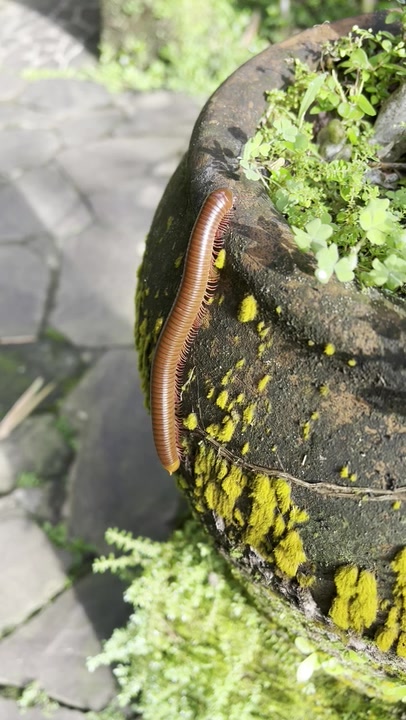
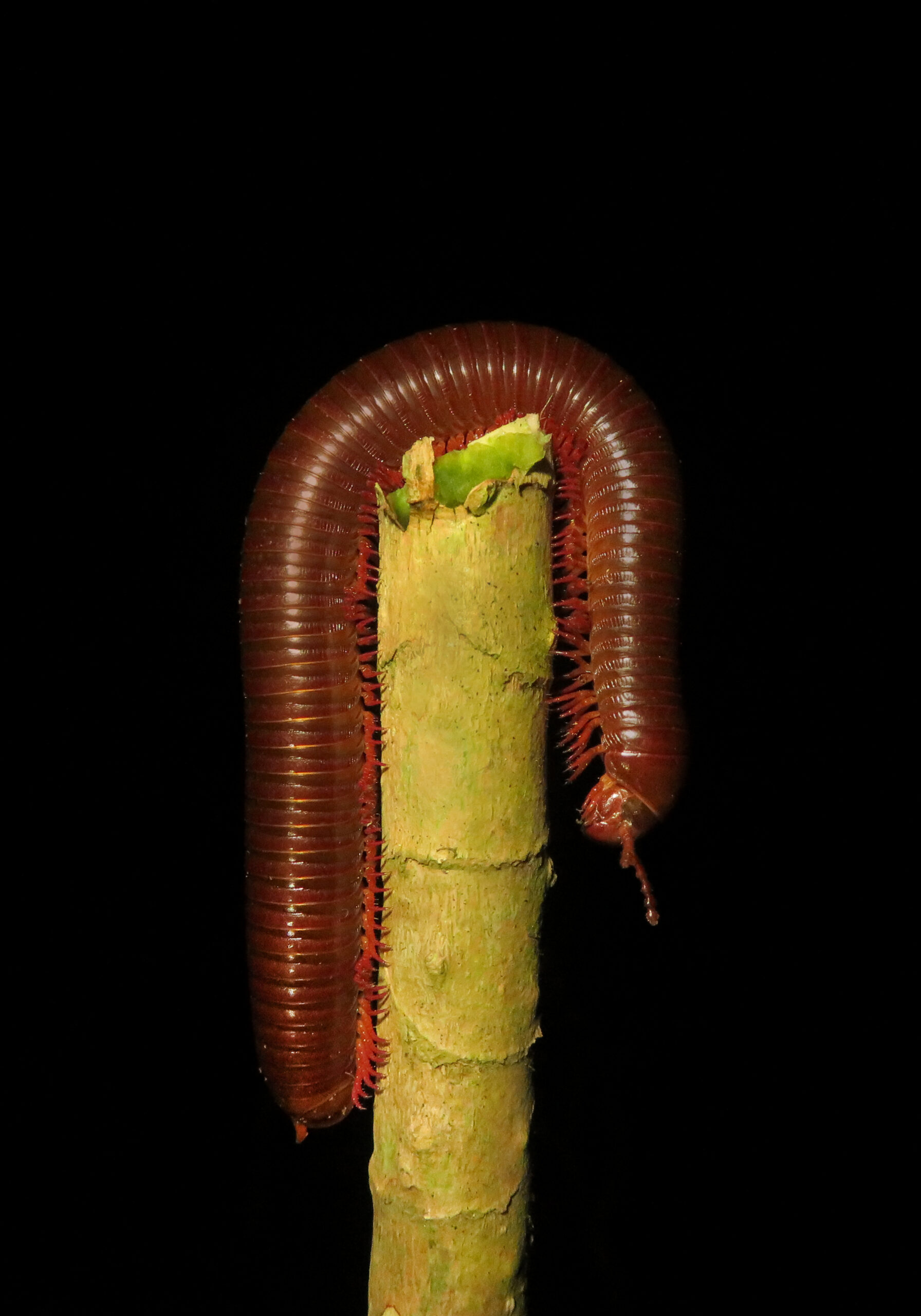
Trigoniulus corallinus is a species of millipede belonging to the genus Trigoniulus (Family Trigoniulidae, Order Spirobolida, Class Diplopoda). Commonly known as the Rusty Millipede or Red Millipede, it is widely distributed throughout South Asia, Southeast Asia, southern China, and many tropical regions of the world, where it has been introduced through human activities. The species inhabits tropical rainforests, secondary forests, plantations, gardens, agricultural fields, parks, compost heaps, and other moist environments rich in decaying organic matter.
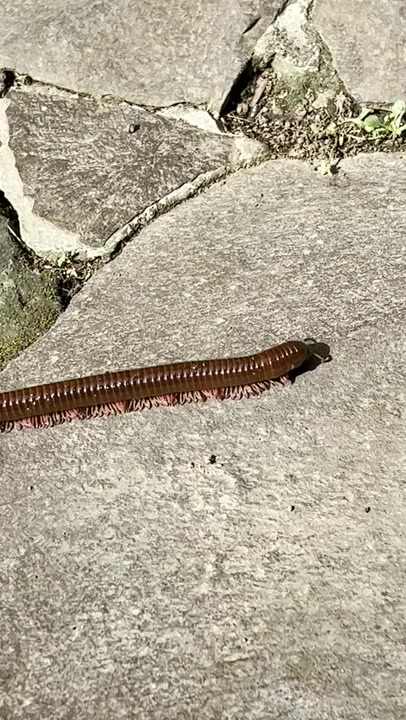
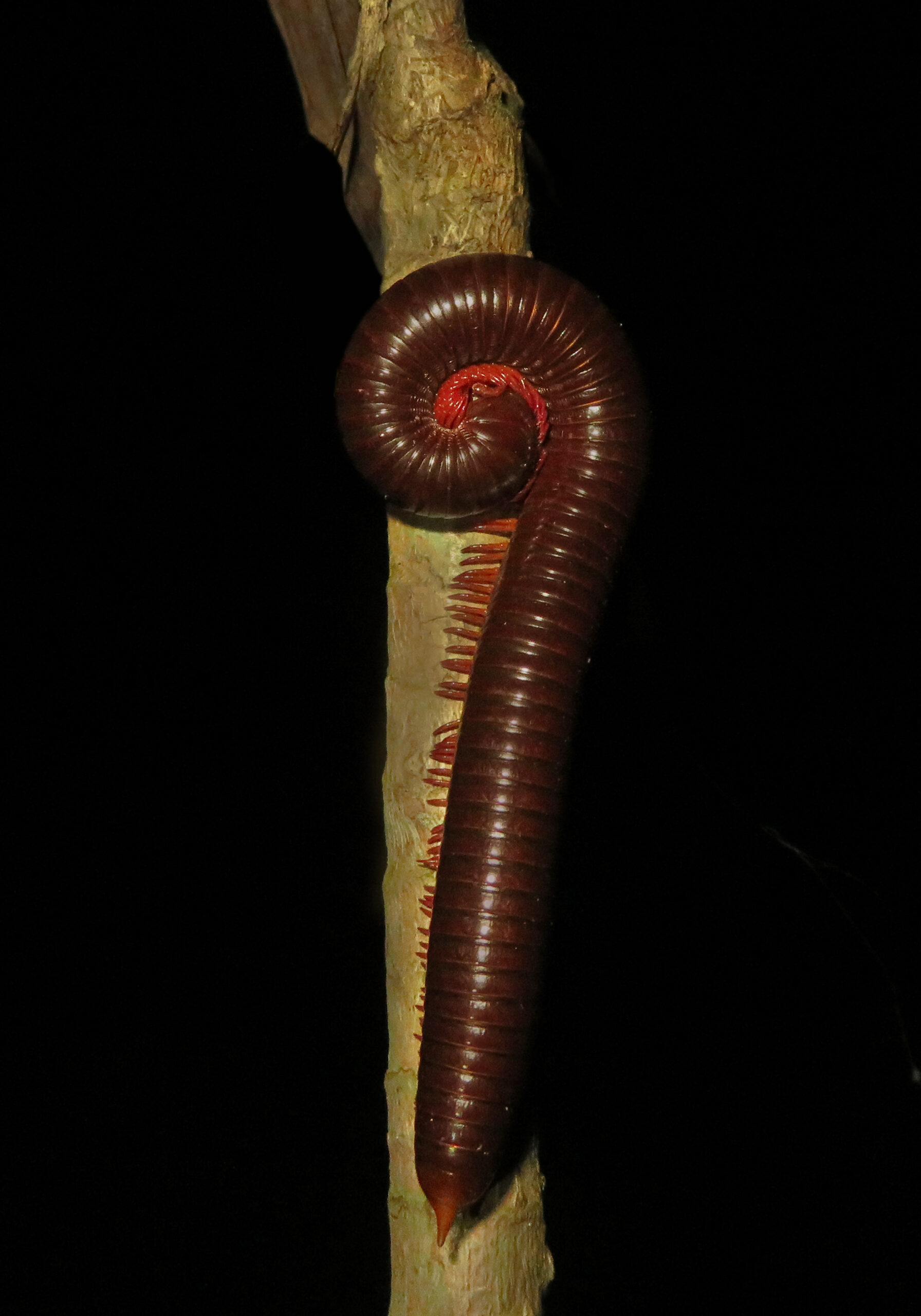
Trigoniulus corallinus is a medium to large cylindrical millipede, typically measuring 50–100 mm in length and 4–8 mm in diameter. Its body consists of numerous hard, ring-like segments, each bearing two pairs of legs, giving the animal a smooth, rounded appearance. The exoskeleton is glossy and usually reddish-brown, brick red, chestnut, or orange-red, although older individuals may appear darker. The head bears a pair of short, segmented antennae and simple eyes (ocelli), while the terminal body segment lacks the elongated tail seen in some other millipede groups.
This species is primarily nocturnal, spending daylight hours concealed beneath leaf litter, fallen logs, stones, decaying wood, or within the soil. At night, it emerges to forage slowly across the forest floor using its numerous legs in a coordinated wave-like motion. When disturbed, it typically coils tightly into a spiral, protecting its softer underside. It may also release defensive secretions from specialized glands along the sides of the body. These secretions, which often contain benzoquinones, help deter predators such as ants, spiders, birds, reptiles, and small mammals.
Trigoniulus corallinus is a detritivore, feeding primarily on decaying leaves, rotting wood, fungi, compost, and other decomposing plant material. It occasionally consumes tender roots, seedlings, or fallen fruits when decaying material is scarce, but its principal ecological role is the breakdown and recycling of organic matter.
The life cycle involves gradual development, consisting of egg, juvenile, and adult stages. Females deposit eggs in moist soil or within decaying organic material. Newly hatched juveniles possess relatively few body segments and legs, gaining additional segments and leg pairs through successive molts until they reach adulthood. This developmental pattern, known as anamorphosis, is characteristic of millipedes.
Ecologically, Trigoniulus corallinus is an important decomposer that accelerates the breakdown of leaf litter and other organic debris, contributing significantly to nutrient cycling and soil formation. Its feeding activities improve soil structure and promote microbial decomposition. The species also serves as prey for birds, reptiles, amphibians, centipedes, spiders, and small mammals, despite its chemical defenses. Owing to its abundance in moist tropical habitats and sensitivity to prolonged drought and severe habitat degradation, T. corallinus is considered an important indicator of healthy soil ecosystems and forest-floor biodiversity.