

Tribe Trachyderini
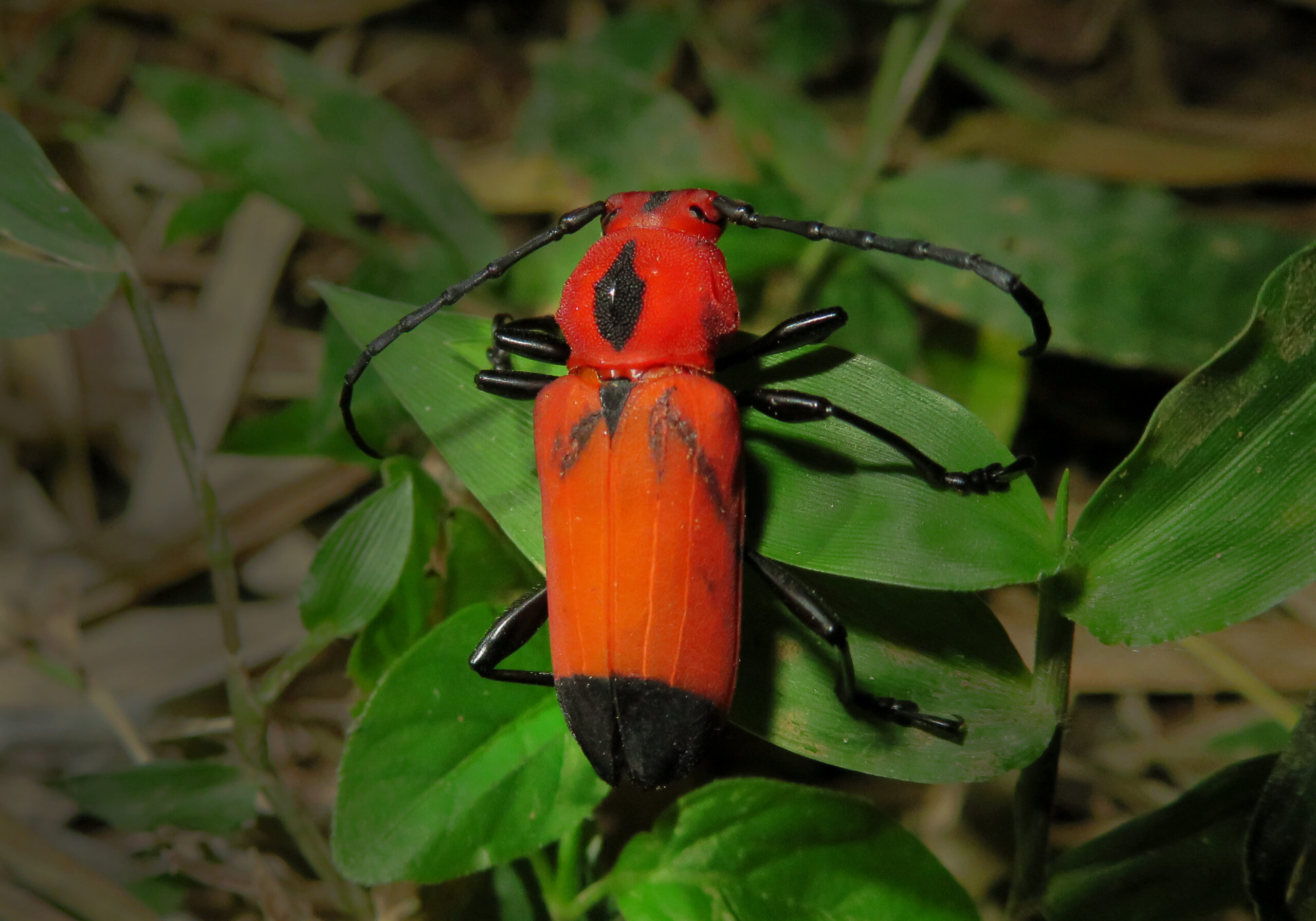
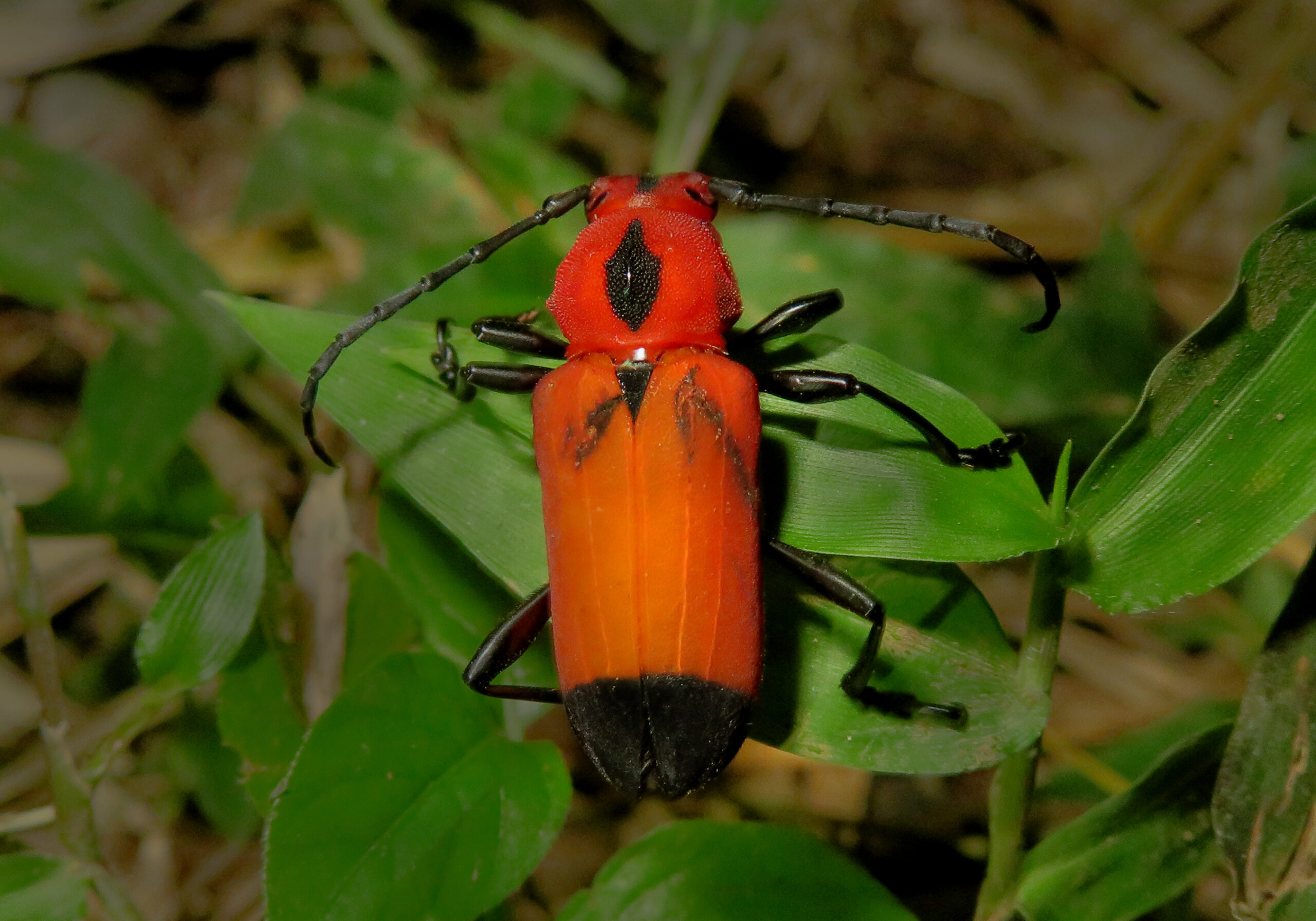
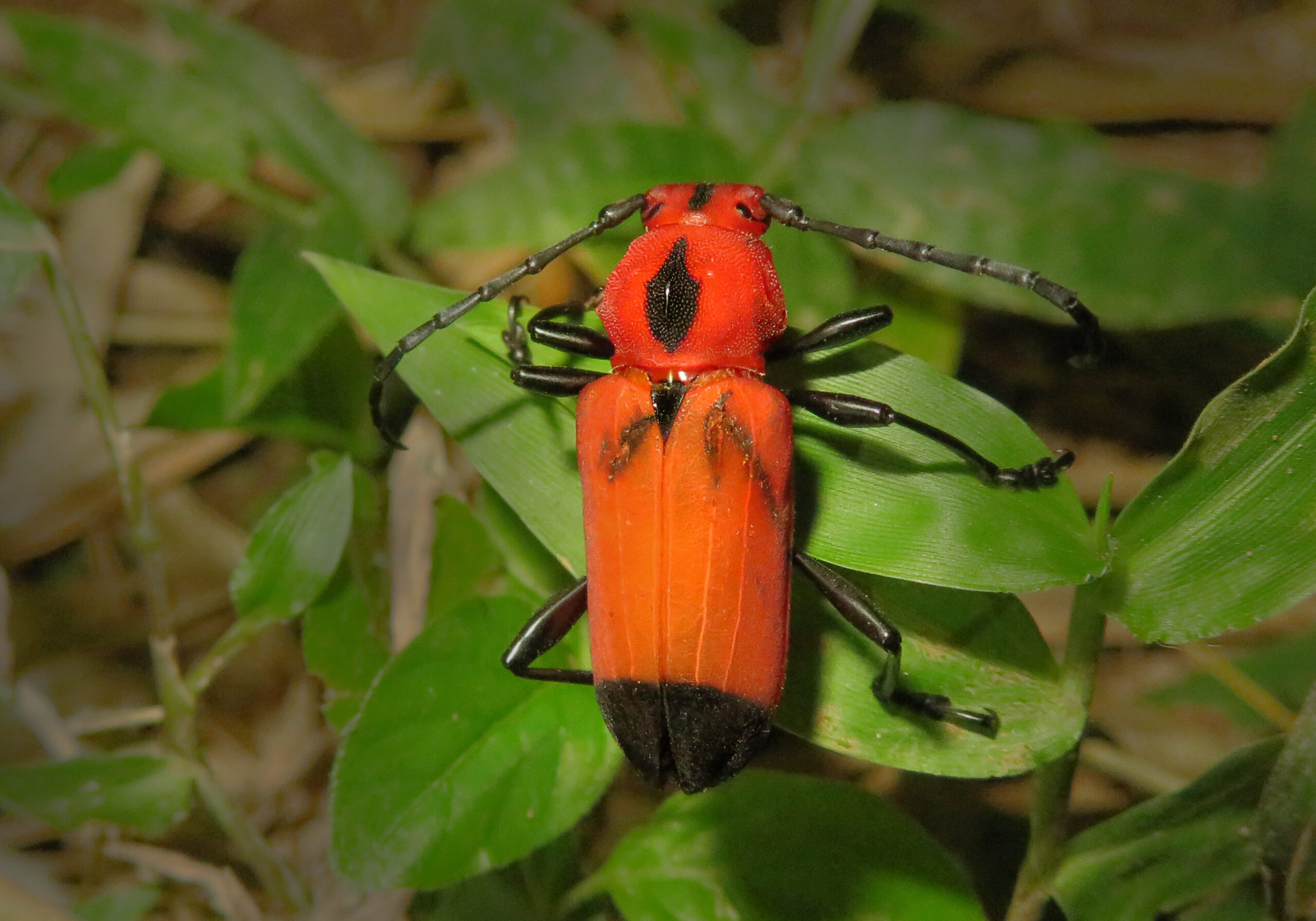
Trachyderini is a tribe of longhorn beetles within the subfamily Cerambycinae (Family Cerambycidae, Order Coleoptera). Members of this tribe are distributed primarily throughout the Americas, especially in Central and South America, with additional species occurring in North America. They inhabit tropical rainforests, deciduous forests, woodlands, savannas, and other habitats containing abundant woody vegetation, where they are closely associated with living, dying, or decaying trees.
Beetles of the tribe Trachyderini are generally medium to large in size and are characterized by an elongated, cylindrical to somewhat flattened body and exceptionally long, segmented antennae, which may equal or exceed the body length in many species, particularly in males. Coloration is highly variable, ranging from black, brown, and reddish-brown to striking combinations of yellow, orange, red, white, and metallic hues. Many species exhibit bold bands or spots that provide camouflage or mimic stinging insects such as wasps.
Adults are active during the day or at dusk, although some species are nocturnal. They are commonly encountered on tree trunks, fallen logs, freshly cut timber, flowers, or sap flows. Adult feeding habits vary among species and may include nectar, pollen, tree sap, bark, or fermenting plant material.
The life cycle involves complete metamorphosis, consisting of egg, larva, pupa, and adult stages. Females lay eggs in cracks or beneath the bark of suitable host trees. The creamy-white, legless larvae bore into the wood, feeding on the inner bark and sapwood while creating extensive galleries. Depending on the species and host plant, larval development may last from several months to several years. Pupation takes place within the wood, and adults emerge through characteristic circular exit holes.
The tribe includes numerous genera, such as Trachyderes, Andraegoidus, Poecilopeplus, Metopocoilus, and related taxa. While many species develop in dead or dying wood and contribute to natural decomposition processes, some may occasionally infest weakened living trees or recently felled timber.
Ecologically, Trachyderini beetles play an important role in forest ecosystems by accelerating the decomposition of woody material, promoting nutrient cycling, and creating habitats for fungi and other invertebrates through their larval tunnels. Adults may also contribute to pollination while visiting flowers. Both larvae and adults serve as prey for birds, reptiles, mammals, spiders, and predatory insects, making them integral components of forest biodiversity and ecological functioning.