

Subtribe Trachyderina
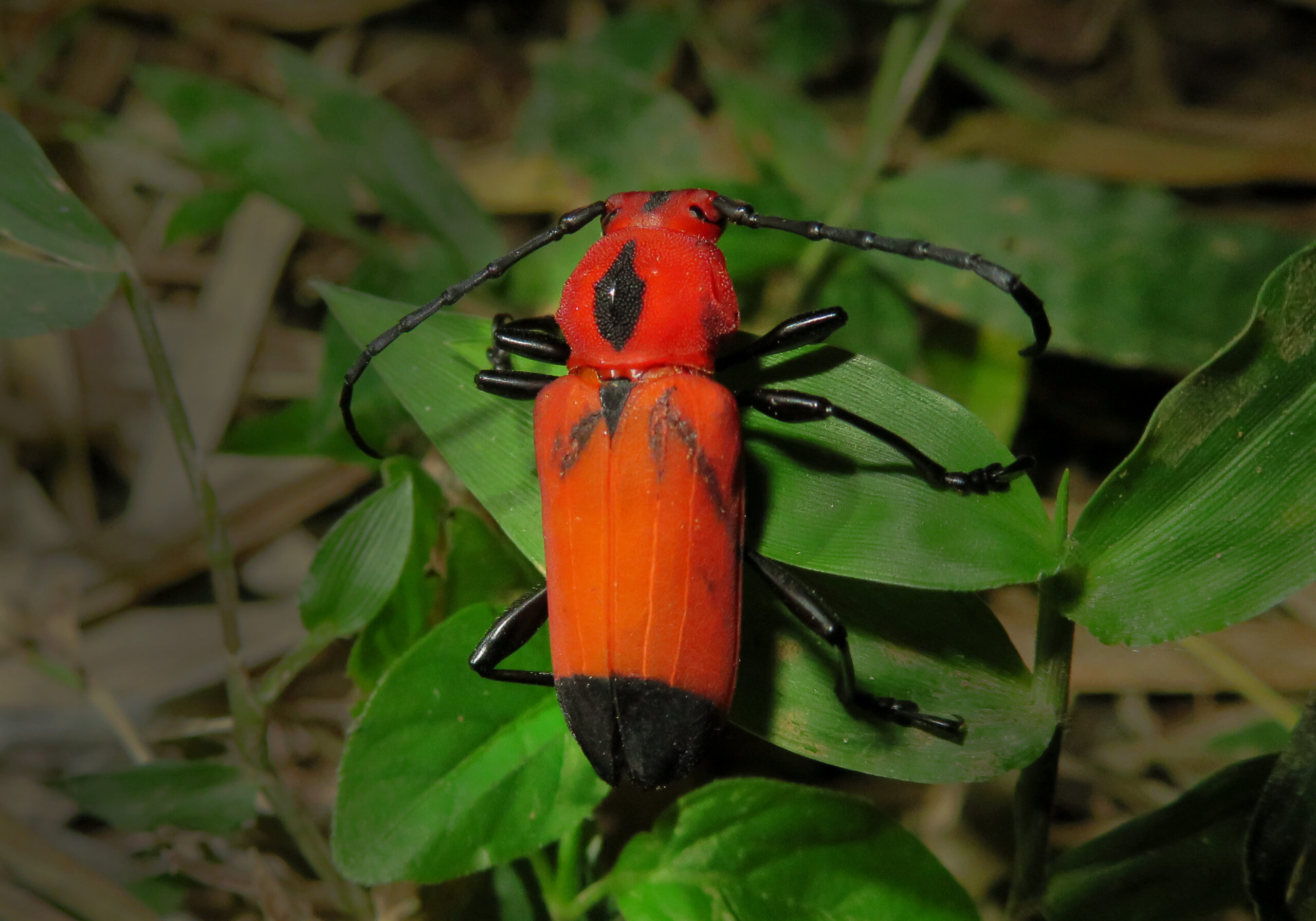
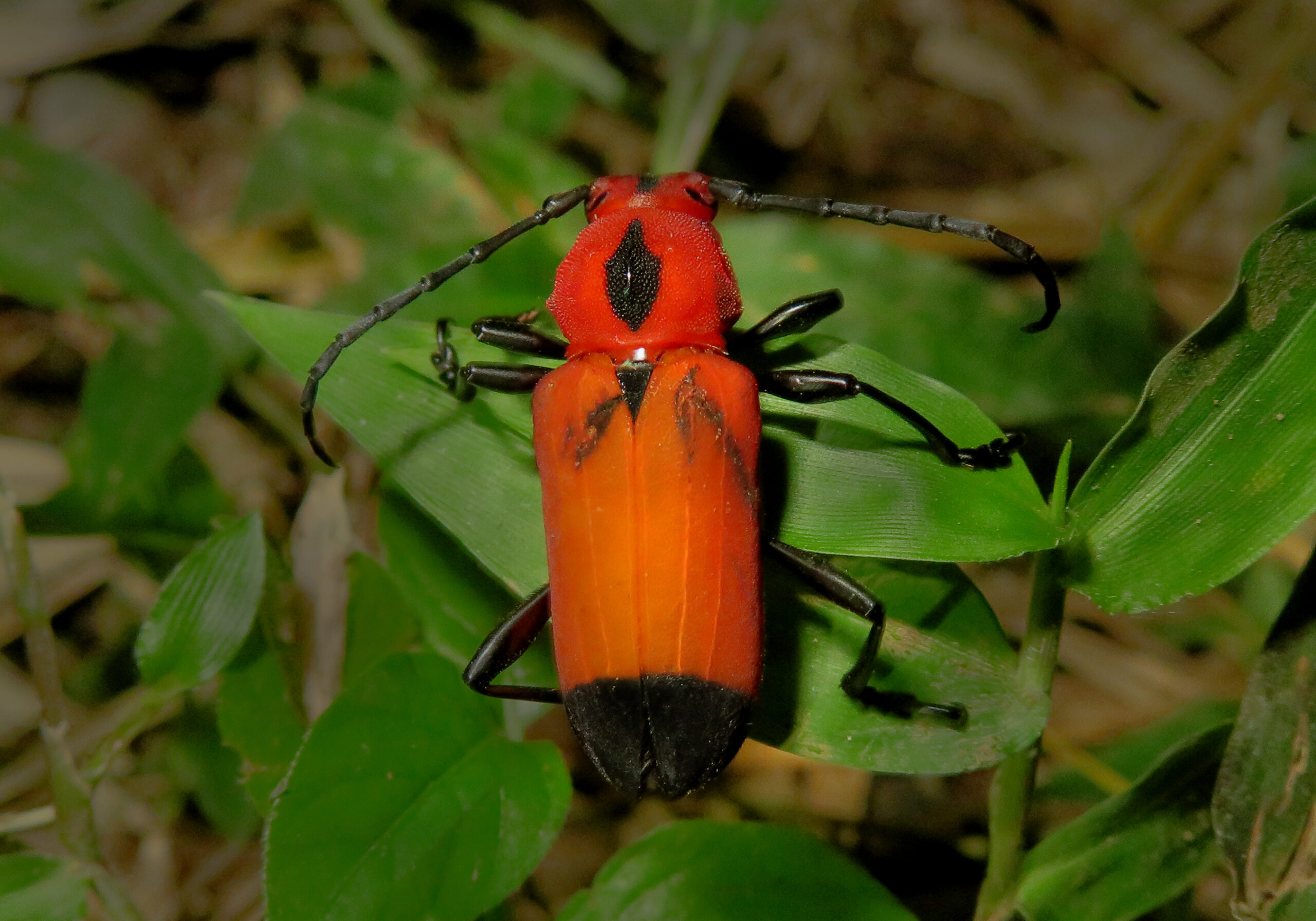
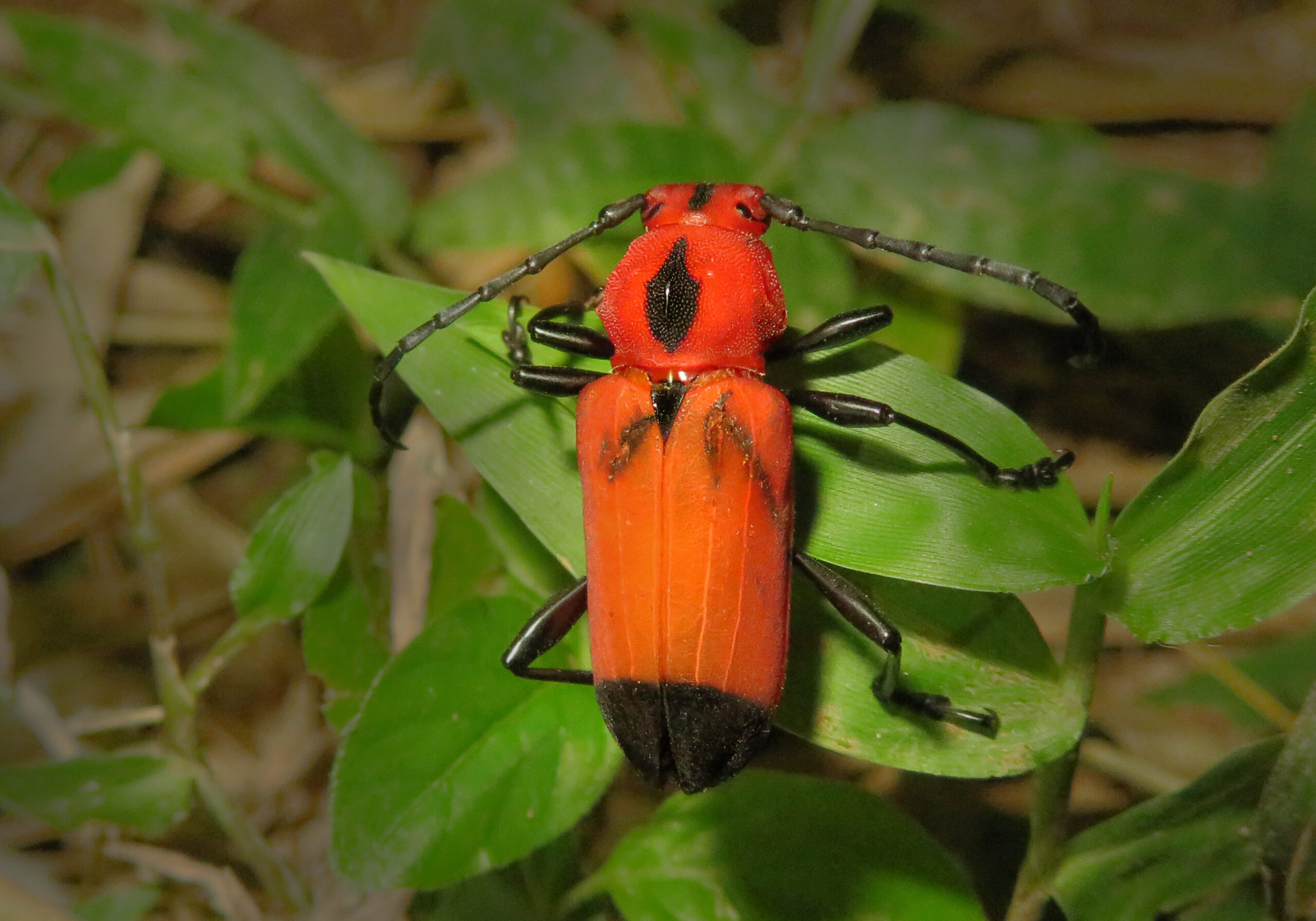
Trachyderina is a subtribe of longhorn beetles within the tribe Trachyderini (Subfamily Cerambycinae, Family Cerambycidae, Order Coleoptera). Members of this subtribe are distributed mainly throughout the Americas, particularly in Central and South America, with some species extending into North America. They are primarily associated with tropical and subtropical forests, deciduous woodlands, savannas, and other habitats containing abundant woody vegetation.
Beetles of the subtribe Trachyderina are generally medium to large in size and possess the elongated, cylindrical body typical of longhorn beetles. Their antennae are long and segmented, often equaling or exceeding the body length in males. The body is usually glossy and strongly sclerotized, with coloration ranging from black and dark brown to vivid combinations of red, orange, yellow, white, and metallic hues. Many species display contrasting bands or spots that resemble stinging wasps or bees, providing protection through mimicry.
Adults are active during the day or at dusk and are commonly observed on tree trunks, fallen logs, flowers, or freshly cut wood. Many species feed on nectar, pollen, tree sap, or fermenting plant material, while others feed very little during their relatively short adult lifespan. Their strong flight enables them to disperse efficiently in search of mates and suitable host trees.
The life cycle follows complete metamorphosis, consisting of egg, larva, pupa, and adult stages. Females deposit eggs in cracks, wounds, or beneath the bark of host trees. The legless, creamy-white larvae bore into the wood, feeding on the inner bark and sapwood while constructing galleries. Larval development may last from several months to several years, depending on the species and host plant. Pupation occurs within the wood, and adults emerge through circular exit holes.
The subtribe includes genera such as Trachyderes, Poecilopeplus, Metopocoilus, and related taxa. Most species develop in dead or dying wood, contributing to natural decomposition, although a few may occasionally infest weakened living trees or freshly felled timber.
Ecologically, Trachyderina beetles are important decomposers that accelerate the breakdown of woody material and promote nutrient cycling in forest ecosystems. Their larval galleries create microhabitats for fungi and other invertebrates, while adults may assist in pollination through flower visitation. Both larvae and adults serve as prey for birds, reptiles, mammals, spiders, and predatory insects, making them valuable contributors to forest biodiversity and ecosystem functioning.