Bali Wildlife
Every Spices Matter


Toxeus is a genus of jumping spiders within the family Salticidae, subfamily Salticinae, subtribe Myrmarachnina, and tribe Myrmarachnini. The genus is distributed primarily in South and Southeast Asia, with species recorded from the Indian subcontinent, mainland Southeast Asia, and nearby regions. Species of Toxeus are typically found in habitats rich in ant populations, including forests, grasslands, agricultural areas, and urban environments.
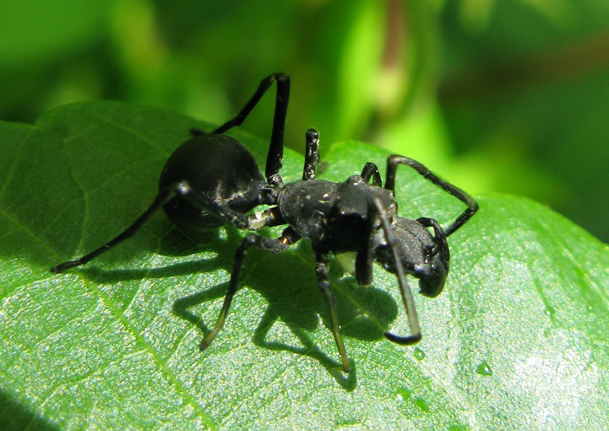
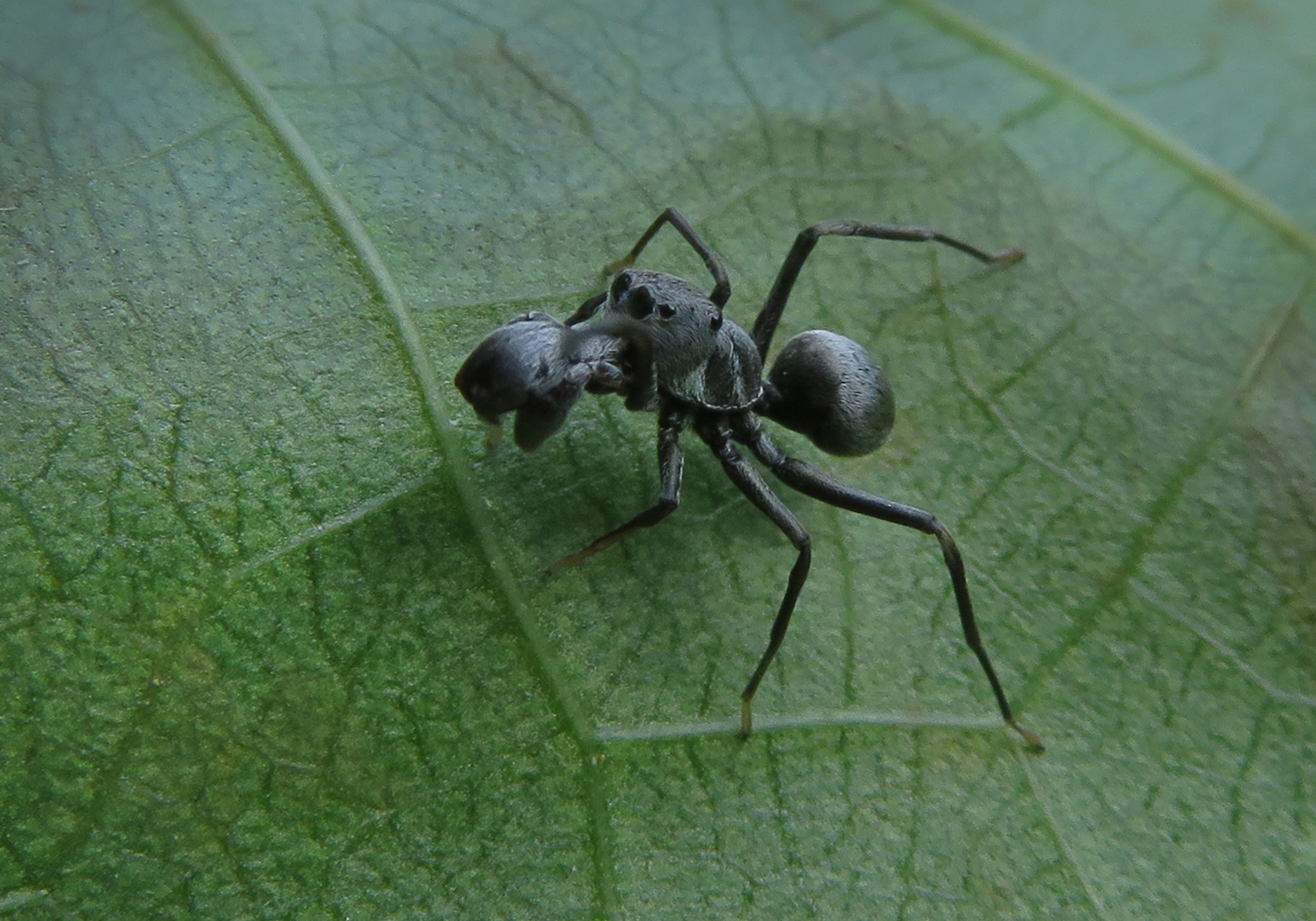
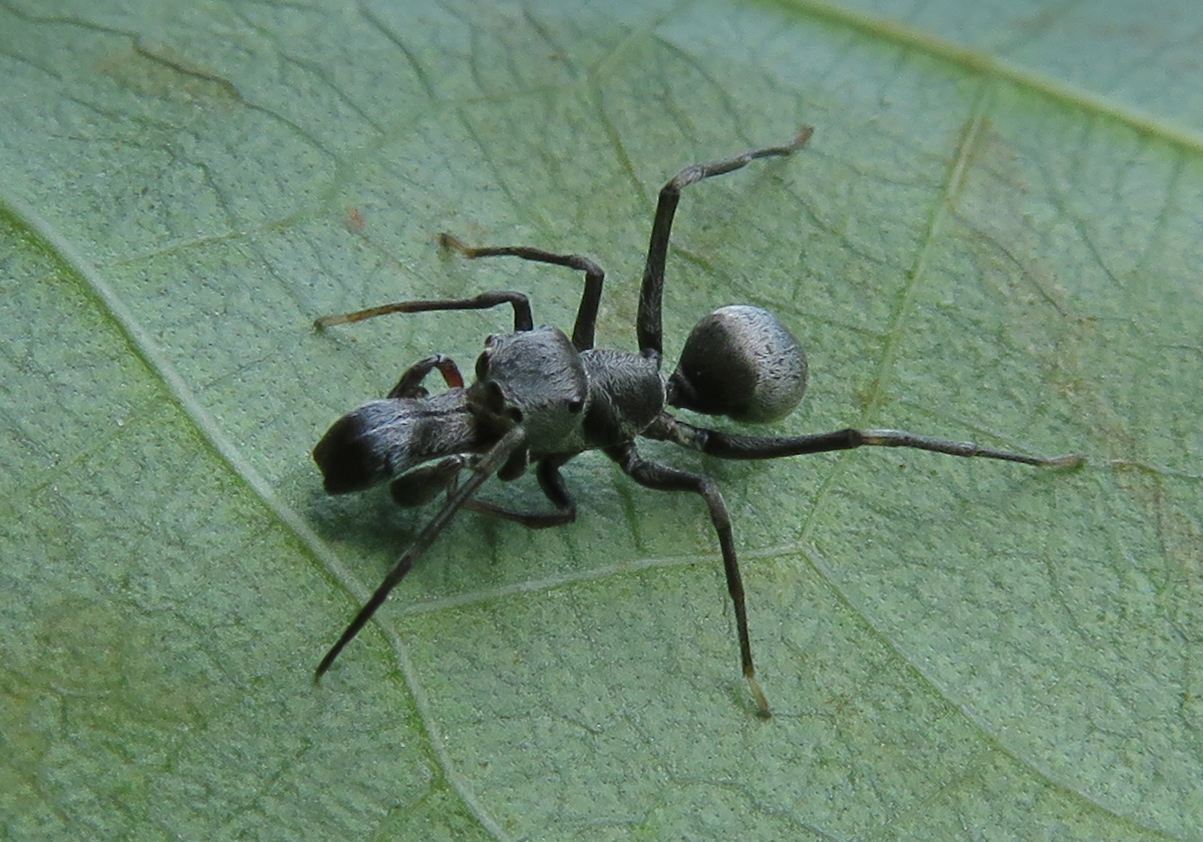
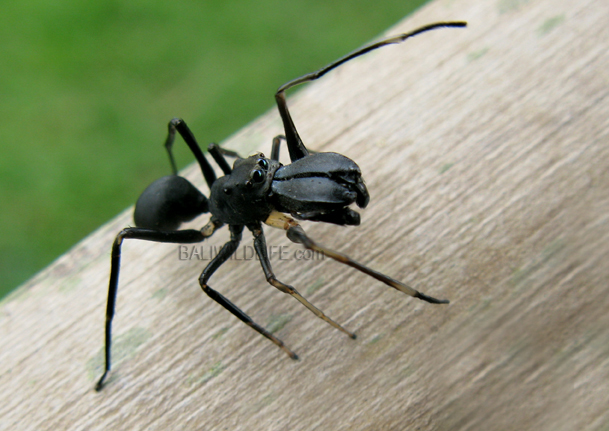
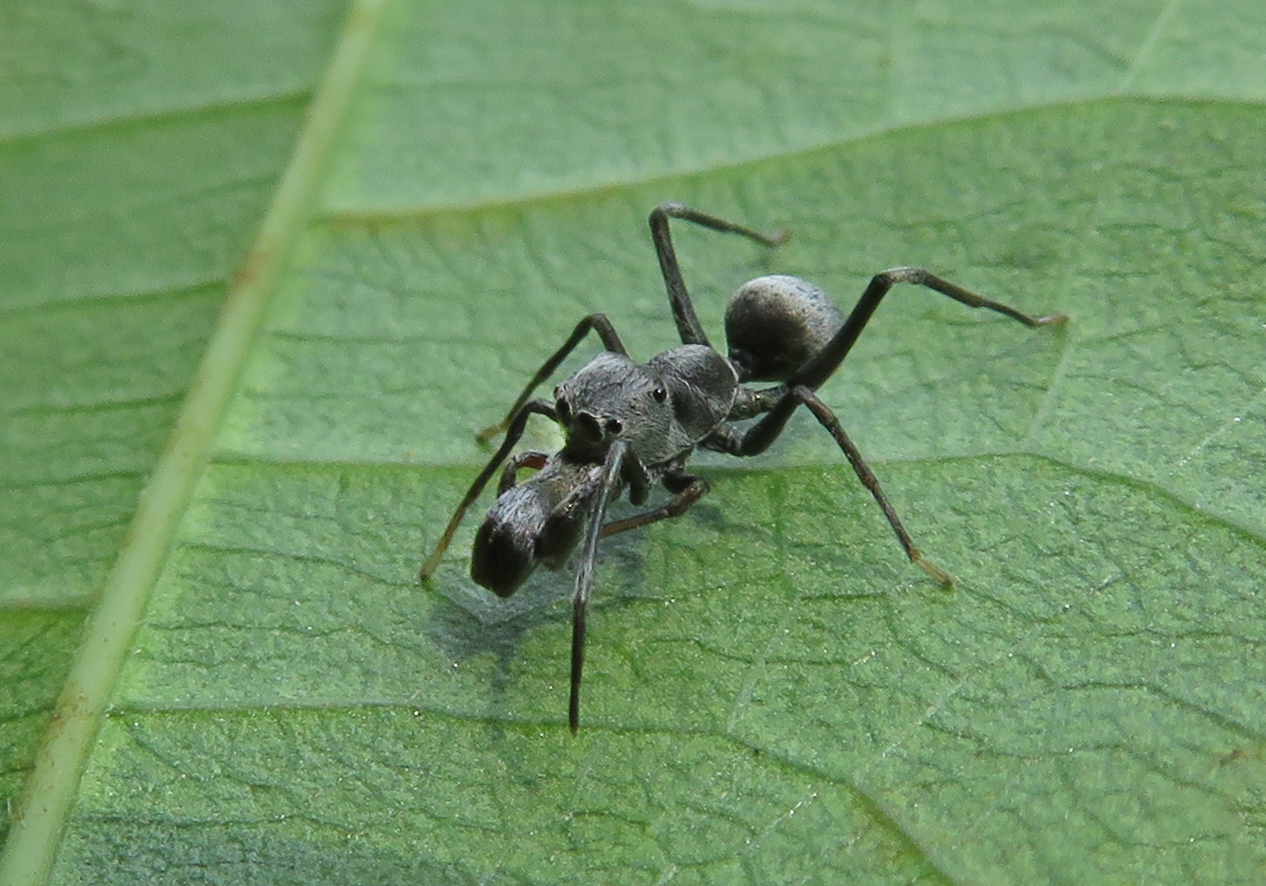
Members of the genus Toxeus are small to medium-sized jumping spiders distinguished by their strong ant-mimicking form and behavior. The body is elongated and narrow with a constricted waist, closely resembling ants in overall shape. Coloration often matches that of sympatric ant species, commonly dark brown, black, or reddish tones. As in other ant-mimicking salticids, the front pair of legs is frequently held upright and waved to imitate ant antennae.
Morphologically, Toxeus species exhibit features adapted to mimicry, including an elongated cephalothorax, slender abdomen, and long, thin legs. Males may possess modified or enlarged chelicerae that resemble ant mandibles. Diagnostic characteristics for species identification are found in the structure of the male palpal organs and the female epigyne, which show patterns unique to the genus.
Behaviorally, Toxeus spiders are active, diurnal visual hunters. They rely on stealth and mimicry rather than speed or frequent jumping, often moving in a jerky, ant-like manner. While they live in close proximity to ants, they generally avoid direct interaction, using their resemblance to gain protection from predators.
Ecologically, Toxeus plays an important role as a predator of small arthropods in ant-dominated environments. The genus is of particular interest because some species exhibit rare and complex parental behaviors among spiders, making Toxeus a notable model for studies of behavior, evolution, and mimicry within the jumping spiders.