Bali Wildlife
Every Spices Matter


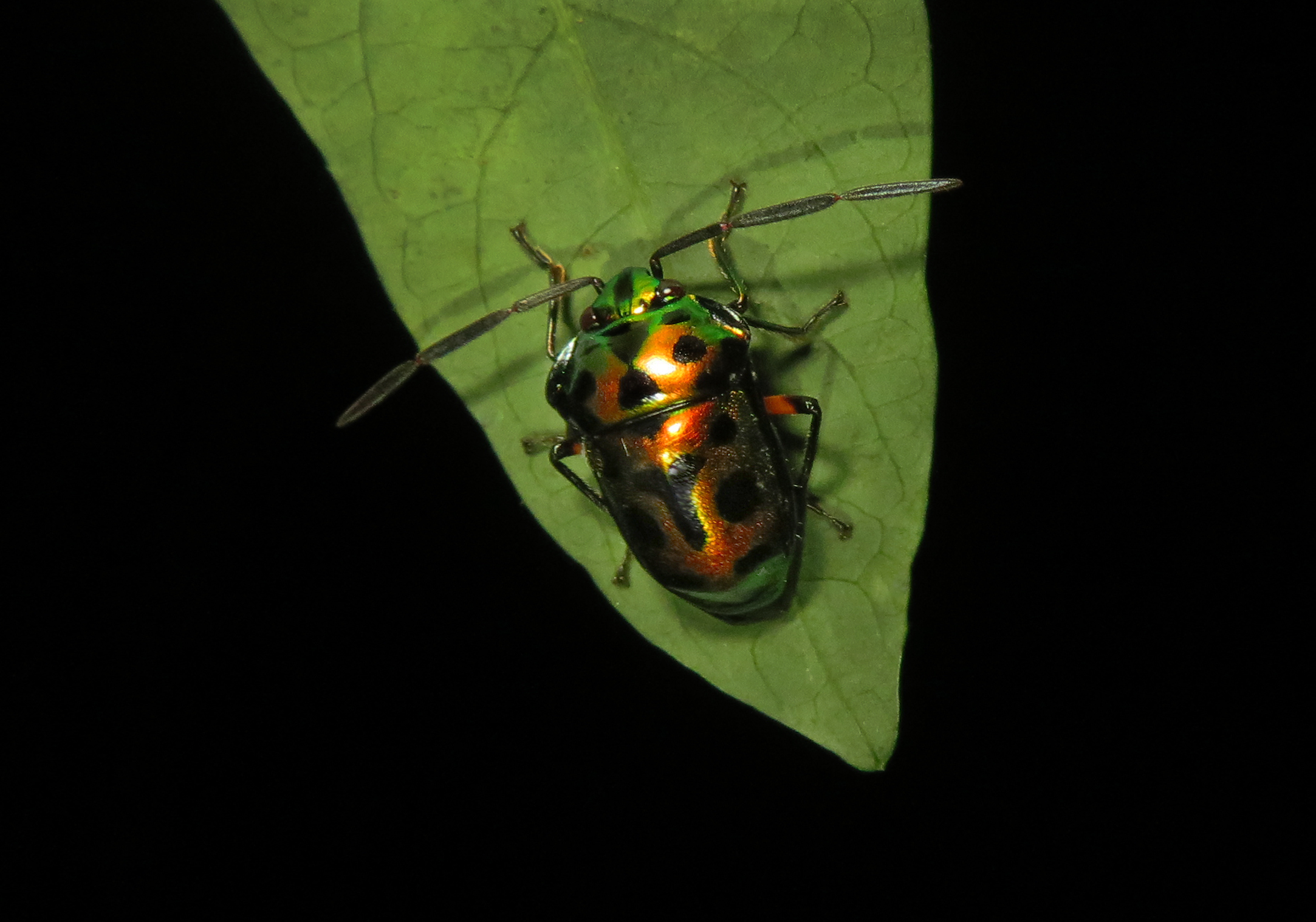
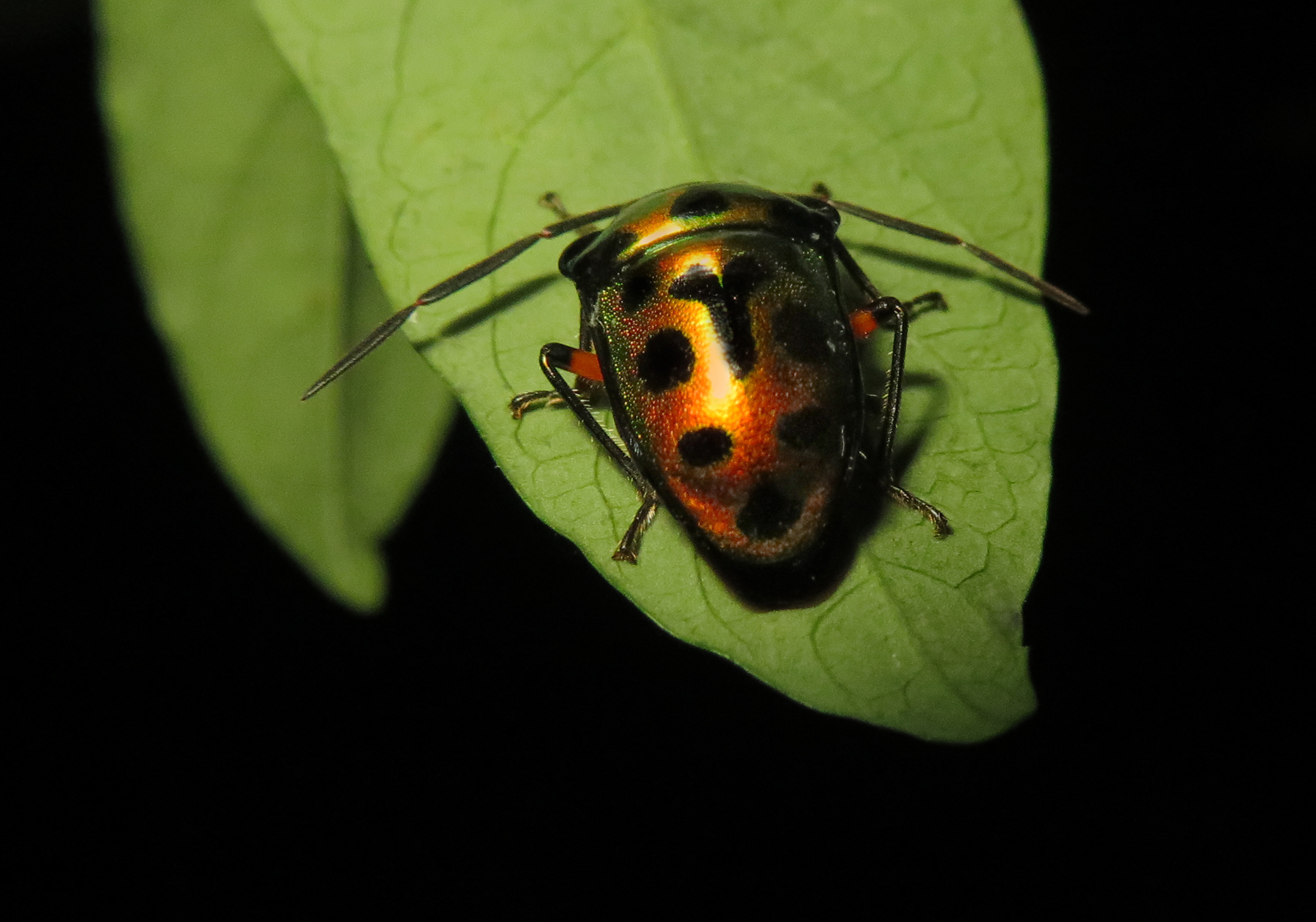
Scutelleridae, commonly known as jewel bugs or shield-backed bugs, is a distinctive family within the superfamily Pentatomoidea. Members of this family are notable for their enlarged scutellum, which extends over and completely covers the wings and abdomen, giving them a smooth, shield-like appearance that resembles that of beetles rather than typical true bugs.
Scutellerid bugs are usually medium-sized and often exhibit striking coloration, including metallic, iridescent, or brightly patterned surfaces, which contribute to their common name “jewel bugs.” The head bears compound eyes, a pair of segmented antennae, and piercing–sucking mouthparts adapted mainly for feeding on plant sap, seeds, or fruits. As in other pentatomoid bugs, scent glands are present and may produce defensive chemicals, though the odor is often less pronounced than in typical stink bugs.
Development in Scutelleridae is hemimetabolous, with egg, nymph, and adult stages. Nymphs resemble adults in general form but lack the fully developed scutellum and wings and often display bold coloration. Eggs are typically laid in clusters on host plants.
Scutelleridae are primarily phytophagous and are most commonly associated with trees, shrubs, and herbaceous plants in tropical and subtropical regions, where their diversity is greatest. Ecologically, they function as herbivores within plant communities and as prey for various predators. Some species are considered agricultural pests due to their feeding on economically important crops, while others are of interest for their vivid appearance and role in biodiversity.