

Largeclaw Scorpions (Family Scorpionidae)
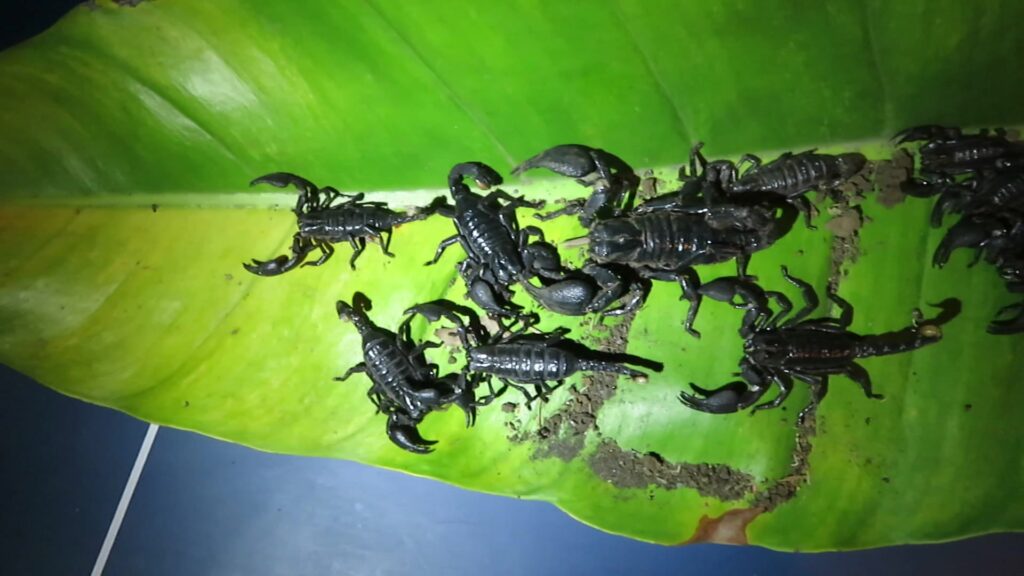
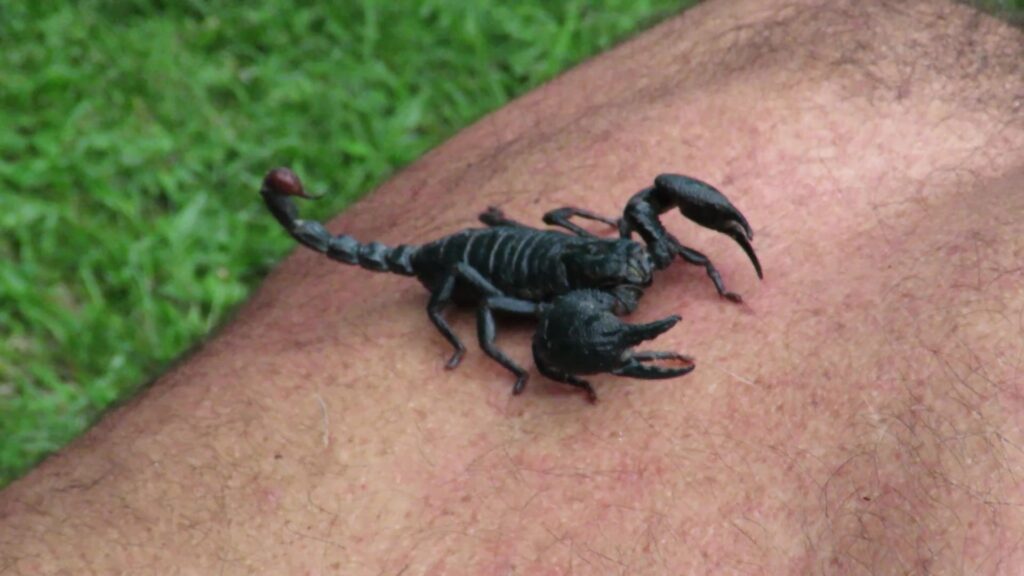
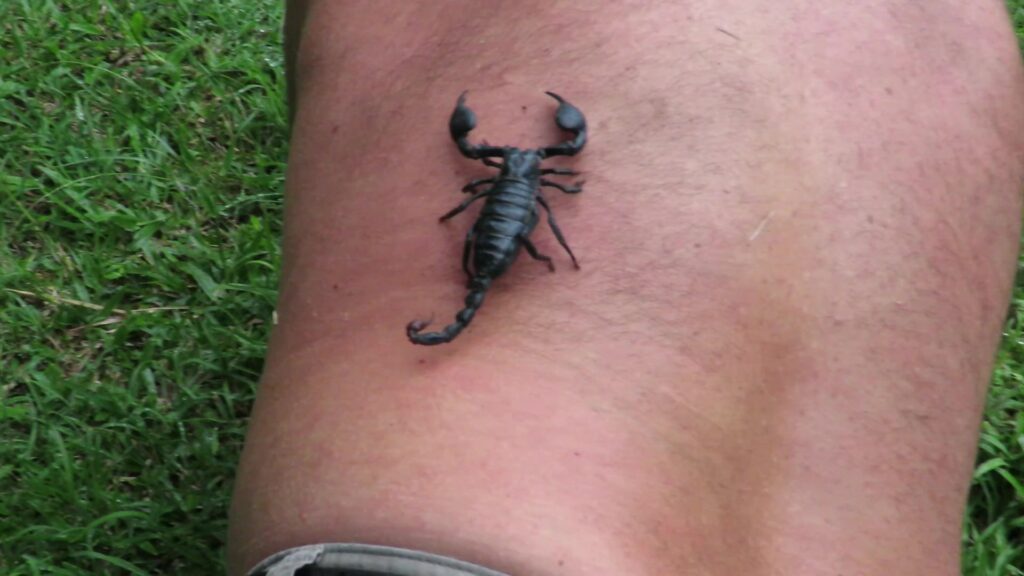
The family Scorpionidae is a group of scorpions belonging to the order Scorpiones, class Arachnida. Its members are best known for their robust bodies, powerful pincers, and segmented tails ending in a venomous sting. The family includes some substantial scorpion species, notably the giant forest scorpions of the genus Heterometrus and the large African scorpions of the genus Pandinus. Scorpionids occur primarily in tropical and subtropical regions, where they inhabit forests, savannas, dry woodlands, and other environments with suitable shelters.
Scorpionidae belongs to the arachnid lineage of arthropods, making its members relatives of spiders, ticks, mites, and harvestmen. Like other scorpions, scorpionids have two main body regions, four pairs of walking legs, a pair of pedipalps that terminate in pincers, and a long, segmented metasoma commonly called the tail. The tip of the tail carries the telson, which contains the venom glands and the sharp aculeus used to deliver venom.
One of the family’s most recognizable characteristics is its large, powerful pedipalps. In many species, the pincers are broad and heavily built, helping the animal grasp prey, manipulate food, and defend itself. Some scorpionids rely heavily on these strong pincers to subdue prey, although the relative importance of pincers and venom varies among species. Their bodies are generally dark brown, reddish brown, or black, and their hardened exoskeleton protects them from abrasion and helps reduce water loss.
Scorpionids vary in size, but some are among the largest scorpions by overall body mass and length. The emperor scorpion (Pandinus imperator), for example, is a large, dark-colored African species with broad pincers. Asian forest scorpions in the genus Heterometrus are also robust, often glossy black or dark brown, and adapted to humid forest environments. Size, coloration, and the proportions of the pincers differ among species and can help specialists distinguish related taxa.
Scorpionidae is found across several continents, although the distributions of individual genera are more restricted. Asian forest scorpions in Heterometrus and related genera occur mainly in South and Southeast Asia, while Pandinus and related African genera inhabit parts of sub-Saharan Africa. Species of Scorpio occur in North Africa and the Middle East, including arid and semiarid environments. Across this range, scorpionids occupy habitats from humid rainforest to dry savanna and scrubland.
Most scorpionids are nocturnal ambush predators. They typically remain hidden during daylight beneath stones, fallen logs, leaf litter, or inside burrows, emerging after dark to search for prey. Many species excavate burrows in soil, sometimes creating deep, winding tunnels that provide shelter from predators and help moderate temperature and humidity. Other species use existing crevices and natural cavities.
Their diet consists mainly of insects, spiders, and other small invertebrates. Larger individuals may also capture other scorpions or small vertebrates when opportunities arise. Prey is seized with the pincers and subdued using mechanical force and, when necessary, venom. Like other scorpions, scorpionids detect nearby movement and vibrations through specialized sensory structures on their legs and body, helping them locate prey in darkness.
Reproduction involves a characteristic courtship sequence in which the male and female grasp one another’s pedipalps and move together in what is often called the promenade à deux. The male deposits a sperm packet, or spermatophore, and guides the female into position to receive it. Scorpions give birth to live young rather than laying external eggs. Newly born juveniles climb onto the mother’s back and remain there until their first molt, after which they gradually become independent.
Representative genera include Heterometrus, the Asian forest scorpions; Pandinus, including the emperor scorpion; Scorpio, containing several arid-region species; and Opistophthalmus, a group of burrowing scorpions from southern Africa. The precise boundaries and relationships of genera have changed as researchers have revised the family’s classification using anatomical and molecular evidence. A specialist taxonomy updated in September 2026 recognizes 19 genera and 207 living species, though other references may report different totals depending on their classification and publication date.
Scorpionids contribute to ecosystem function by regulating populations of insects and other small animals. They are also prey for some birds, reptiles, mammals, and larger arthropods. Their burrows create sheltered microhabitats and can influence soil structure, while their sensitivity to habitat conditions makes them relevant to studies of terrestrial biodiversity.
Although their large pincers and stinging tails can appear intimidating, the medical significance of a sting varies considerably among species. Scorpionids should not be handled casually, and a large body size does not automatically indicate highly potent venom. Habitat destruction, local collection, and trade can affect some species, although conservation concerns vary across the family.
Overall, Scorpionidae is a distinctive family of predominantly robust, ground-dwelling scorpions. Its members combine powerful pincers, venom-assisted prey capture, nocturnal activity, burrowing behavior, and maternal care. These adaptations have enabled scorpionids to thrive in a wide range of terrestrial environments, from humid tropical forests to some of the drier landscapes of Africa and Asia.