Bali Wildlife
Every Spices Matter


Scoliidae, commonly known as scoliid wasps, is a family within the superfamily Scolioidea (Order Hymenoptera). Members of this family are distributed worldwide and are especially diverse in tropical and subtropical regions. They are commonly found in open habitats such as grasslands, gardens, sandy areas, and forest edges where suitable hosts occur in the soil.
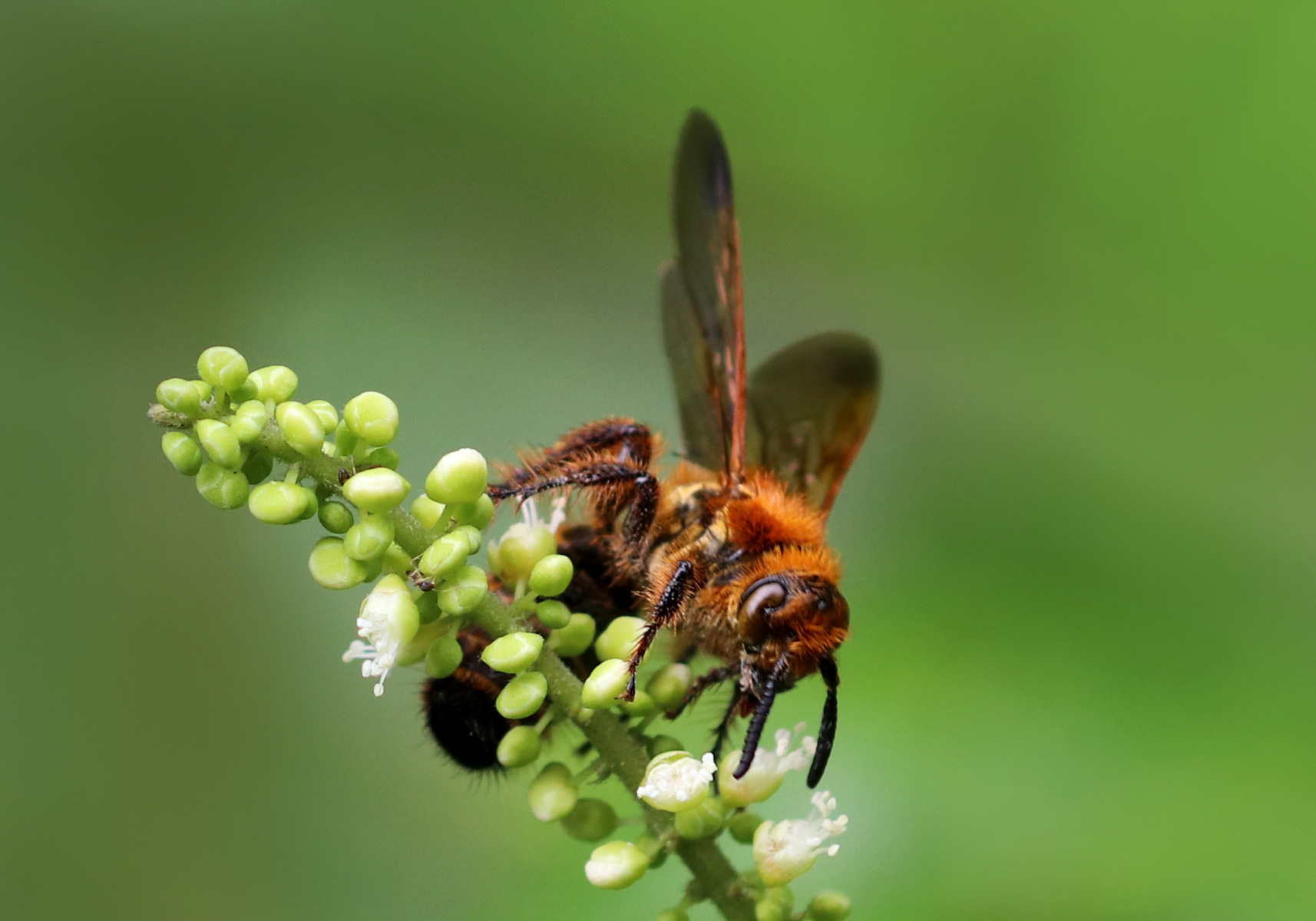
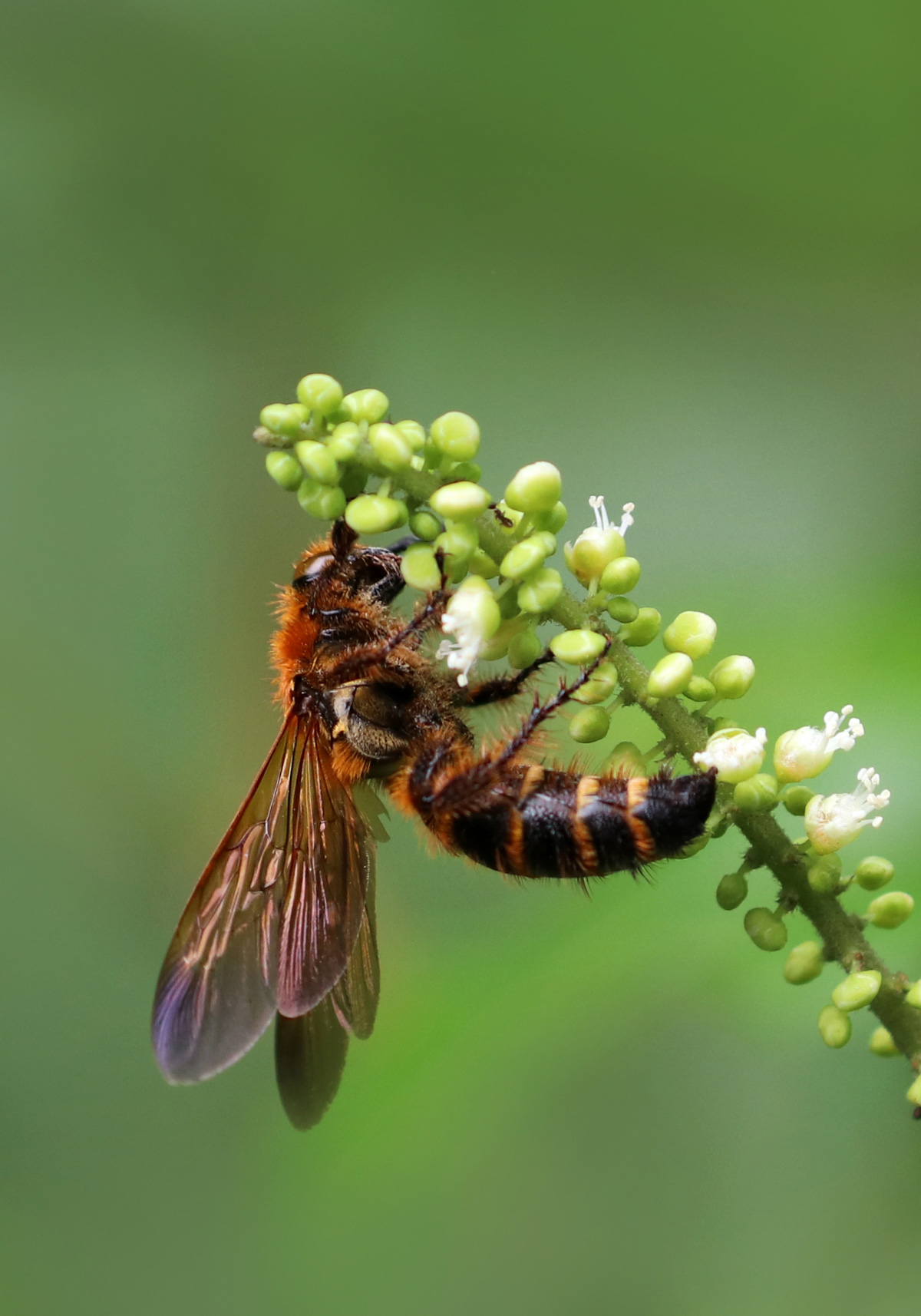
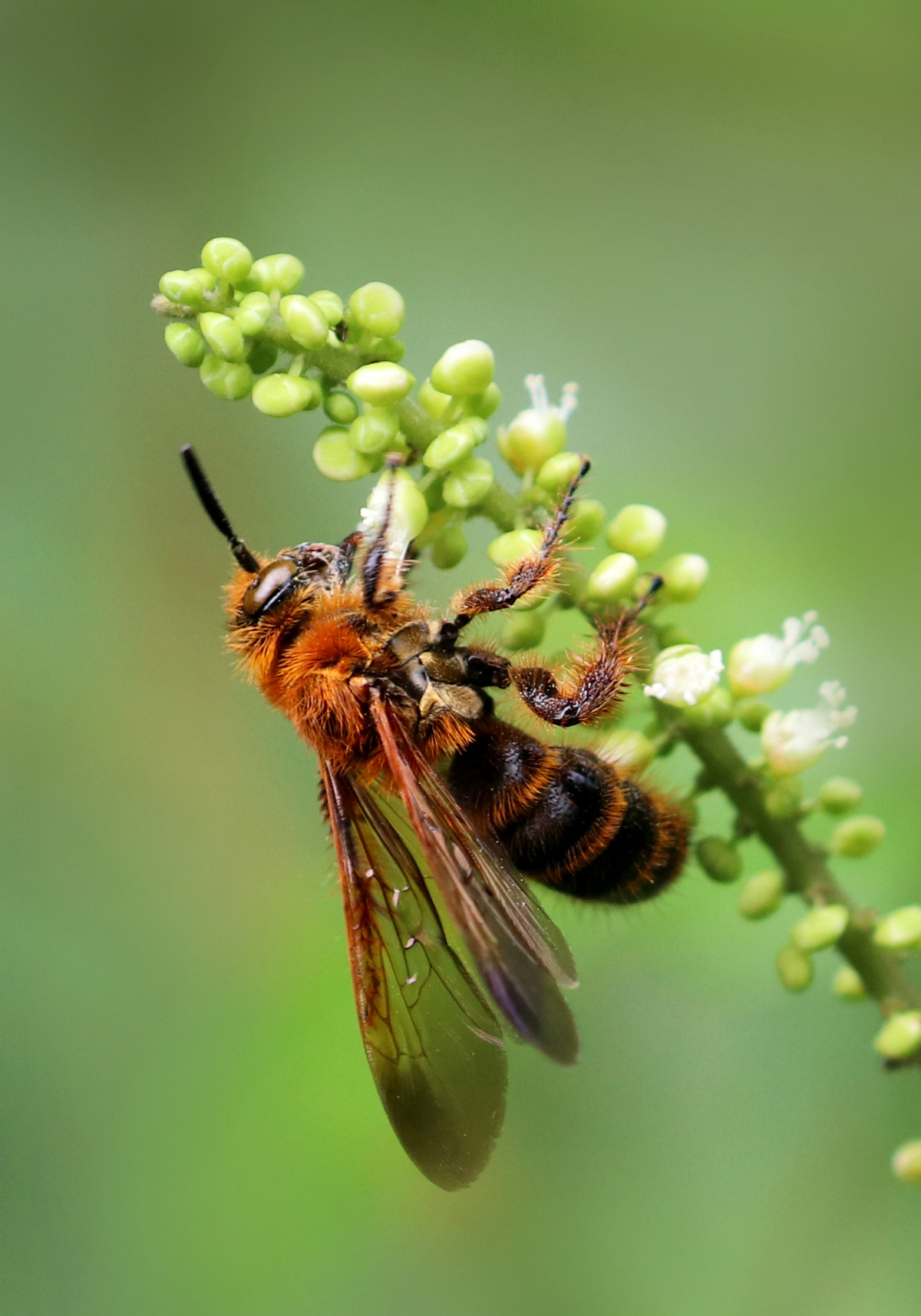
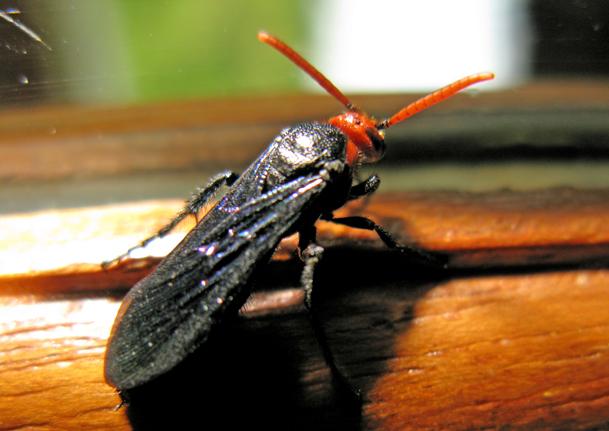
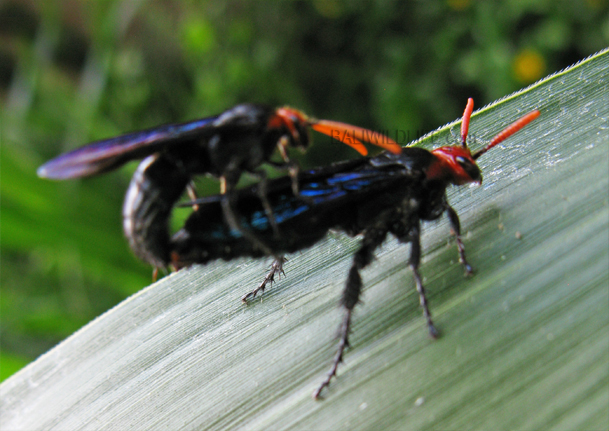
Scoliidae are typically medium to large wasps with a robust and often hairy body. Many species exhibit striking coloration, commonly black with yellow, orange, or white markings. Their wings are often dark or iridescent, sometimes showing metallic blue or violet reflections. The body is well adapted for digging, with strong legs that enable females to burrow into soil in search of hosts.
The head is large with well-developed compound eyes and strong mandibles. Females possess a powerful stinger used primarily to paralyze prey rather than for defense. Despite their formidable appearance, most scoliid wasps are not aggressive and rarely sting humans unless disturbed.
The life cycle involves complete metamorphosis. Females locate larvae of soil-dwelling beetles, particularly scarab beetles, and sting them to induce paralysis. An egg is then laid on or near the host. The developing larva feeds externally on the immobilized host, eventually consuming it before pupating in the soil.
Adults primarily feed on nectar and are often seen visiting flowers, where they may act as pollinators. They are generally active during warm daylight hours and are frequently observed flying low over the ground while searching for hosts.
The family includes genera such as Scolia, Megascolia, and related forms, which vary in size and distribution.
Ecologically, Scoliidae play an important role in controlling populations of beetle larvae, many of which are agricultural pests. Their parasitoid behavior helps regulate these populations naturally. In addition, their nectar-feeding habits contribute to pollination, making them beneficial insects in both natural and agricultural ecosystems.