Bali Wildlife
Every Spices Matter


Ropalidiini is a tribe within the subfamily Polistinae (Family Vespidae, Order Hymenoptera), comprising a group of social paper wasps that are primarily distributed in tropical and subtropical regions, especially in Asia, Africa, and Australasia. Members of this tribe are commonly found in forests, gardens, and human-influenced environments where suitable nesting sites are available.
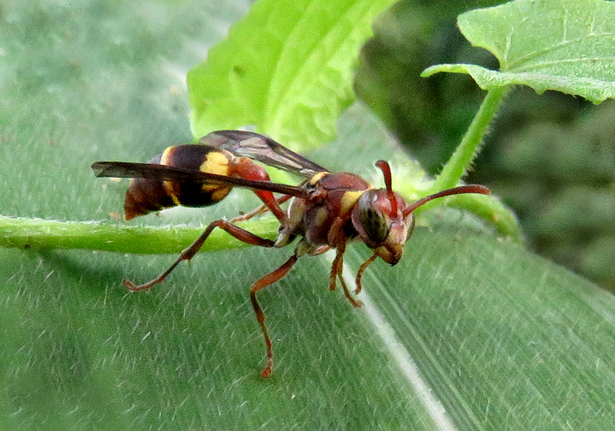
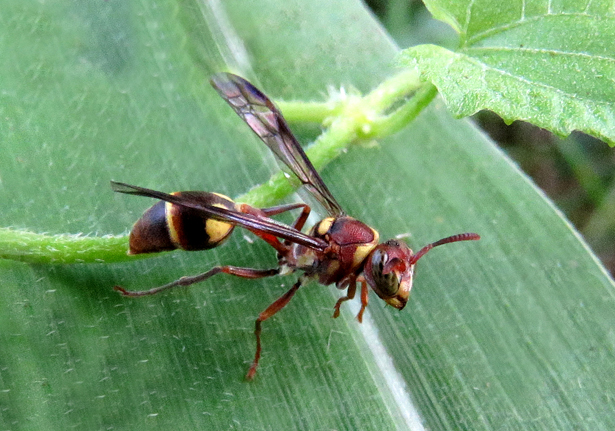
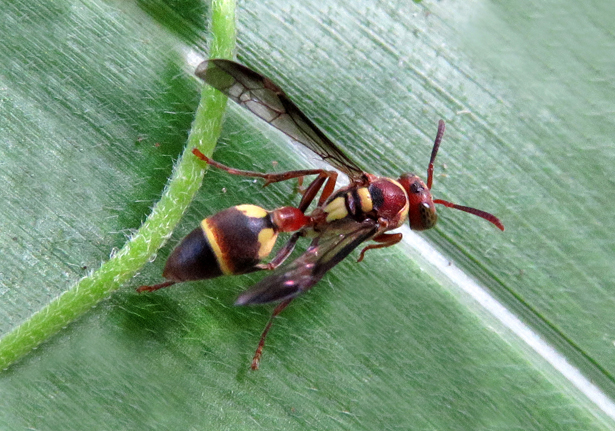
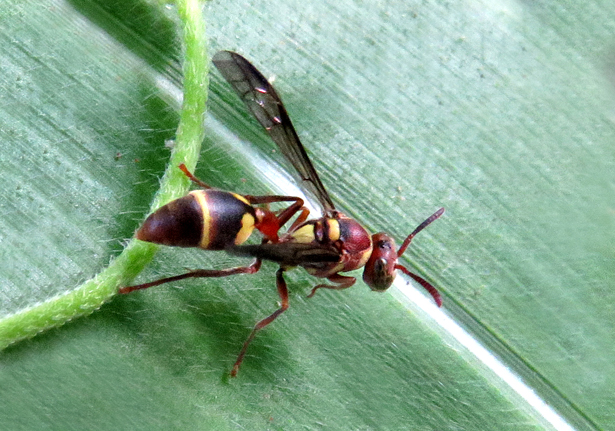
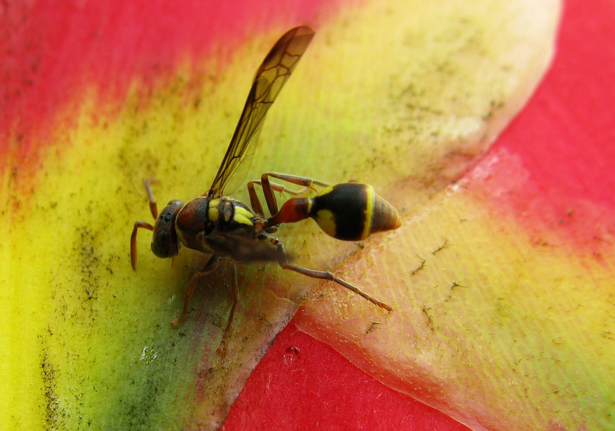
Wasps of the tribe Ropalidiini are generally medium-sized and have a slender body with a narrow waist, typical of vespid wasps. They often display coloration in shades of brown, black, yellow, or reddish tones. The head is equipped with well-developed compound eyes and long, segmented antennae, and the wings are membranous and folded lengthwise at rest. Like other polistine wasps, their long legs often hang down during flight.
Ropalidiini are eusocial insects, forming colonies with a division of labor among queens, workers, and males. Compared to other paper wasps, some species in this tribe exhibit more complex social organization and colony structures. Their nests are constructed from plant fibers mixed with saliva, forming a paper-like material. Nests may be open or partially enclosed and are often attached to vegetation, branches, or man-made structures.
The life cycle involves complete metamorphosis. The queen initiates the nest and lays eggs, and workers take over foraging and brood care. Larvae are fed protein-rich prey, typically insects such as caterpillars, which are captured and processed by adult wasps.
Adults primarily feed on nectar, plant exudates, or other sugary substances, while larvae depend on animal protein. This dual feeding behavior allows them to function as both predators and occasional pollinators.
The tribe includes genera such as Ropalidia and related forms, which vary in nesting habits and social complexity.
Ecologically, Ropalidiini play an important role in controlling insect populations through predation, helping to regulate herbivorous pests. They also contribute to pollination when visiting flowers. Although they may defend their nests when disturbed, they are an essential part of ecosystem balance and biodiversity.