Bali Wildlife
Every Spices Matter


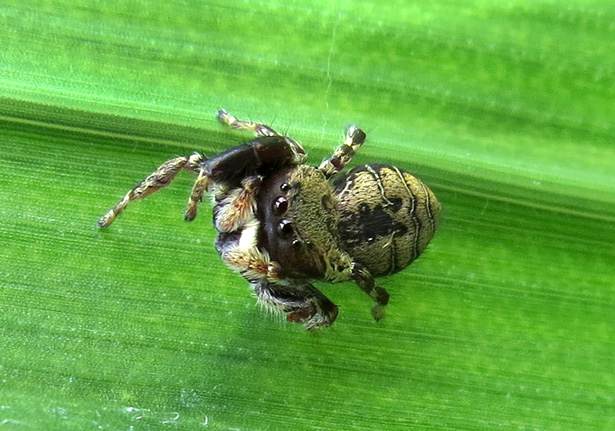
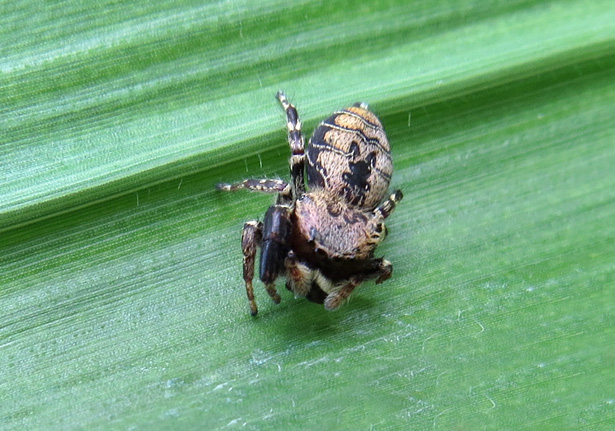
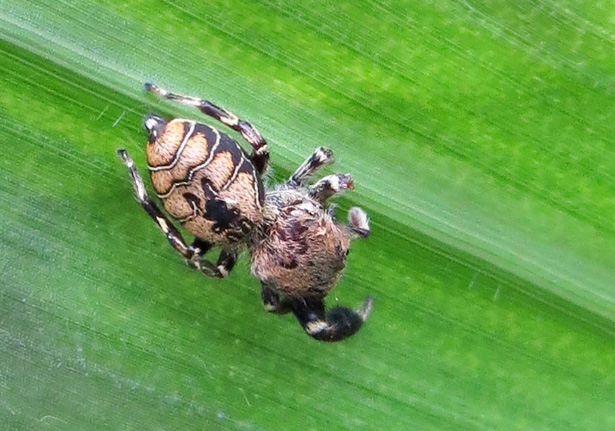
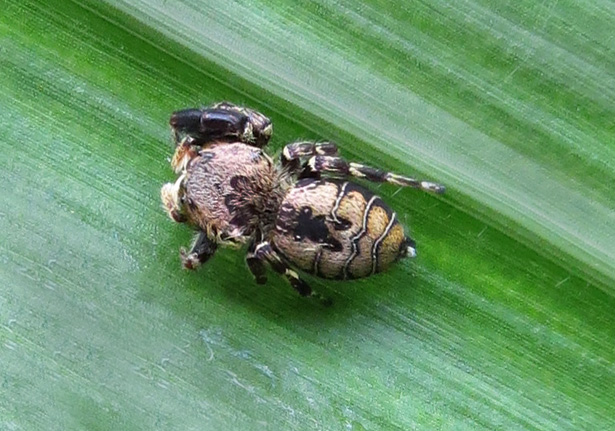
Rhene is a genus of jumping spiders within the family Salticidae, tribe Dendryphantini, subtribe Dendryphantina (Order Araneae, Suborder Araneomorphae). The genus is primarily distributed in the Old World, especially across Africa and Asia, with several species occurring in South and Southeast Asia.
Species of Rhene are diurnal, visually oriented hunters that rely on stalking and precise jumping to capture prey. Like other salticids, they do not construct prey-capture webs. They are commonly found on tree trunks, bark, rock surfaces, foliage, and occasionally on walls or wooden structures, where their cryptic appearance provides effective camouflage.
Morphologically, Rhene spiders are generally small to medium-sized with a compact, flattened body form. The carapace is broad and often slightly raised posteriorly, while the abdomen is short and oval. This flattened shape allows them to cling closely to substrates such as bark or rock surfaces. Coloration is typically mottled brown, gray, or black, often with pale patches or bands that enhance camouflage.
The anterior median eyes are large and forward-facing, providing sharp vision typical of jumping spiders. Legs are relatively short and sturdy, suited for short jumps and rapid directional changes rather than long-distance leaping.
Male genitalia possess distinctive palpal structures characteristic of the genus, particularly in the form of the embolus and tibial apophysis, which are used to distinguish Rhene from related genera. Females have well-developed epigynes with paired copulatory openings and internal ducts that are diagnostic at the species level.
Behaviorally, Rhene species are generally less conspicuous than many other jumping spiders, displaying subtle movements and restrained courtship behaviors. When disturbed, they often rely on stillness and camouflage rather than rapid escape.
Ecologically, species of Rhene are important predators of small arthropods in arboreal and rocky microhabitats. The genus represents a specialized lineage of jumping spiders adapted for life on hard, textured surfaces, combining cryptic morphology with the advanced visual hunting strategies typical of Salticidae.