

Red Bugs (Family Pyrrhocoridae)

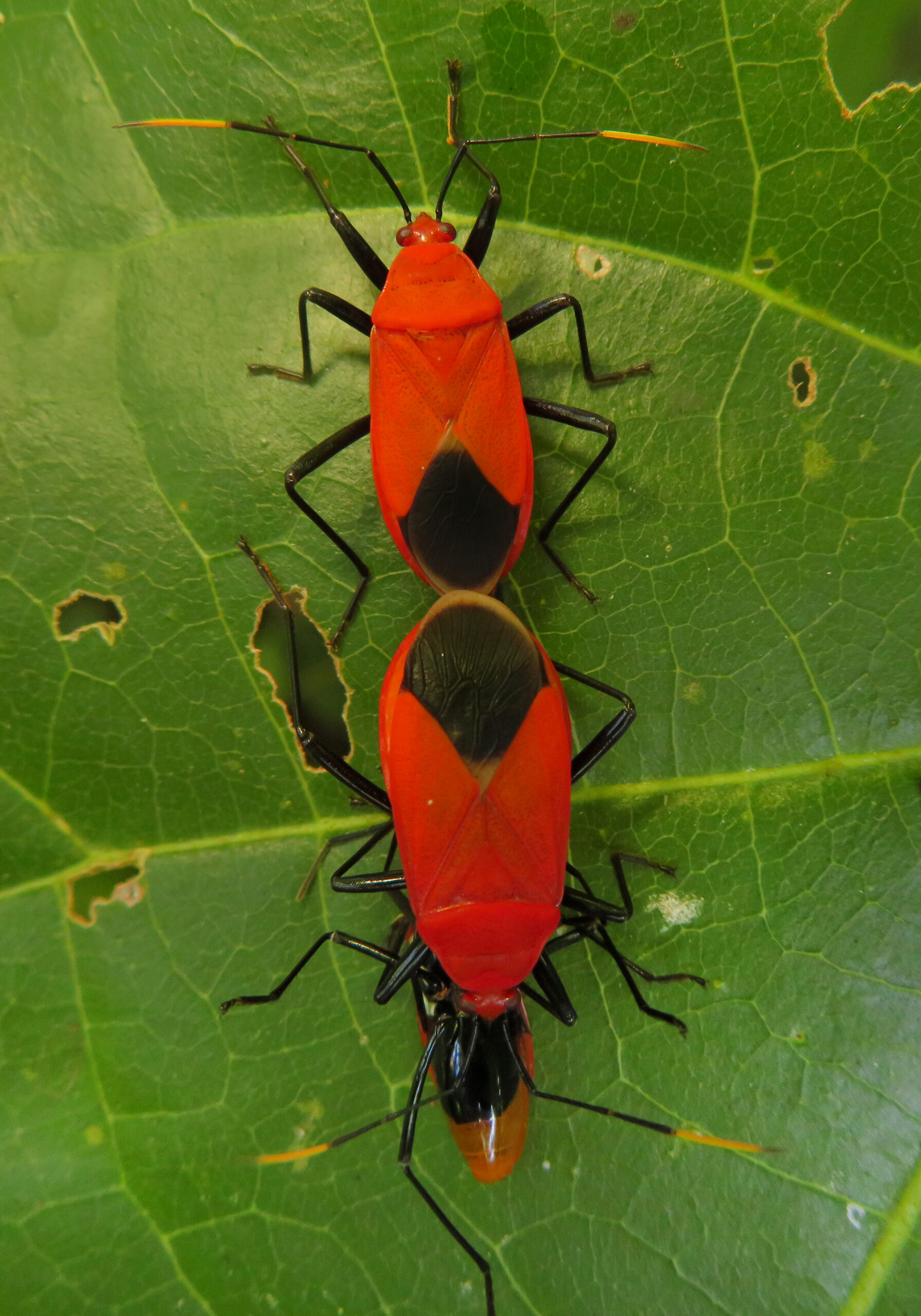
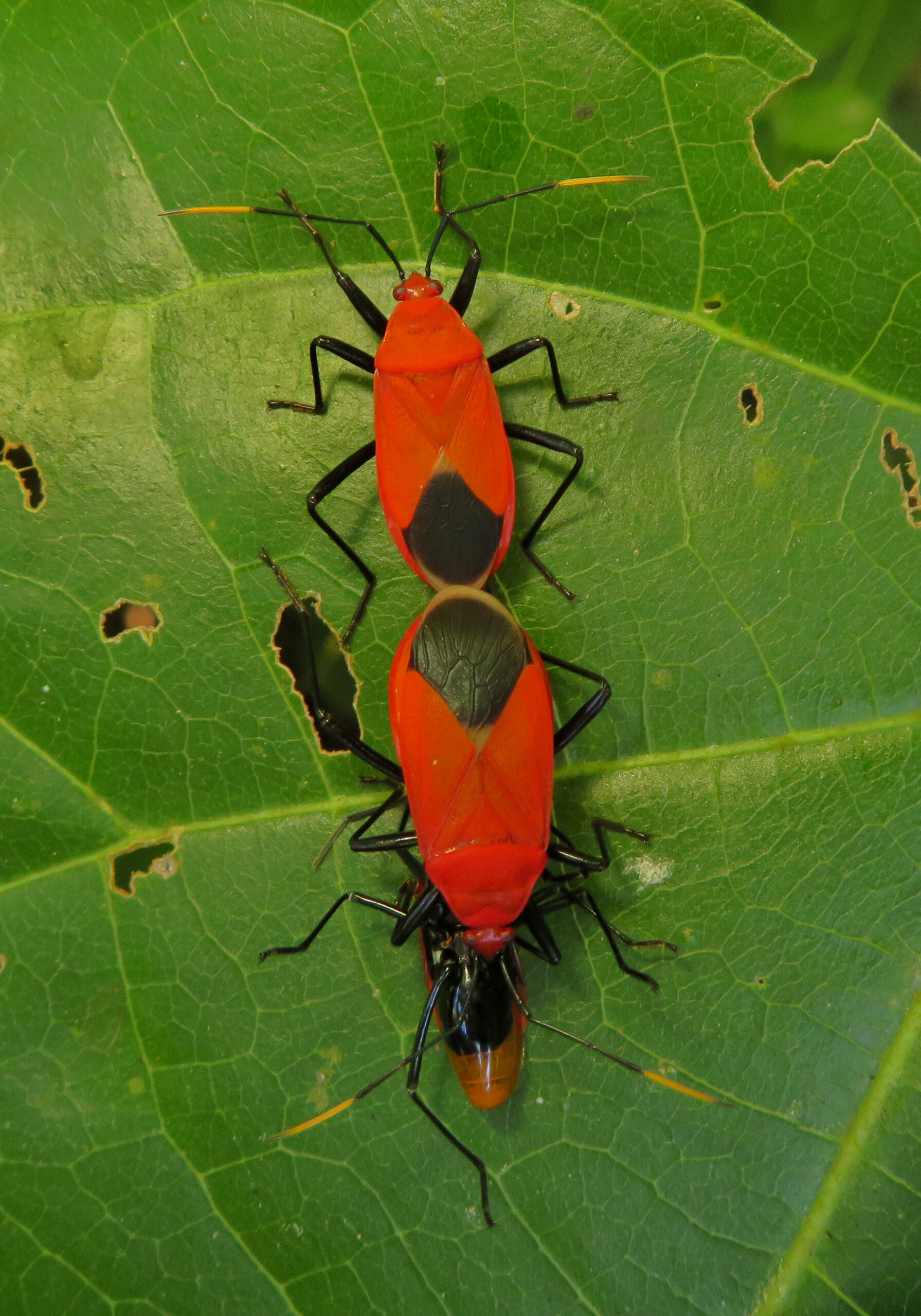
Pyrrhocoridae is a family of true bugs within the superfamily Pyrrhocoroidea (Infraorder Pentatomomorpha, Order Hemiptera). Commonly known as the red bugs or cotton stainers, the family comprises more than 300 described species distributed throughout tropical, subtropical, and warm temperate regions of the world. Members are especially diverse in Africa, Asia, Australia, and the Americas, where they inhabit tropical rainforests, woodlands, grasslands, shrublands, agricultural fields, plantations, parks, and gardens. Many species are closely associated with plants in the family Malvaceae.
True bugs of the family Pyrrhocoridae are generally small to medium-sized, measuring approximately 6–20 mm in body length. They have an oval to elongate body with a relatively small head and a well-developed piercing–sucking rostrum used to feed on plant fluids. The wings are held flat over the abdomen when at rest, although some species are short-winged or wingless. A distinctive feature of the family is the absence of ocelli (simple eyes), which distinguishes them from many other true bugs. Coloration is often conspicuous, with striking combinations of bright red, orange, yellow, and black arranged in bold spots, stripes, or geometric patterns. These colors function as aposematic (warning) coloration and may also serve in mimicry and species recognition.
Adults are primarily diurnal and are commonly found on leaves, stems, flowers, fruits, seed pods, and tree trunks. Many species are gregarious, forming large aggregations during feeding, mating, or overwintering. They are active walkers and capable fliers, although some species rely mainly on walking. When disturbed, they release unpleasant-smelling defensive secretions from thoracic scent glands that help deter predators.
Members of Pyrrhocoridae are predominantly phytophagous (plant-feeding). Using their piercing–sucking mouthparts, they feed on seeds, fruits, flowers, stems, and developing plant tissues, particularly those of Malvaceae, including cotton (Gossypium), hibiscus (Hibiscus), kapok (Ceiba), and related plants. Some species also feed opportunistically on dead insects or decaying organic matter. Several species of the genus Dysdercus, commonly known as cotton stainers, are economically important agricultural pests because they damage cotton bolls and stain cotton fibers through feeding and fungal contamination.
The life cycle involves incomplete metamorphosis, consisting of egg, nymph, and adult stages. Females deposit eggs in clusters within soil, leaf litter, or near the base of host plants. Wingless nymphs resemble adults but differ in coloration and lack fully developed wings. They undergo several molts before reaching maturity and occupy similar habitats while feeding on the same host plants.
The family includes numerous genera, such as Dysdercus, Pyrrhocoris, Antilochus, Scantius, Roscius, and Cenaeus. Representative species include the Firebug (Pyrrhocoris apterus), Cotton Stainers (Dysdercus spp.), and Antilochus coqueberti, a predatory species that is unusual within this predominantly plant-feeding family.
Ecologically, Pyrrhocoridae bugs play important roles in terrestrial ecosystems as seed feeders and herbivores, influencing plant reproduction and nutrient cycling. They also serve as prey for birds, reptiles, amphibians, spiders, predatory insects, and parasitoids. Their abundance, host-plant associations, and sensitivity to habitat alteration make many pyrrhocorid species valuable indicators of ecosystem health, habitat quality, and biodiversity, while some species are of considerable importance in agriculture due to their impact on cotton and other crops.