

Gaudy Grasshoppers (Family Pyrgomorphidae)
Pyrgomorphidae is a family of grasshoppers belonging to the order Orthoptera and the suborder Caelifera. Its members are commonly known as gaudy grasshoppers because many species display striking colors and distinctive body patterns. The family is distributed widely across tropical and subtropical regions of the world, with particularly high diversity in Africa, Asia, and Australia. Pyrgomorphid grasshoppers inhabit a variety of environments, including forests, grasslands, scrublands, agricultural fields, and open areas with abundant vegetation.
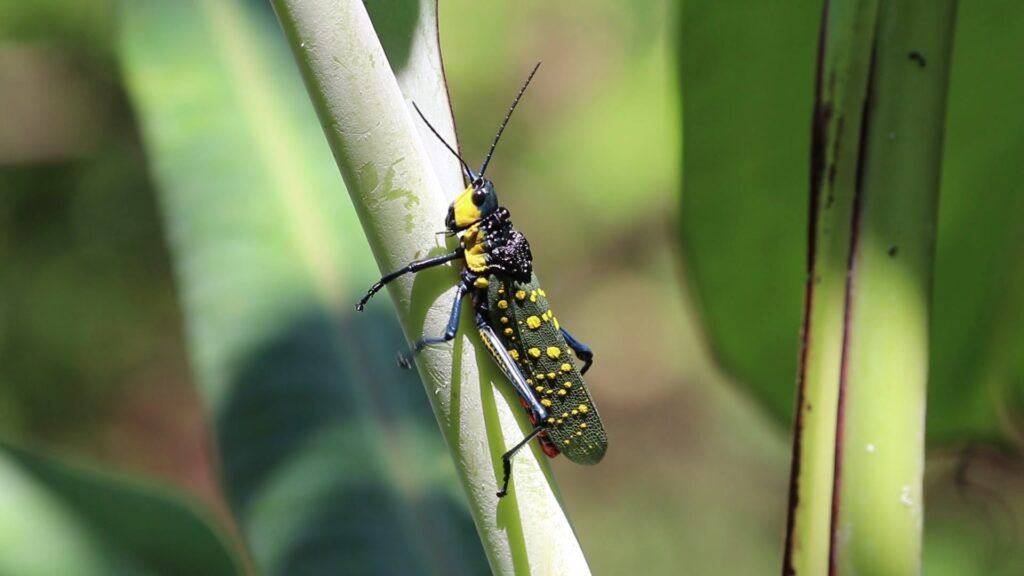
Members of Pyrgomorphidae vary considerably in size, body shape, and coloration. Many species have elongated bodies, relatively short antennae, powerful hind legs, and a hard exoskeleton that protects them from physical damage. Their coloration ranges from green and brown to yellow, orange, red, and black, often combining several contrasting shades. Some species are well camouflaged among leaves and grasses, while others have bright warning colors that advertise their chemical defenses to potential predators.
One of the distinctive characteristics of Pyrgomorphidae is the variation in their external appearance. Some species have smooth, streamlined bodies, whereas others possess rough surfaces, unusual projections, or expanded structures on the head and thorax. Their wings also vary considerably. Certain species have fully developed wings and can fly effectively, while others have shortened wings and rely mainly on walking or jumping to move between plants. These differences reflect adaptations to their respective habitats and lifestyles.
Pyrgomorphidae occurs across many warm regions, including sub-Saharan Africa, South and Southeast Asia, Australia, and parts of the Americas. Different species occupy habitats ranging from humid tropical forests to dry grasslands and semiarid landscapes. Many are associated with particular plant communities, and their distribution is influenced by temperature, rainfall, vegetation structure, and the availability of suitable food plants. Some species are common in disturbed habitats, including roadsides, plantations, gardens, and agricultural areas.
Most pyrgomorphid grasshoppers are herbivorous and feed on leaves, shoots, flowers, and other plant tissues. Their dietary preferences differ among species, with some feeding on a broad range of plants and others showing stronger associations with particular host plants. Certain species can become agricultural pests when populations increase and large numbers of individuals feed on crops or cultivated vegetation. Their feeding activity may influence plant growth and vegetation composition, particularly during outbreaks.
Many members of Pyrgomorphidae possess chemical defenses that discourage predators. Some species obtain defensive compounds from their food plants and store them in their bodies, making them distasteful or potentially harmful to predators. Bright coloration may serve as a warning signal, while some species also release defensive secretions when threatened. These adaptations contribute to their survival and illustrate the varied defensive strategies found among grasshoppers.
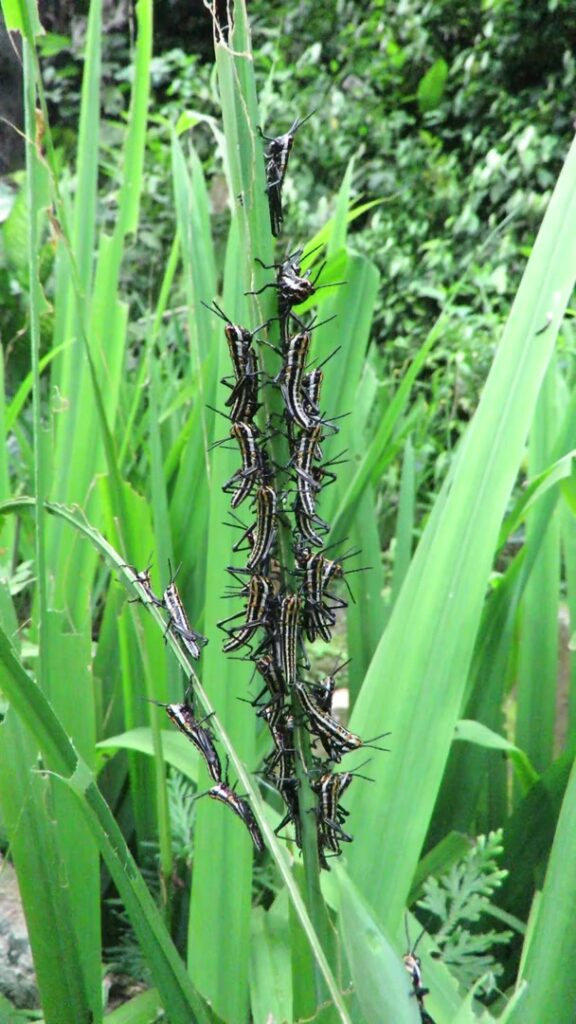
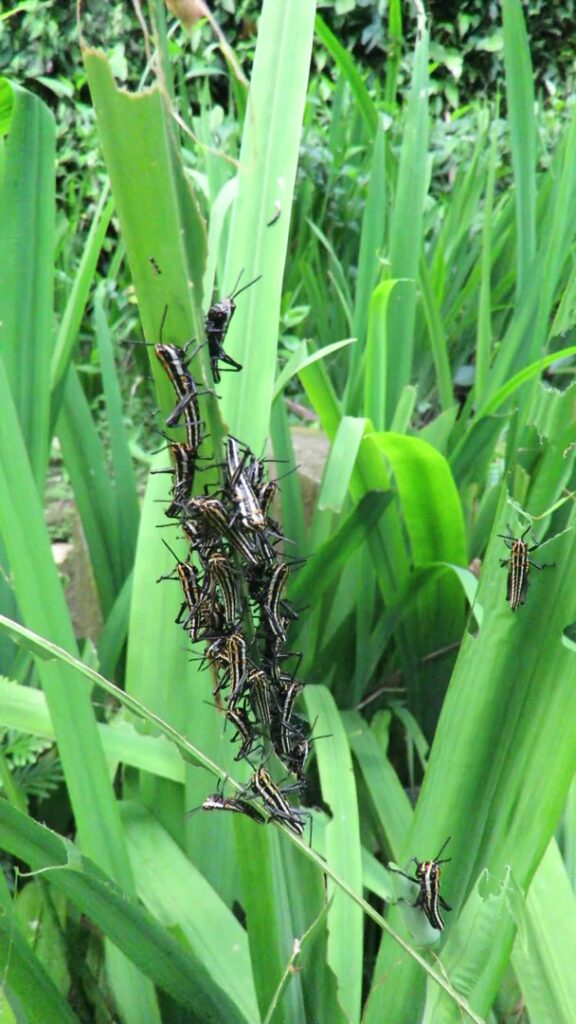
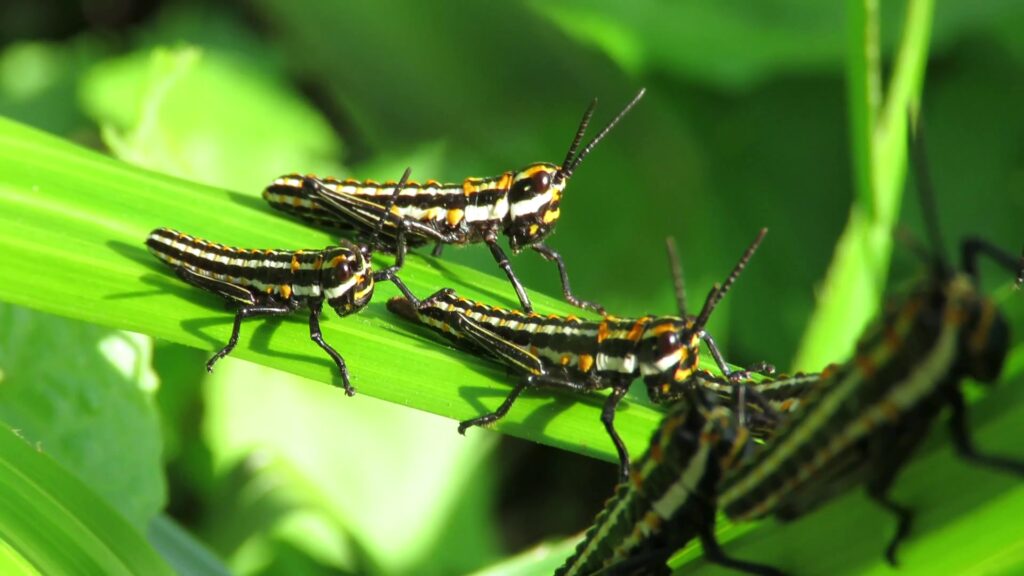
The life cycle of Pyrgomorphidae follows the typical pattern of grasshoppers, involving eggs, nymphs, and adults. Females generally deposit eggs in soil or other suitable substrates, sometimes within protective egg pods. The young hatch as nymphs that resemble smaller, wingless versions of the adults. They pass through several molts as they grow, gradually developing adult body proportions and wings where these are present. The duration of development depends on the species, climate, temperature, and food availability.
The family includes many genera with distinctive forms and ecological characteristics, such as Atractomorpha, Zonocerus, Poekilocerus, Pyrgomorpha, and Chrotogonus. Species of Atractomorpha are often recognized by their elongated, pointed heads, while Zonocerus includes brightly colored grasshoppers found in Africa. Poekilocerus species are associated with particular host plants and may display striking patterns, whereas Chrotogonus includes ground-dwelling species adapted to open and often relatively dry habitats. These genera demonstrate the diversity of morphology, coloration, and ecological specialization within Pyrgomorphidae.
Pyrgomorphid grasshoppers play important roles in terrestrial ecosystems. As herbivores, they influence plant communities and contribute to the movement of energy from vegetation to higher trophic levels. They are also prey for birds, reptiles, amphibians, spiders, and predatory insects, although chemical defenses protect some species from being eaten. By interacting with plants and predators, they form an important component of grassland and forest food webs.
Although many species are widespread, some pyrgomorphid populations may be affected by habitat loss, changes in land use, pesticide exposure, and the decline of specialized host plants. Other species benefit from disturbed environments and can become abundant in agricultural landscapes. Understanding their ecology is important both for conserving native insect diversity and for managing species that occasionally cause damage to crops.
Overall, Pyrgomorphidae is a diverse family of grasshoppers distinguished by its varied body forms, powerful jumping legs, and, in many species, vivid coloration and chemical defenses. Its members occupy a wide range of habitats and display diverse feeding strategies and life histories. Through their interactions with vegetation, predators, and other organisms, pyrgomorphid grasshoppers contribute significantly to the ecological complexity of terrestrial environments.