Bali Wildlife
Every Spices Matter


Pteropodoidea is a superfamily within the suborder Yinpterochiroptera (Order Chiroptera), comprising the fruit bats or flying foxes. This group is distributed across Africa, Asia, Australia, and many islands of the Indo-Pacific region. Members are especially abundant in tropical and subtropical environments such as rainforests, mangroves, orchards, and urban green spaces.
Bats of the superfamily Pteropodoidea are generally medium to very large in size and are among the largest bats in the world. They are characterized by a fox-like face with large eyes, relatively simple ears, and a robust body covered in fur. Their wings are formed by elongated fingers supporting a membranous patagium, enabling strong and sustained flight.
Unlike many other bats, most members of Pteropodoidea rely primarily on vision and a keen sense of smell rather than echolocation, although a few species use a simple form of echolocation based on tongue clicks. Their large eyes are well adapted for low-light conditions, allowing them to forage at dusk and night.
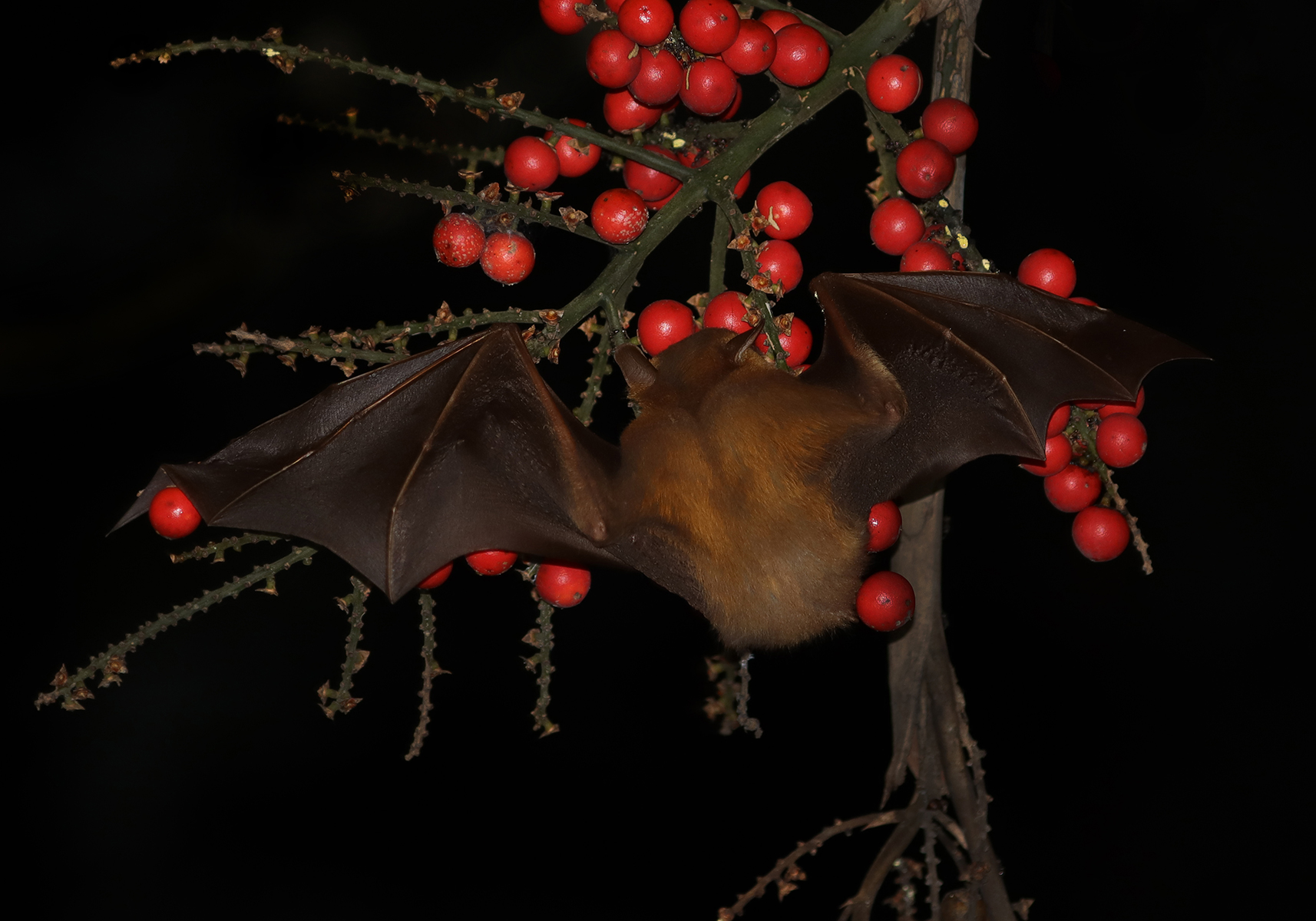
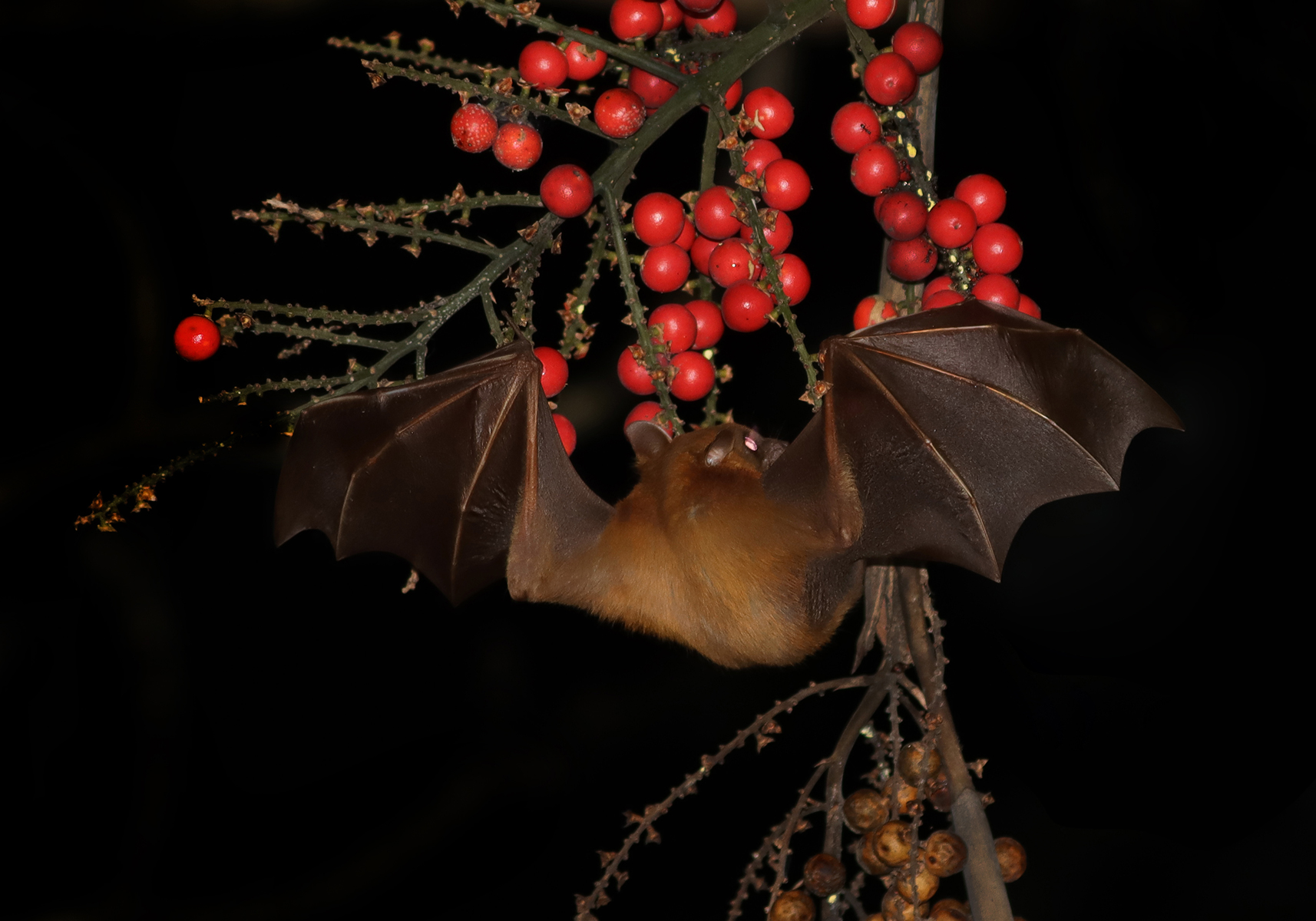
Feeding habits are primarily frugivorous and nectarivorous. These bats feed on fruits, nectar, and pollen, often traveling long distances to locate food sources. Their feeding behavior frequently involves chewing fruit to extract juice and discarding the pulp.
The life cycle involves typical mammalian reproduction. Females usually give birth to a single offspring, which is cared for extensively and may be carried by the mother during early development. Many species roost in large colonies in trees, forming conspicuous aggregations.
The superfamily includes the family Pteropodidae, which contains genera such as Pteropus (flying foxes), Cynopterus, and others.
Ecologically, Pteropodoidea plays a critical role in pollination and seed dispersal, particularly in tropical ecosystems. By transporting seeds and pollen over long distances, they contribute to forest regeneration and plant diversity. Despite their ecological importance, many species face threats from habitat loss, hunting, and human conflict, highlighting the need for conservation efforts.