Bali Wildlife
Every Spices Matter


Polyrhachis is a large and distinctive genus of ants within the tribe Camponotini (Subfamily Formicinae, Family Formicidae, Order Hymenoptera). The genus is primarily Old World in distribution, with greatest diversity in tropical Africa, South and Southeast Asia, Australia, and the Pacific region, and is especially well represented in forested habitats.
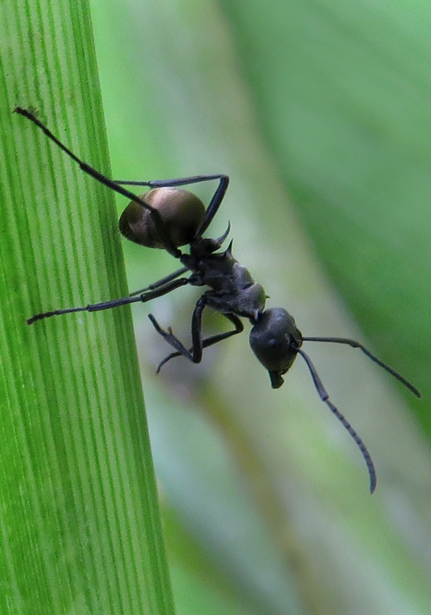
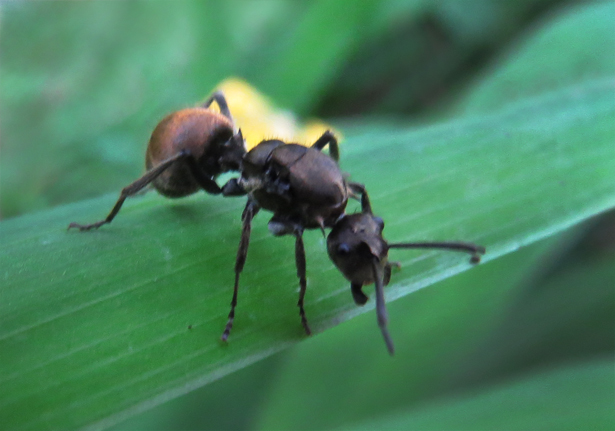
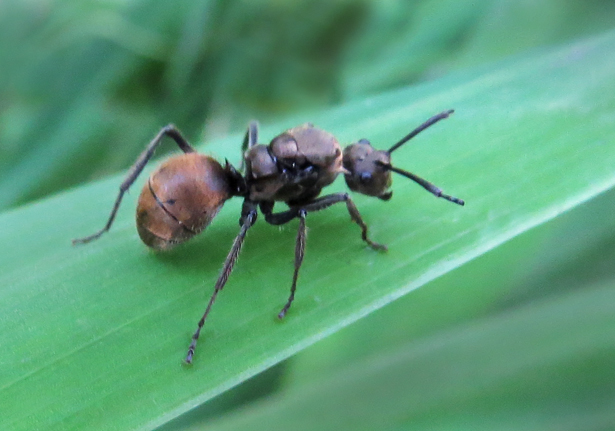
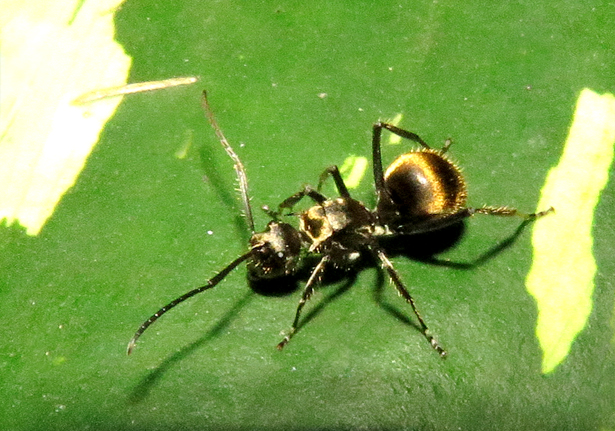
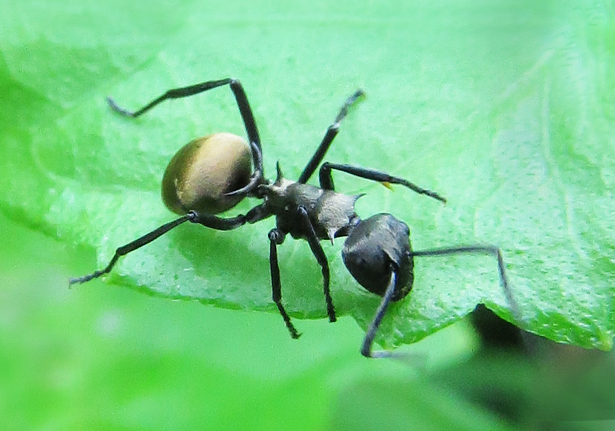
Species of Polyrhachis are best known for their remarkable external morphology, particularly the presence of spines, projections, and sculptured body surfaces on the mesosoma and petiole. These spines vary greatly in number, size, and orientation among species and are thought to function in defense, camouflage, or predator deterrence. Body size ranges from small to medium-large, and coloration is typically dark—black or brown—often with a metallic sheen or dense pubescence.
Like other formicine ants, Polyrhachis lacks a functional stinger and instead possesses an acidopore, which allows the ant to spray formic acid as a chemical defense. The antennae are geniculate with long scapes, and the mandibles are strong and well suited for grasping prey, manipulating materials, and nest construction.
Behaviorally, Polyrhachis species exhibit diverse nesting strategies. Some nest in soil or rotting wood, while many species are arboreal, constructing nests on vegetation. Certain species are notable for building silk-bound nests, using larval silk to bind leaves or plant fibers together—an advanced and unusual behavior among ants.
Colonies range from small to moderately large and are typically organized with a single queen, though social structure varies among species. Workers are usually monomorphic or weakly polymorphic.
Ecologically, Polyrhachis ants are omnivorous, feeding on insects, nectar, honeydew from hemipterans, and other plant-derived resources. As active foragers and predators, they play an important role in regulating arthropod populations and participating in forest food webs.
The genus Polyrhachis represents one of the most morphologically diverse and visually striking lineages within Formicinae, distinguished by its spiny architecture, arboreal tendencies, and wide ecological adaptability.