Bali Wildlife
Every Spices Matter


Phintella is a genus of jumping spiders within the family Salticidae, tribe Chrysillini (Order Araneae, Suborder Araneomorphae). The genus is widely distributed across the Old World, particularly in South Asia, Southeast Asia, East Asia, and parts of Australasia, with many species occurring in tropical and subtropical regions.
Species of Phintella are diurnal, visually oriented hunters that rely on keen eyesight and agile jumping to capture prey. Like other jumping spiders, they do not construct prey-capture webs, instead stalking small insects on foliage, shrubs, grasses, and tree branches. Many species are commonly encountered in gardens, forest edges, and open vegetation.
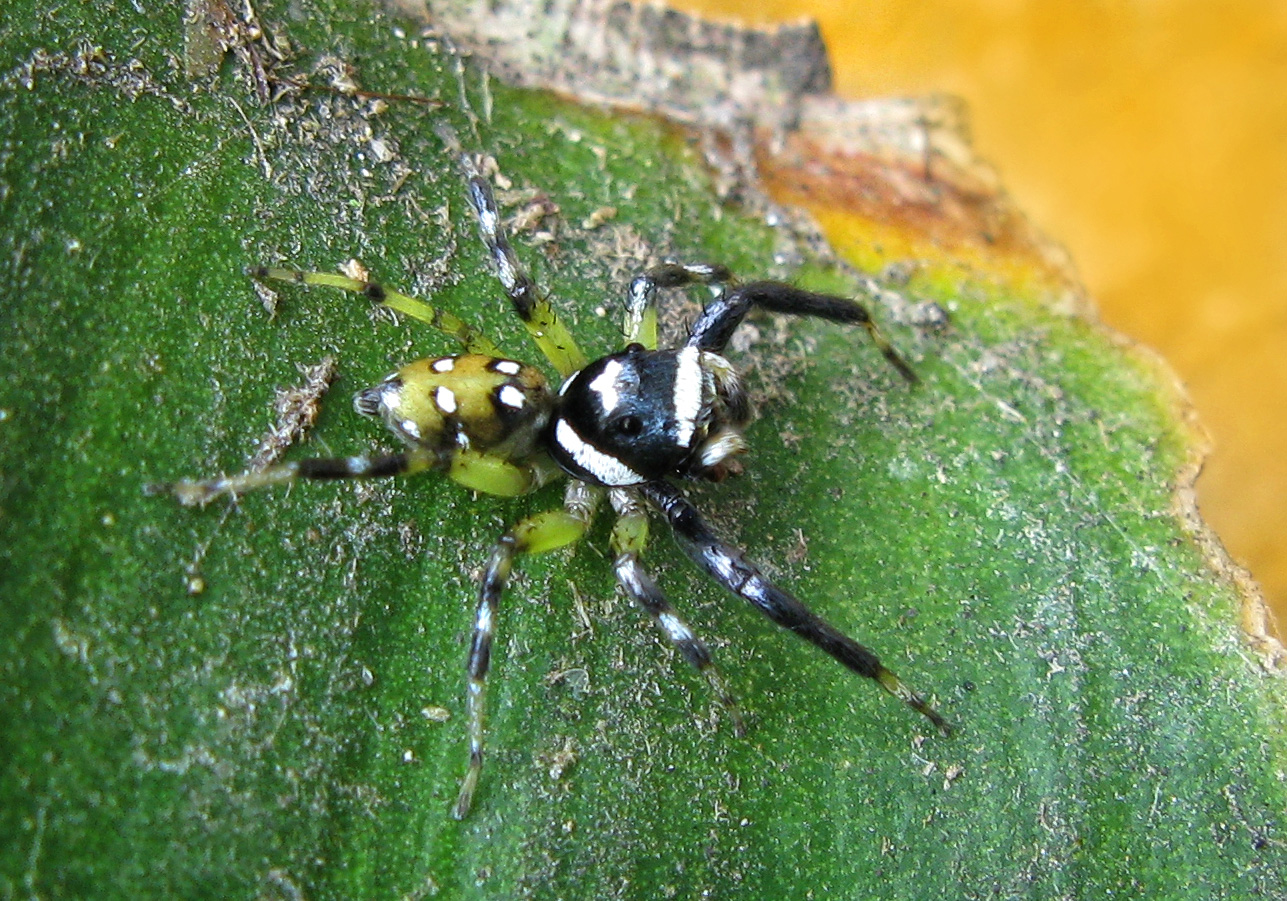
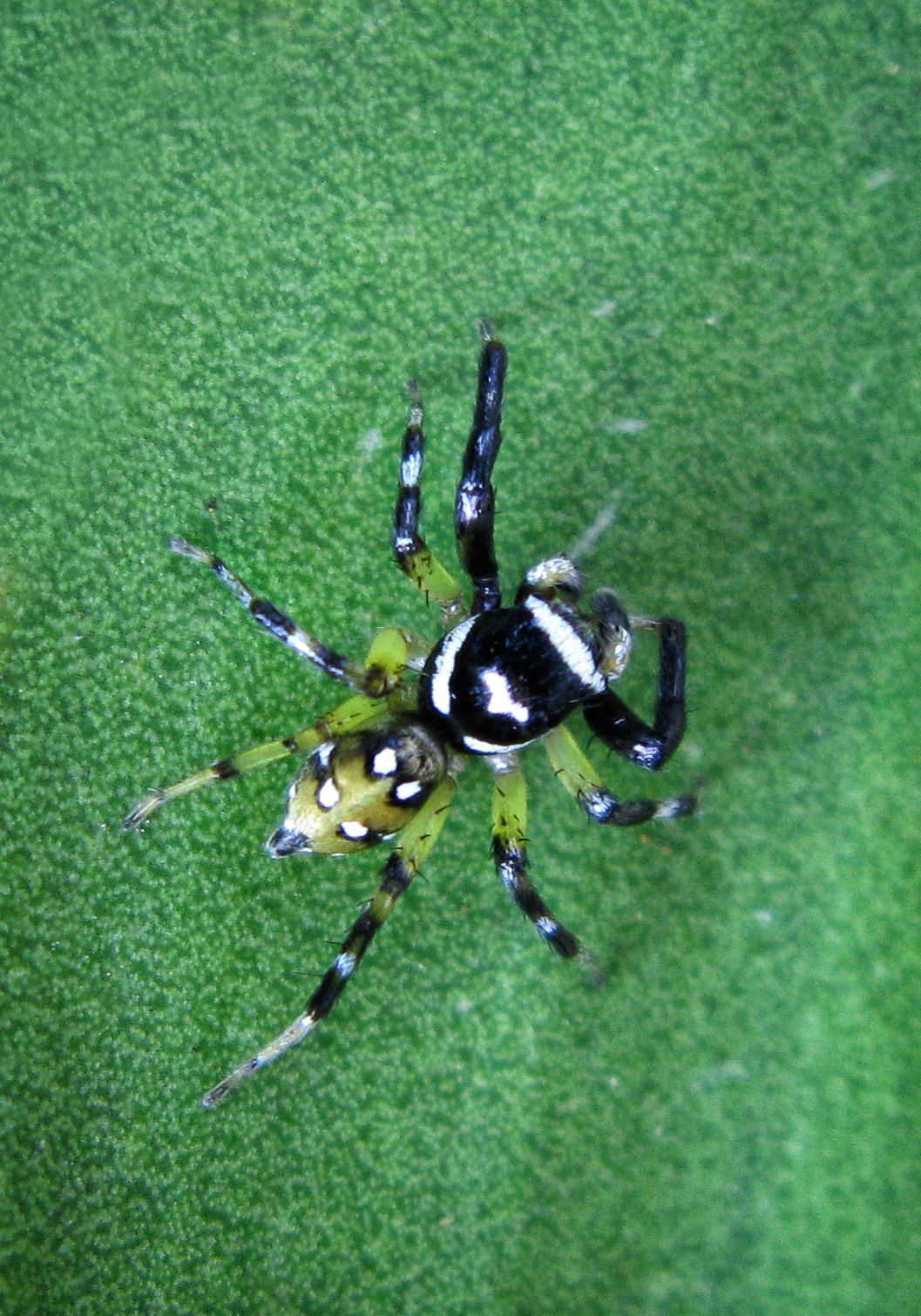
Morphologically, Phintella spiders are generally small to medium-sized with a compact body form. The carapace is moderately high, and the abdomen is oval to elongate. Coloration is often subtle but may include iridescent or metallic hues, especially in males, combined with pale bands, spots, or contrasting markings. Females are usually more cryptically colored.
The anterior median eyes are large and forward-facing, providing excellent visual acuity. Legs are slender and adapted for agile movement and jumping, with the first pair sometimes more robust and used in courtship displays.
Male genitalia show species-specific palpal structures characteristic of Chrysillini, particularly in the shape and orientation of the embolus and tegulum. Females possess fully developed entelegyne genitalia with a distinct epigyne and internal duct systems important for species identification.
Behaviorally, Phintella species often display visual courtship behaviors, including leg waving, body orientation, and subtle movements directed toward females. These displays are typically less elaborate than those of some larger salticids but are highly species-specific.
Ecologically, members of Phintella are active predators of small insects and contribute to natural pest control in a variety of vegetated habitats. The genus represents a diverse and widespread lineage of Chrysillini, combining modest size, visual hunting strategies, and adaptability to a broad range of environments.