Bali Wildlife
Every Spices Matter


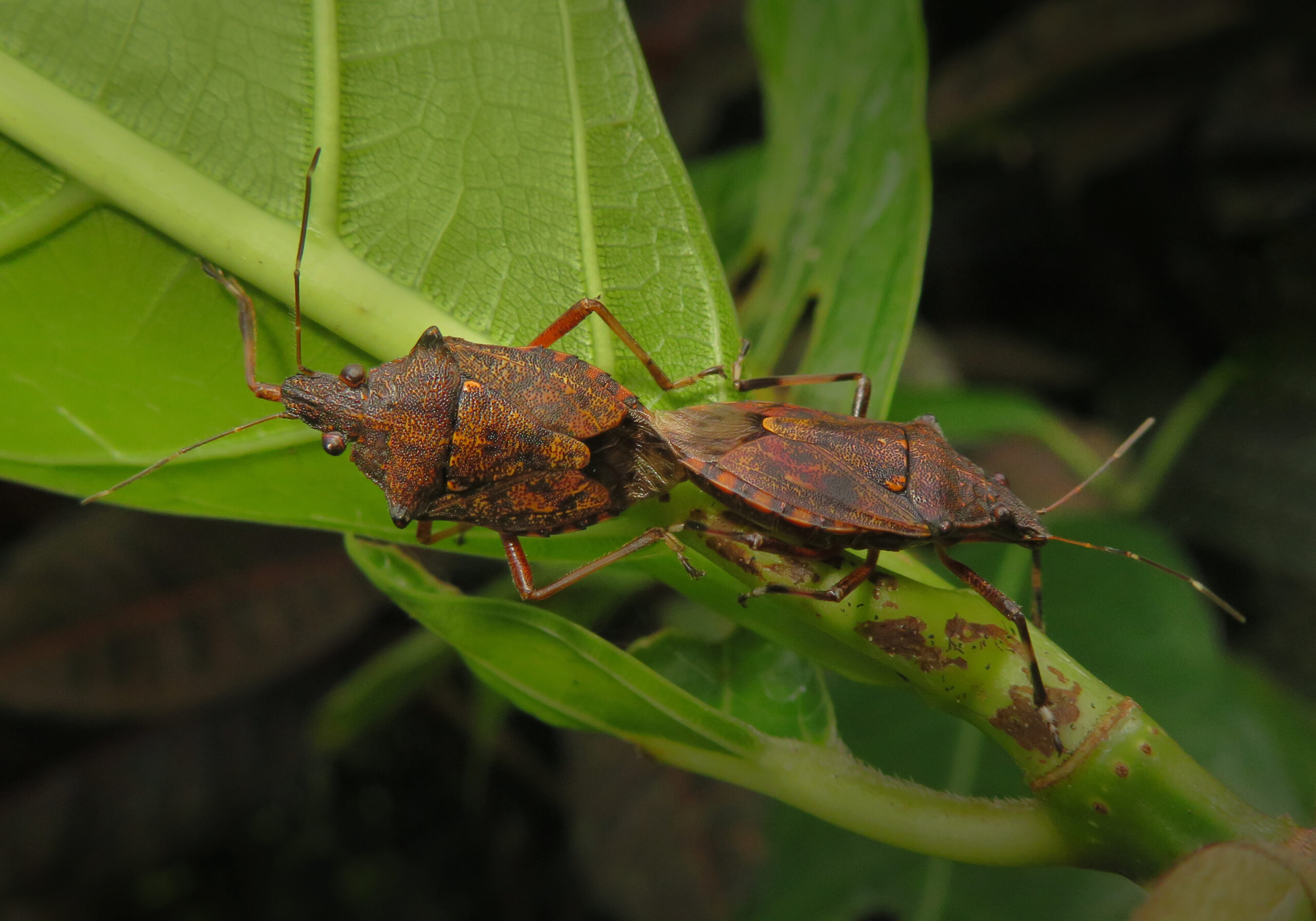
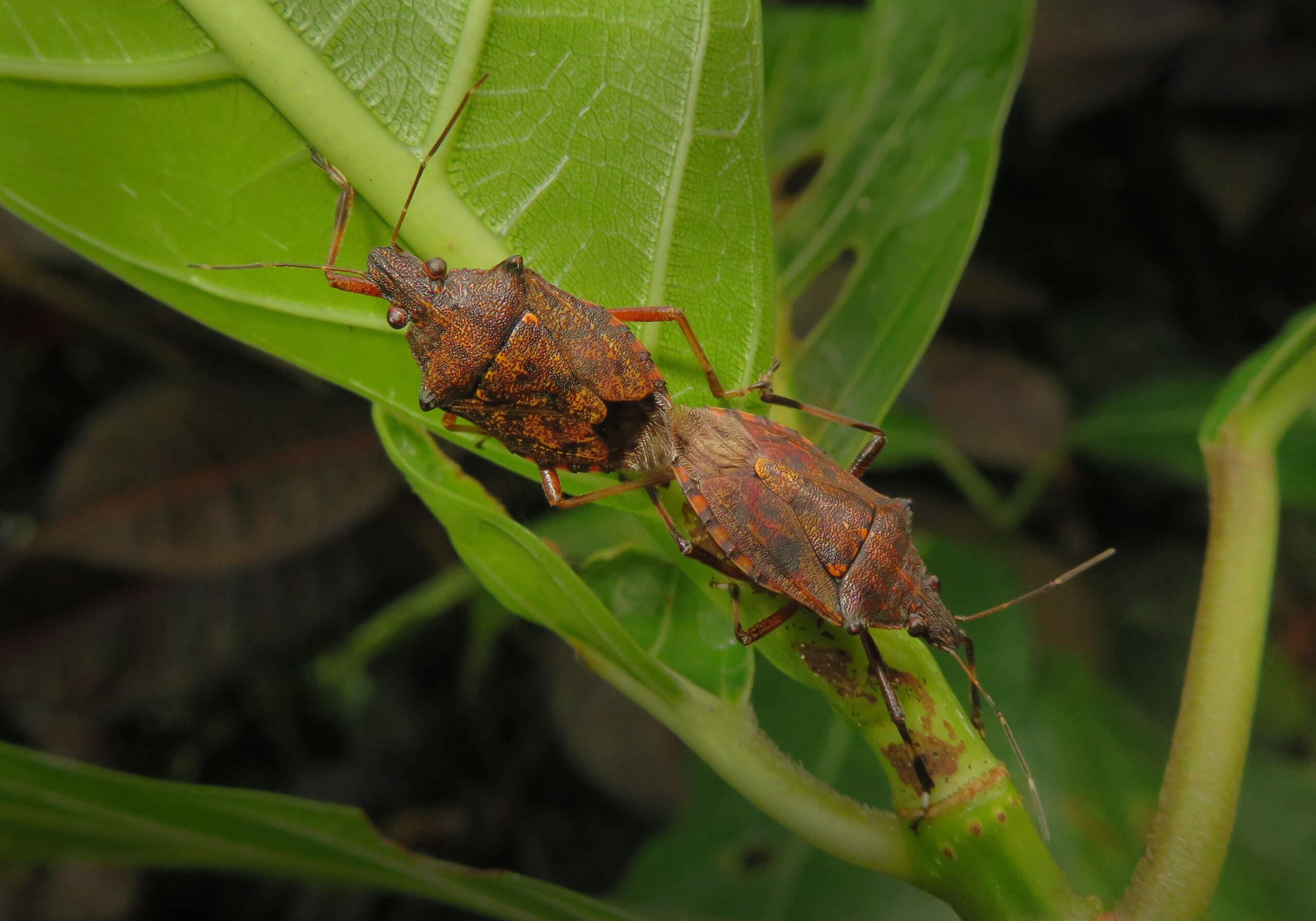
Pentatomidae, commonly known as stink bugs, is a large and diverse family within the superfamily Pentatomoidea. Members of this family are easily recognized by their typically shield-shaped body and the presence of well-developed scent glands that produce a strong, often unpleasant odor when the insects are disturbed or threatened. This chemical defense is a defining characteristic of the family and serves to deter predators.
Pentatomid bugs generally have a broad, flattened body with a large, triangular scutellum that extends partway over the abdomen. The head bears compound eyes, usually five-segmented antennae, and a piercing–sucking rostrum adapted primarily for feeding on plant tissues, seeds, and fruits. While most species are phytophagous, some are omnivorous or predatory, feeding on other insects and contributing to natural pest control.
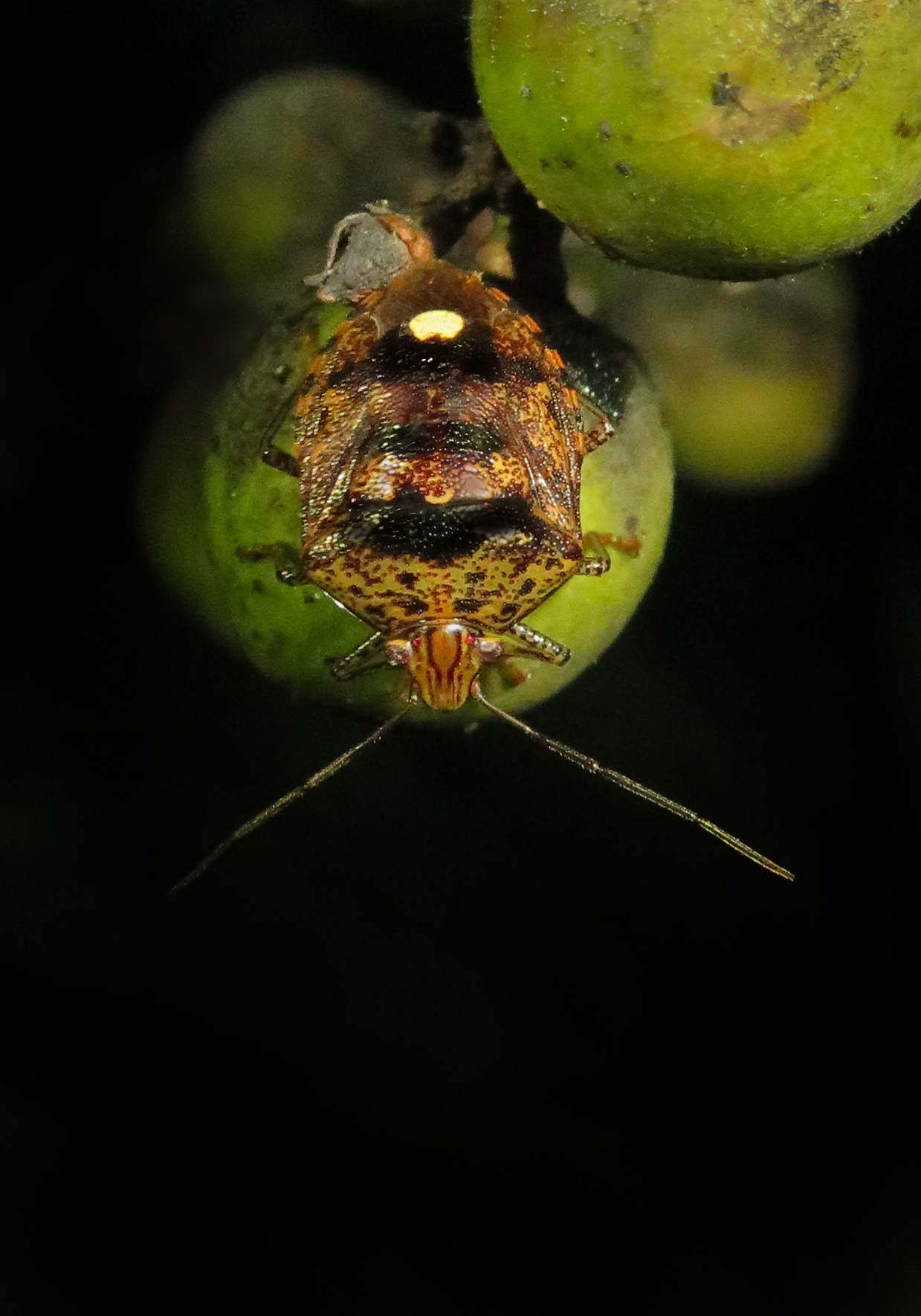
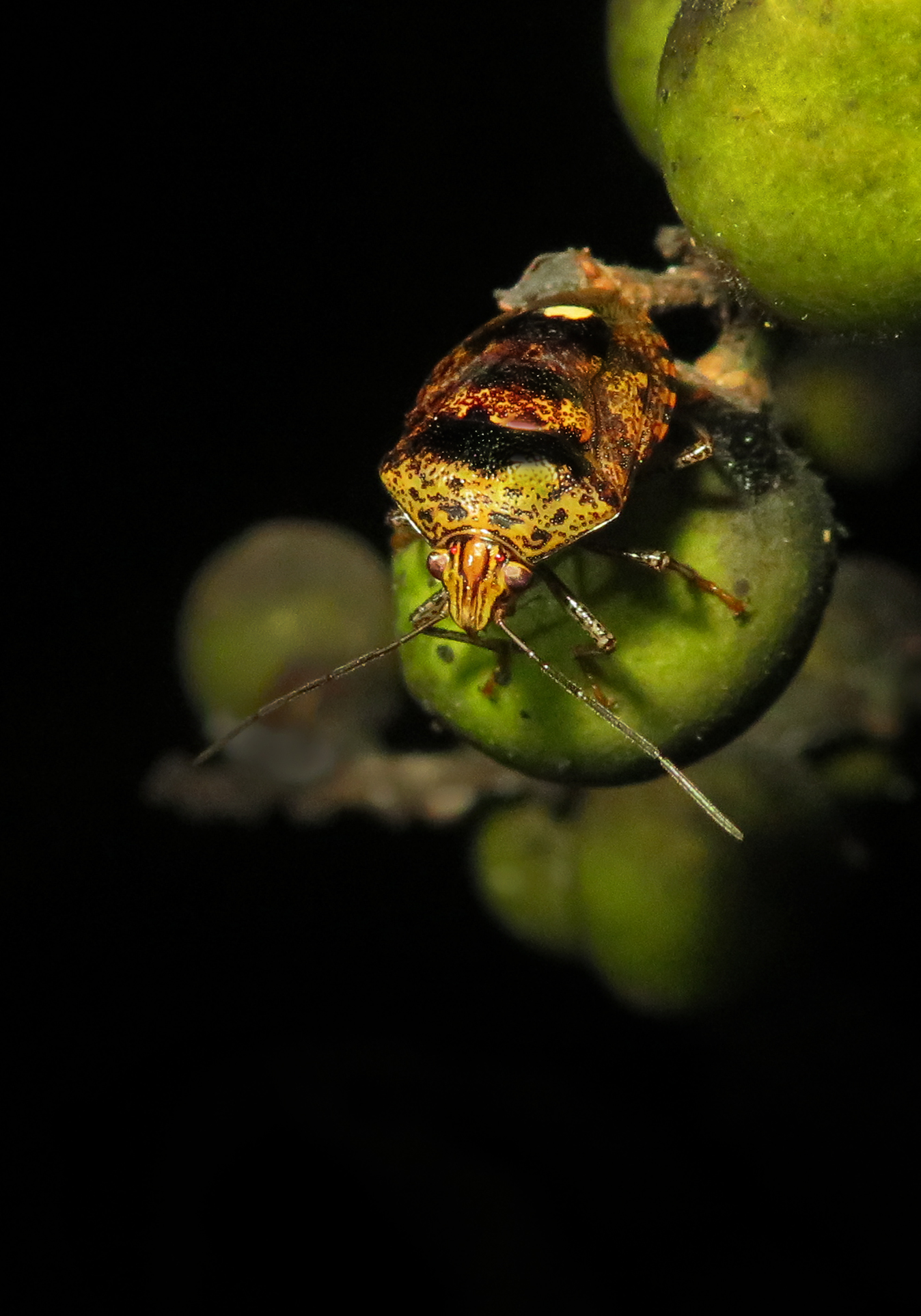
Development in Pentatomidae is hemimetabolous, with egg, nymph, and adult stages. Eggs are often laid in distinctive clusters on plant surfaces. Nymphs resemble adults in overall shape but lack wings and reproductive structures and frequently display bright or contrasting coloration in early instars, which may function as a warning signal to predators.
Pentatomidae are widely distributed across the globe and inhabit a broad range of terrestrial environments, including forests, grasslands, agricultural fields, and urban gardens. Ecologically, they play important roles as herbivores, seed feeders, and prey for other animals. Many species are economically significant, as some cause serious damage to crops and fruit trees, while others are beneficial predators used in integrated pest management.