Bali Wildlife
Every Spices Matter


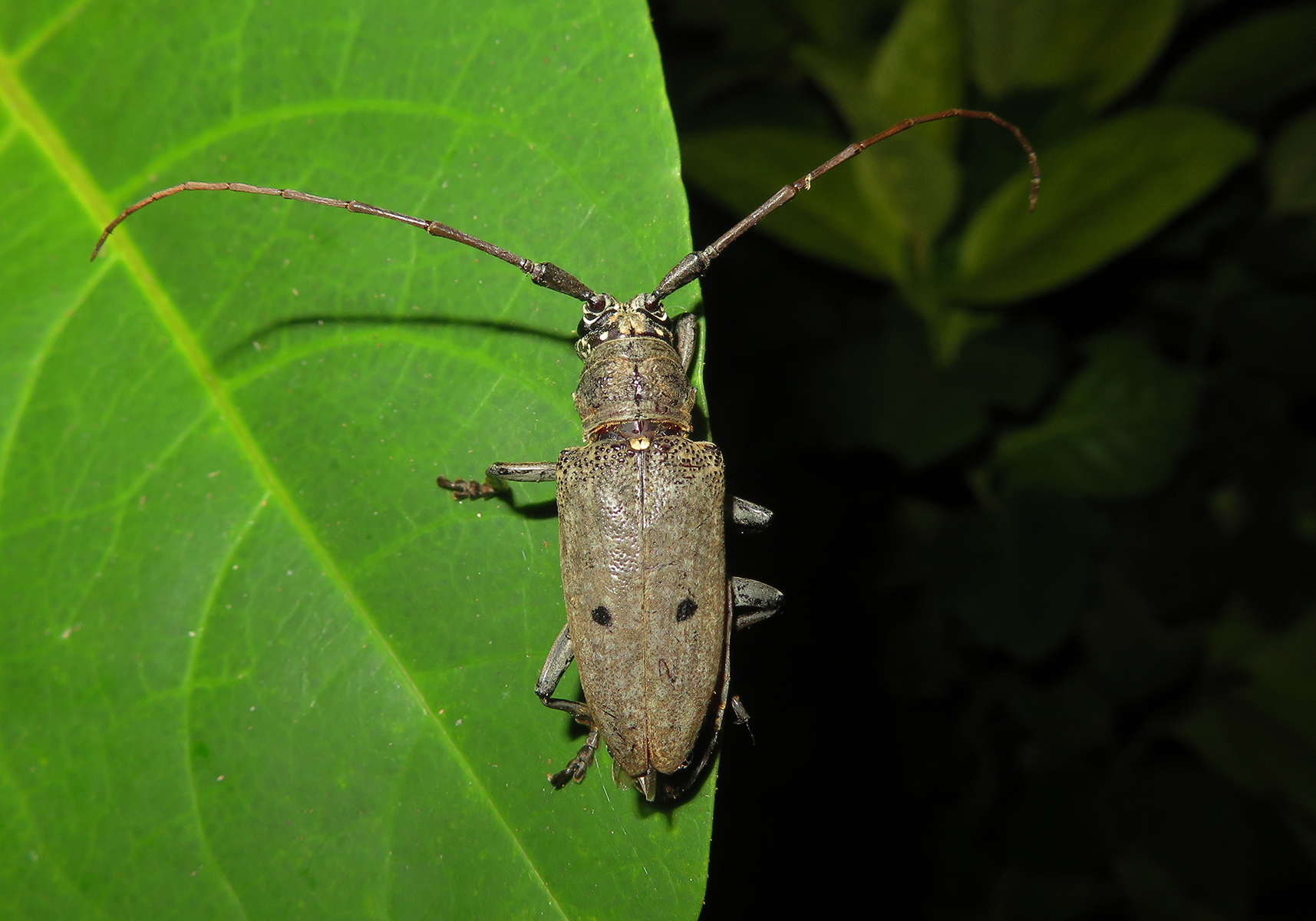
Pelargoderus bipunctatus is a species of longhorn beetle belonging to the genus Pelargoderus (Family Cerambycidae, Subfamily Prioninae, Tribe Macrotomini, Order Coleoptera). This impressive beetle is distributed in South and Southeast Asia, where it inhabits tropical and subtropical forests, woodland habitats, and areas containing mature trees and decaying wood suitable for larval development.
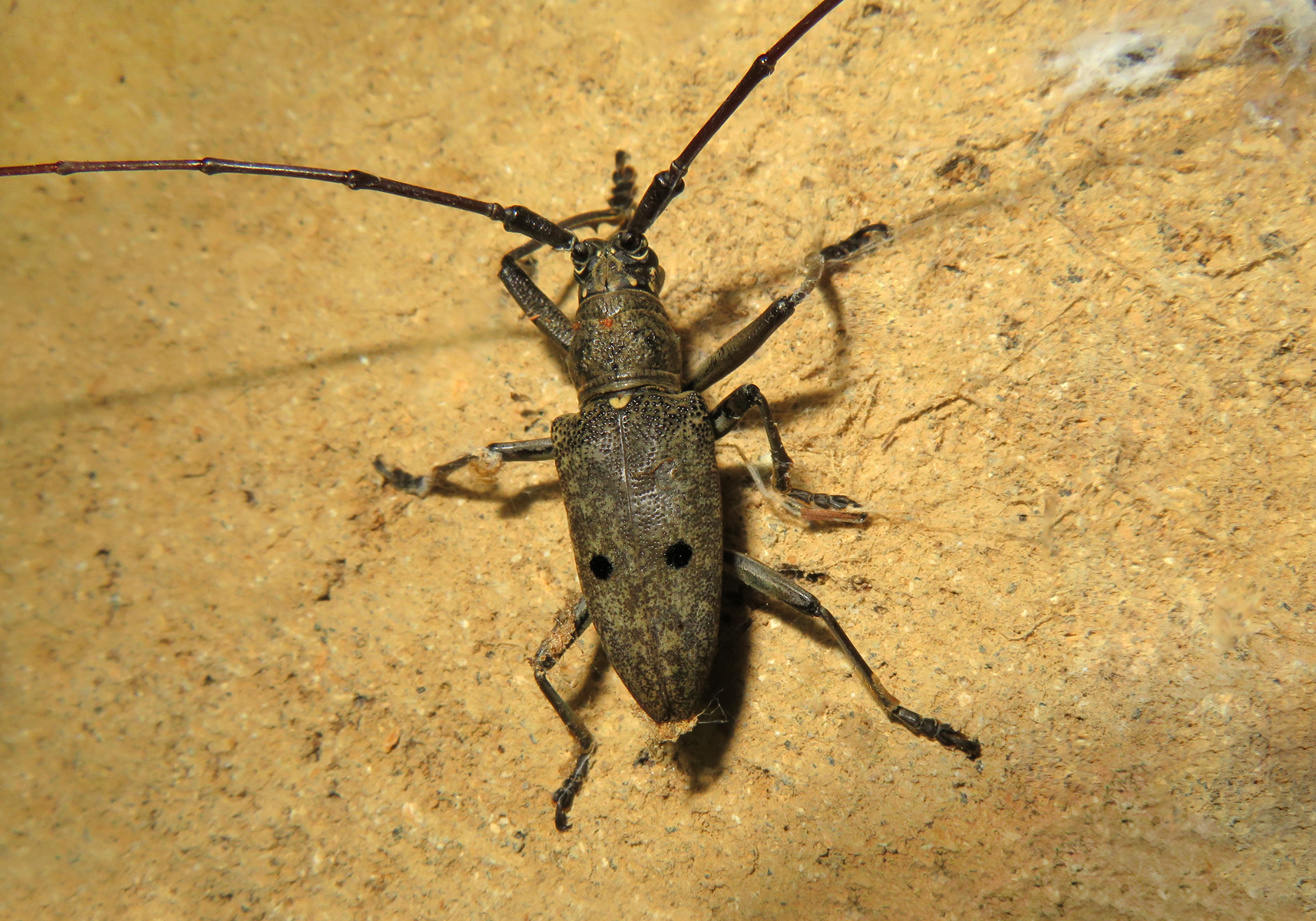
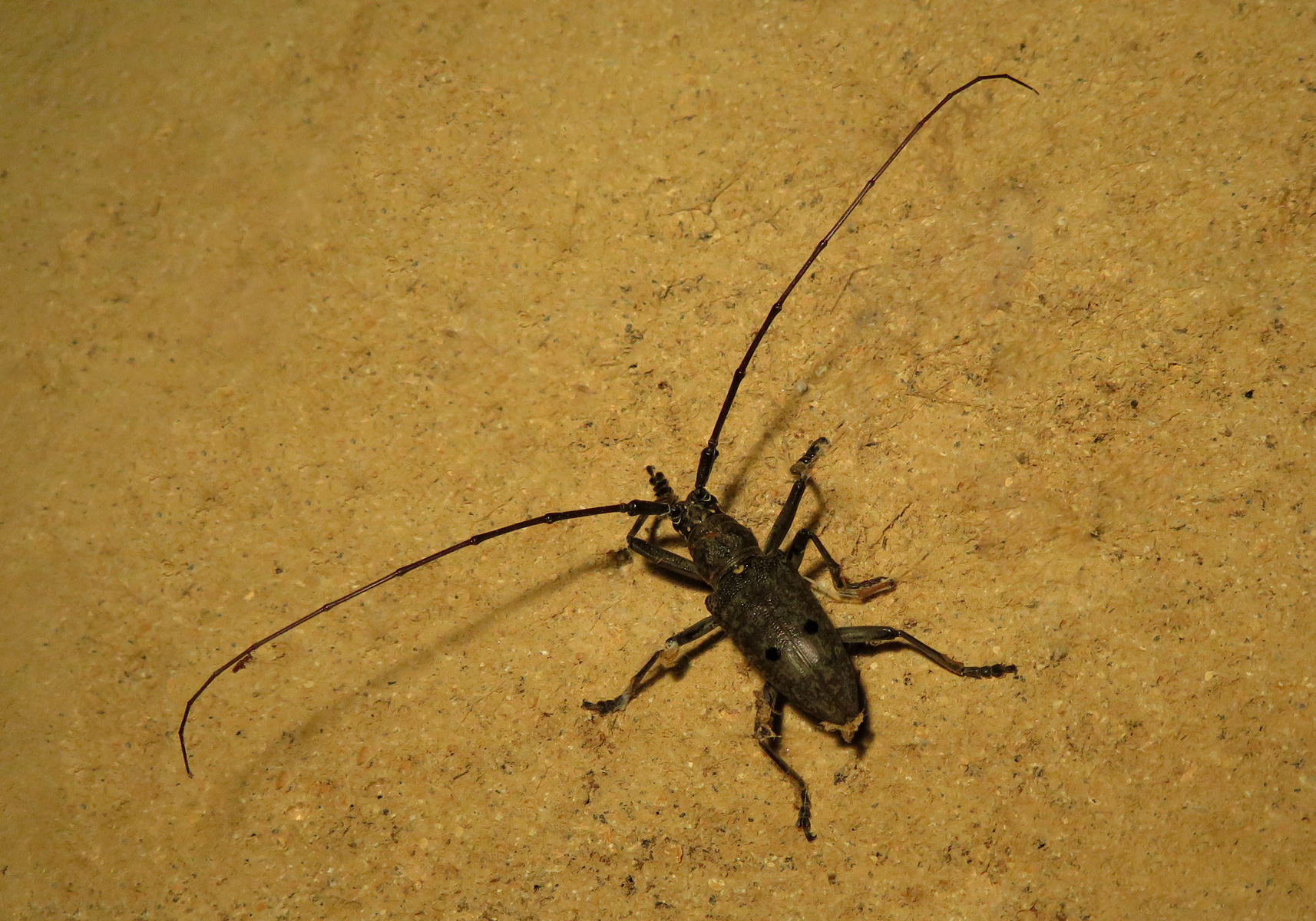
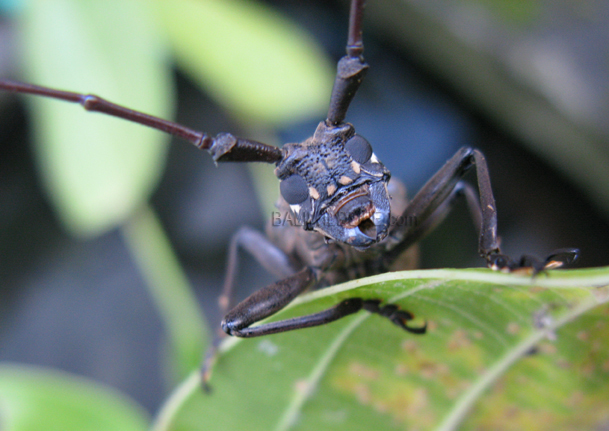
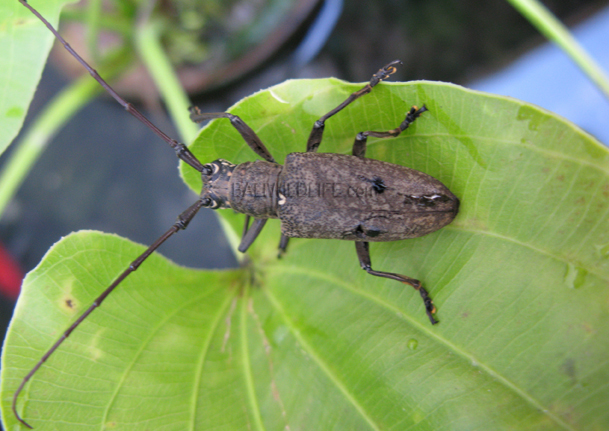
Pelargoderus bipunctatus is a large and robust beetle characterized by its elongated body, strong exoskeleton, and well-developed antennae. The body is generally dark brown to black, sometimes with reddish-brown tones, and has a glossy or slightly textured appearance. The species name bipunctatus refers to the presence of two distinctive spots or markings that may be visible on the body, depending on the individual and viewing angle.
Males are typically larger and possess longer antennae than females, a common characteristic among longhorn beetles. The mandibles are strong and adapted for feeding and interactions with other individuals. The legs are robust, allowing effective movement across bark, branches, and woody substrates.
The life cycle follows complete metamorphosis and consists of egg, larva, pupa, and adult stages. Females lay eggs in cracks, crevices, or damaged portions of wood. After hatching, the larvae bore into dead, dying, or decaying wood, where they feed and develop over an extended period that may last several years. Pupation occurs within the wood before the adult emerges.
Adults are mainly nocturnal and are often attracted to artificial lights. They are usually encountered on tree trunks, fallen logs, or near breeding sites during the warmer months. Adult feeding habits are not well documented but may include sap and other plant-derived substances.
Ecologically, Pelargoderus bipunctatus contributes to the decomposition of woody material and nutrient recycling through its larval feeding activities. The species forms part of forest food webs, serving as prey for birds, reptiles, mammals, and predatory insects. Its dependence on mature forests and deadwood habitats makes it an important component of forest biodiversity and ecosystem functioning.