

Genus Orgyia
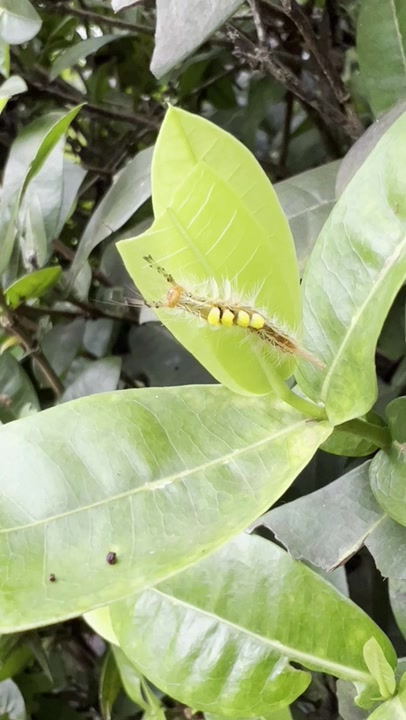
Orgyia is a genus of tussock moths in the family Erebidae, subfamily Lymantriinae, and tribe Orgyiini. The genus contains small to medium-sized moths whose larvae are particularly recognizable for their dense tufts of hair-like setae, often arranged into conspicuous brushes and pencils. Orgyia is a widely distributed genus, with species occurring across parts of the Palearctic, Nearctic, and other temperate and subtropical regions. The genus is currently accepted in major biodiversity databases, with several historically used generic names treated as synonyms.
Adult Orgyia moths are generally small to medium-sized, but their appearance varies strongly between species and sexes. A striking characteristic of the genus is sexual dimorphism. Males are usually winged, active fliers with relatively well-developed antennae, whereas females in several species have reduced wings and are flightless or nearly so. This difference produces dramatically contrasting appearances between males and females.
Winged males commonly have grayish, brown, reddish, or mottled forewings that provide camouflage when resting on bark and vegetation. Their antennae are often strongly bipectinate or feather-like, greatly increasing their surface area for detecting female pheromones. Females of species with reduced wings may have compact, heavy bodies and remain close to the site where they emerged.
The caterpillars are much more conspicuous than many of the adults. Orgyia larvae are typically covered with long, brightly contrasting setae and tufts of hairs. Some species possess prominent dorsal hair pencils, lateral tufts, or colored spots that produce a distinctive ornamental appearance. The hairs are not merely decorative: they can provide protection against predators and may make the caterpillars difficult to handle.
The dense larval hairs can also have defensive significance. The setae of some species can cause skin or mucous-membrane irritation when handled, particularly when they become detached and are dispersed into the environment. For this reason, brightly hairy Orgyia caterpillars are best observed without direct contact.
Larvae are herbivorous, feeding on leaves of trees, shrubs, and other plants. Host range varies considerably among species, and some Orgyia caterpillars are polyphagous, feeding on numerous plant species. Others show stronger associations with particular groups of woody plants. Their feeding can be important in forest ecosystems, although most populations remain at levels where their effects are limited.
One well-known member is Orgyia antiqua, the rusty tussock moth, which has a broad distribution across the Northern Hemisphere. Another is Orgyia leucostigma, the white-marked tussock moth of North America. These species illustrate the characteristic combination of hairy larvae, strong sexual dimorphism, and plant-feeding behavior found in the genus.
The genus includes species associated with a wide range of temperate and subtropical habitats, including deciduous and mixed forests, woodland edges, shrublands, gardens, parks, orchards, and other areas supporting suitable host plants. Some species tolerate considerable habitat disturbance and can occur in urban and suburban landscapes.
Adult males are generally active fliers, particularly when searching for females. Their highly sensitive feathery antennae detect female sex pheromones from considerable distances. Females with reduced wings are often comparatively sedentary and may remain near their pupal cocoon after emergence, attracting males through pheromone signals.
Reproduction is unusual compared with many other moths because of the extreme sexual dimorphism in some species. After mating, the female lays eggs, often on or around the pupal cocoon, providing a convenient protected site for the next generation. The eggs subsequently overwinter in some temperate species, with larvae emerging when suitable host foliage becomes available.
The life cycle follows complete metamorphosis, progressing through egg, several larval instars, pupa, and adult. Larvae pass through successive molts as they increase in size and develop their characteristic hair tufts. Pupation generally occurs in a silken cocoon constructed on vegetation, bark, or another protected surface.
Taxonomically, Orgyia has a complex history. Several names have historically been used for species now placed in the genus, including Hemerocampa and Teia, while other names have been treated as synonyms or historical combinations. Modern biodiversity databases recognize Orgyia as an accepted genus within Orgyiini.
Ecologically, Orgyia species function primarily as foliage-feeding herbivores during their larval stage. Their caterpillars convert plant biomass into insect biomass and provide food for birds, predatory insects, parasitoid wasps, spiders, and other predators. Adults, particularly males, participate in the reproductive transfer of energy and are also incorporated into food webs.
Some species can become forest or ornamental-plant pests when larval populations become unusually abundant. Heavy infestations may cause substantial defoliation of host trees and shrubs, particularly when several generations or favorable environmental conditions allow populations to increase. Nevertheless, outbreaks are often localized and naturally regulated by predators, parasitoids, pathogens, and environmental conditions.
Overall, Orgyia is a distinctive genus of tussock moths characterized by strikingly hairy caterpillars, strong sexual dimorphism, pheromone-seeking winged males, and plant-feeding larvae. Its unusual reproductive biology and conspicuous larval morphology make it one of the more recognizable lineages of Lymantriinae, while its diverse host-plant associations connect the genus closely with forest and woodland ecosystems.