

Tribe Oecophyllini
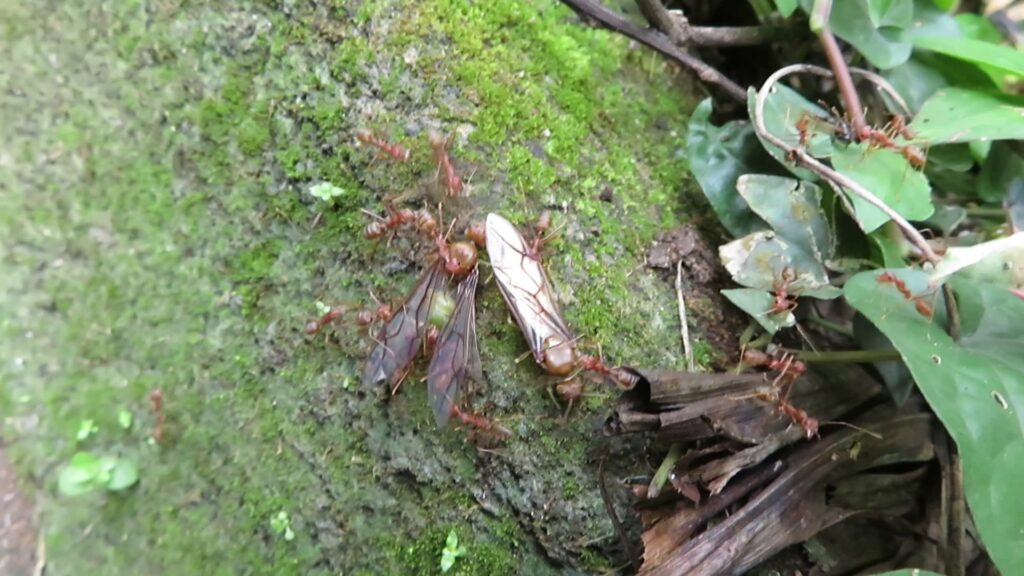
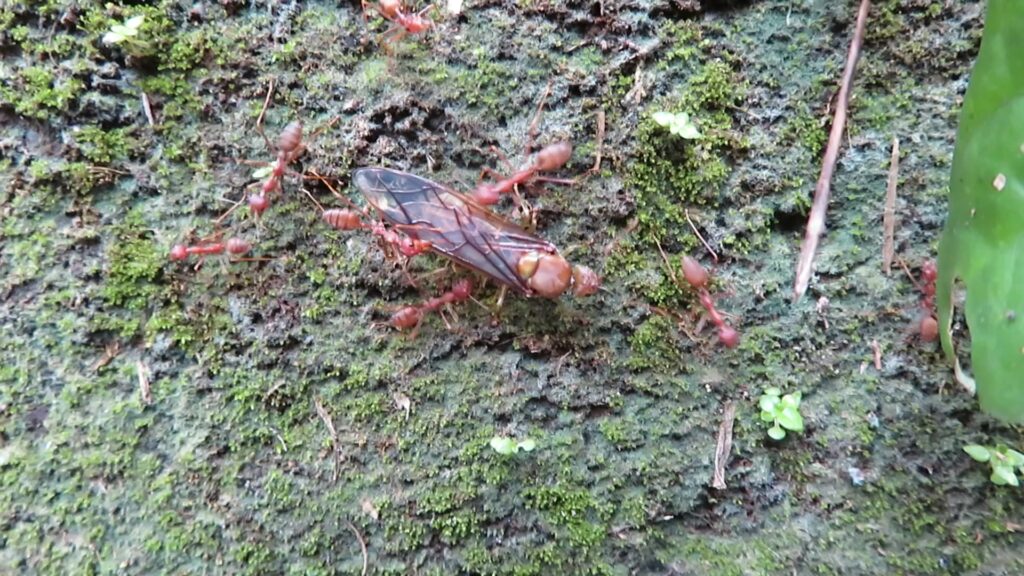
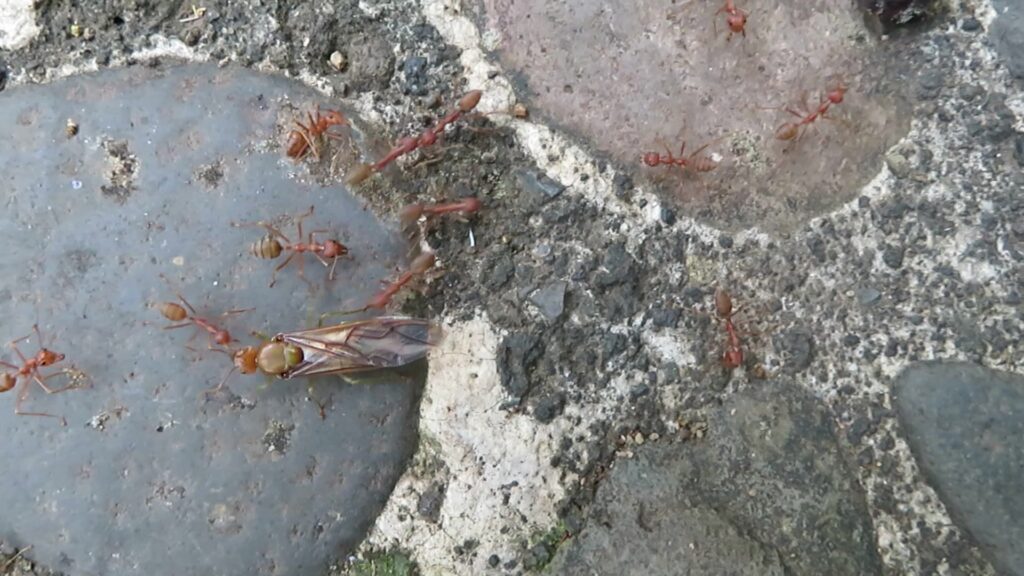
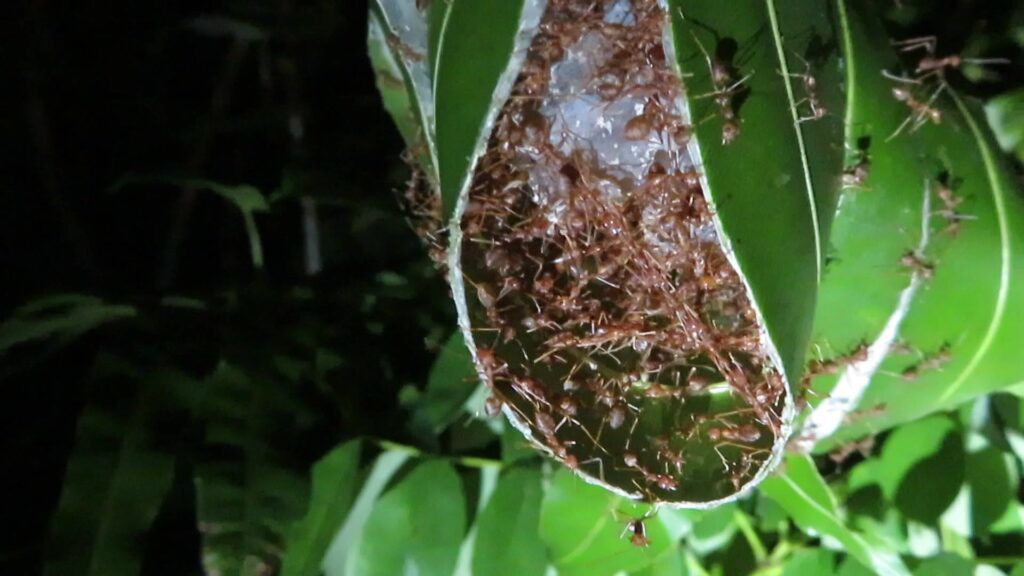
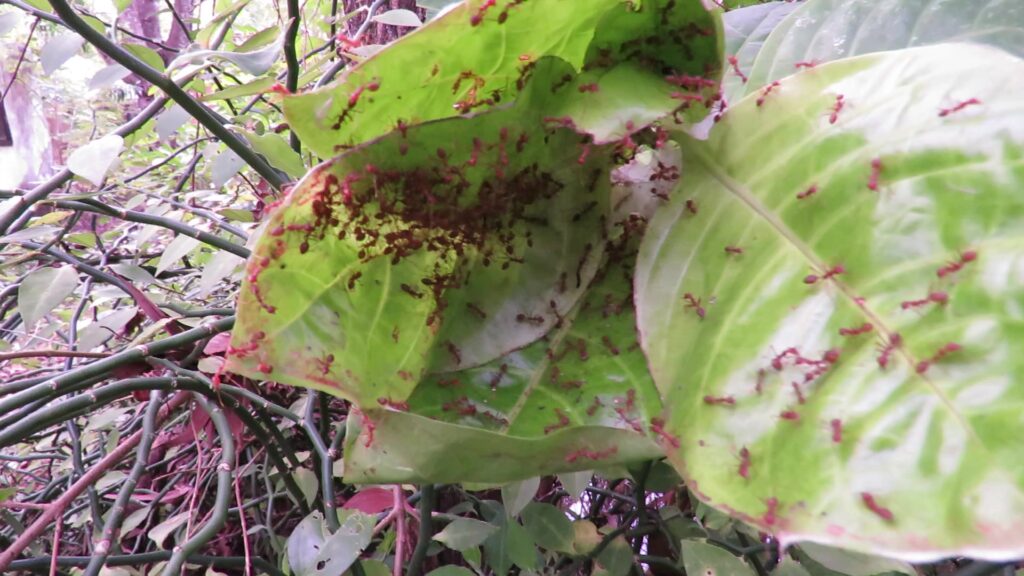
The tribe Oecophyllini is a group of ants within the subfamily Formicinae, family Formicidae, best known for its association with arboreal life and the remarkable nest-building behavior of weaver ants. Its best-known and living representative is the genus Oecophylla, which includes the Asian weaver ant (Oecophylla smaragdina) and the African weaver ant (Oecophylla longinoda). These ants are prominent inhabitants of tropical forests, woodlands, orchards, and agricultural landscapes, where they establish colonies in trees and shrubs. Their ability to construct nests from living leaves, combined with their highly coordinated social behavior, makes them among the most distinctive ants in tropical ecosystems.
Members of Oecophyllini are characterized by their adaptations for climbing, hunting, and nesting in vegetation. Weaver ants typically have elongated bodies, long legs, and powerful mandibles that help them capture prey, defend territories, and manipulate leaves during nest construction. Their coloration commonly ranges from yellowish orange to reddish brown, sometimes with darker portions of the abdomen. Workers possess strong sensory antennae that detect chemical signals, food sources, and movements in their surroundings. As in other ants, the colony is organized into reproductive individuals and workers, with workers performing most tasks related to foraging, brood care, nest construction, and defense.
The most distinctive characteristic associated with this group is the construction of nests by binding living leaves together. When a colony establishes a new nest or expands an existing one, workers cooperate to pull neighboring leaves into position, sometimes forming chains by gripping one another with their mandibles and legs. Other workers then carry ant larvae to the leaf margins. The larvae produce silk from their labial glands, and workers guide them across the surfaces of the leaves, using the silk to fasten the leaves together. Unlike spiders, which produce their own silk, weaver ants rely on their larvae as living silk-producing tools. The resulting nests form enclosed shelters that protect the colony’s brood and provide a relatively stable microenvironment.
Oecophyllini ants are primarily associated with tropical and subtropical regions of the Old World. The genus Oecophylla occurs naturally in Africa, South Asia, Southeast Asia, and parts of Australia and nearby islands, although the distributions of its individual species differ. The Asian weaver ant is widespread across tropical Asia and the Indo-Australian region, while the African weaver ant occurs across parts of sub-Saharan Africa. These ants generally favor areas with sufficient trees or shrubs to support interconnected nests and provide abundant prey. They are particularly common in forest edges, plantations, orchards, and other habitats with a continuous or closely spaced canopy.
The social organization of weaver ants is highly developed. Colonies may contain numerous workers distributed among multiple nests within a shared territory. Workers communicate primarily through chemical pheromones and tactile signals, enabling them to coordinate foraging, recruit nestmates to food, and respond rapidly to threats. Their colonies often display pronounced territorial behavior, aggressively defending food resources and nesting trees against competing ants and other animals. When disturbed, workers may bite intruders with their mandibles and spray formic acid as a defensive chemical. This combination of coordinated aggression and rapid recruitment allows a colony to defend a large area of vegetation despite the small size of individual workers.
Weaver ants are active predators and scavengers that feed on a variety of arthropods, including caterpillars, flies, beetles, termites, spiders, and other ants. Workers patrol leaves, branches, and trunks in search of prey, often using coordinated attacks to overpower larger insects. They may also consume sugary secretions produced by sap-feeding insects such as aphids, scale insects, and certain treehoppers. This relationship can create ecological trade-offs: the ants may protect honeydew-producing insects from predators and parasitoids in exchange for access to their sugary secretions. Their feeding behavior therefore influences both the abundance of other arthropods and the structure of insect communities in trees.
Reproduction follows the general social pattern of ants. Colonies contain one or more reproductive queens depending on the species and colony structure, while workers are typically non-reproductive females. During reproductive periods, winged males and virgin queens leave their natal colonies for mating flights. After mating, a queen establishes a new colony, initially raising her first brood before workers take over most foraging, nest construction, and brood-care duties. As the colony grows, workers construct additional leaf nests and expand their foraging territory. The timing of reproduction and colony development depends on climate, food availability, and local environmental conditions.
Ecologically, weaver ants are influential predators in the canopy of tropical forests and agricultural systems. By consuming herbivorous insects, they can reduce damage to leaves, flowers, and developing fruits. Their territorial activity can also exclude other arthropod predators and competitors from occupied trees. In some ecosystems, their presence contributes to complex interactions among ants, plants, herbivores, and other predators. Although they do not directly pollinate most plants, their movement across vegetation and their effects on insect populations can influence broader ecological processes.
Weaver ants are particularly important in tropical agriculture because some species are used as biological control agents. Farmers in parts of Asia and Africa have historically encouraged colonies in citrus, mango, cashew, and other tree crops to reduce populations of insect pests. Their ability to patrol foliage continuously can make them effective against certain caterpillars and fruit-damaging insects, potentially reducing the need for chemical pesticides. However, their usefulness depends on the crop, pest species, and local conditions. Their aggressive behavior can make harvesting difficult, and their protection of honeydew-producing insects may sometimes increase pest problems. Effective management therefore requires balancing their benefits against these potential disadvantages.
Despite their ecological importance, weaver ants can be affected by habitat destruction, pesticide exposure, and the removal of trees that support their nests. Intensive insecticide use may directly kill workers or reduce the prey populations on which colonies depend. The loss of connected tree cover can also limit opportunities for nest construction and foraging. In agricultural landscapes, maintaining suitable vegetation and minimizing unnecessary pesticide use can help preserve their ecological functions. Their abundance and conspicuous activity make them useful organisms for studying tropical food webs, social behavior, and biological control.
The tribe Oecophyllini illustrates the extraordinary complexity of social life among ants. Through cooperative nest construction, chemical communication, collective hunting, and territorial defense, weaver ants transform individual actions into effective colony-level behavior. Their leaf nests are striking examples of animal architecture, while their predatory habits make them important participants in tropical ecosystems. Although their aggressive defense can make them challenging neighbors for humans, their role in controlling insect populations and supporting ecological interactions gives them considerable biological and agricultural significance.