Bali Wildlife
Every Spices Matter


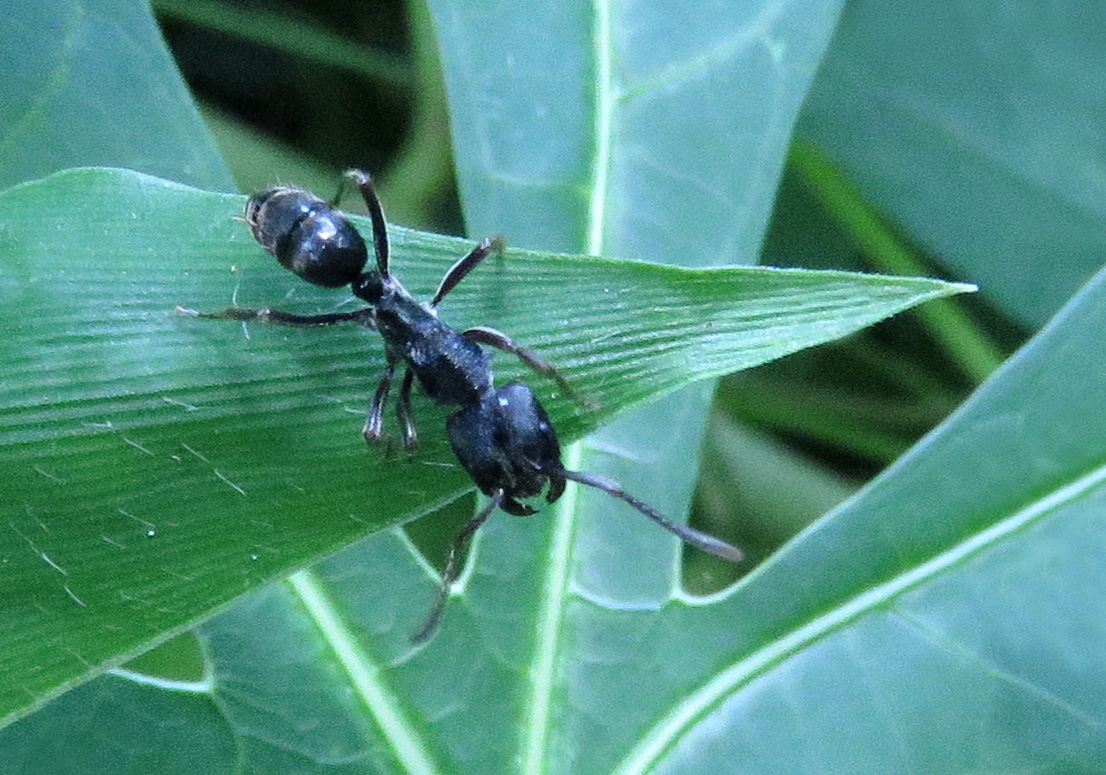
Odontoponera is a genus of predatory ants within the tribe Ponerini (Subfamily Ponerinae, Family Formicidae, Order Hymenoptera). The genus is native to Southeast Asia, where it is commonly encountered in forested landscapes, plantations, gardens, and disturbed habitats.
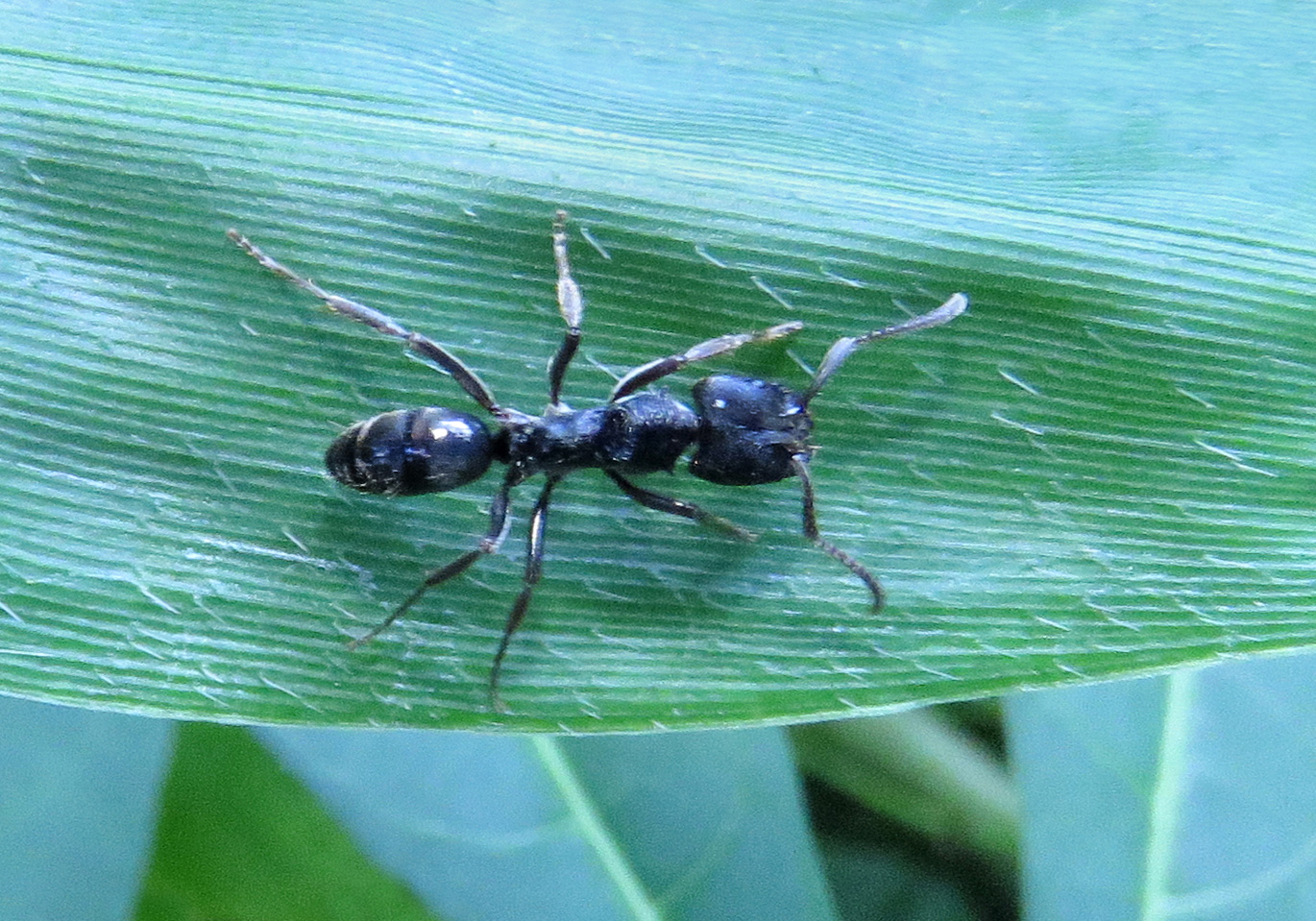
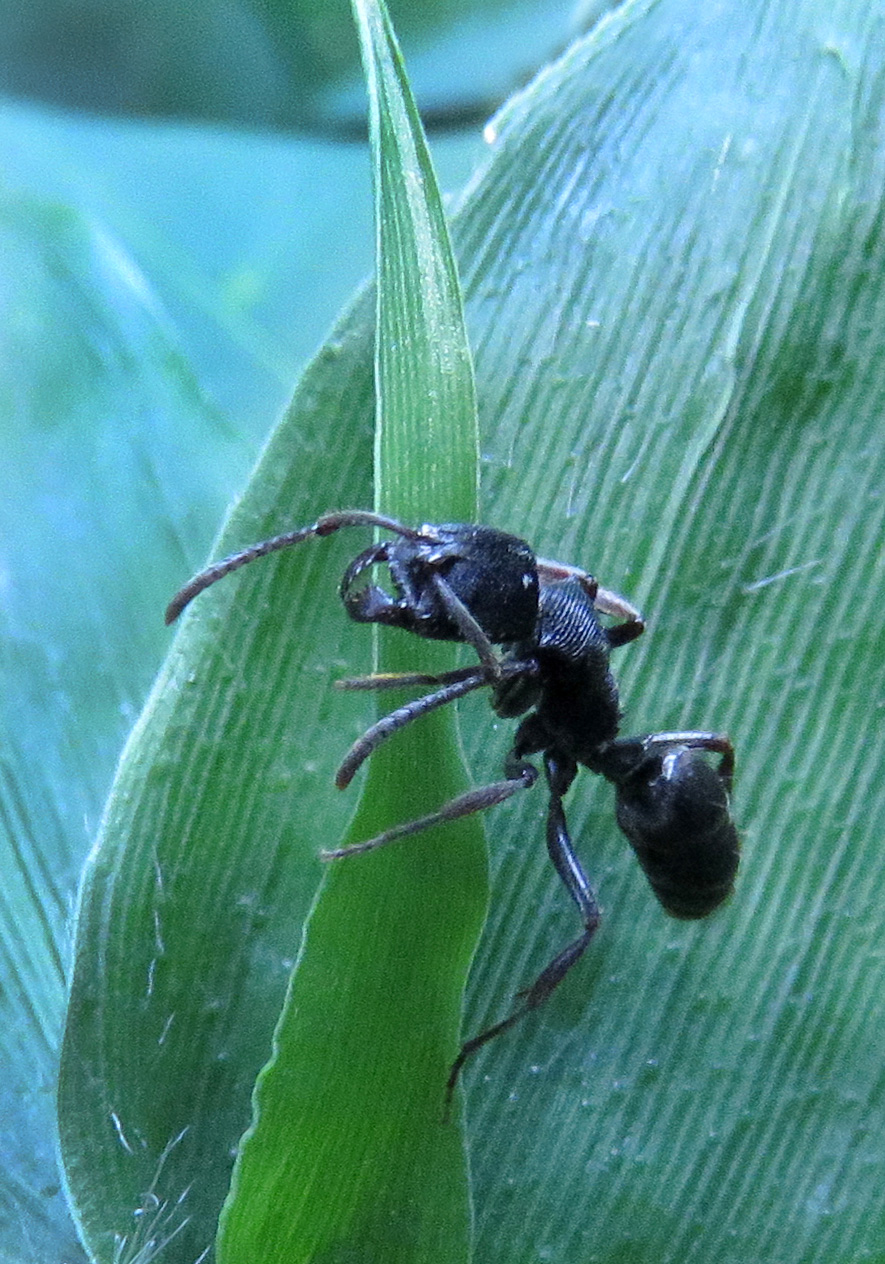
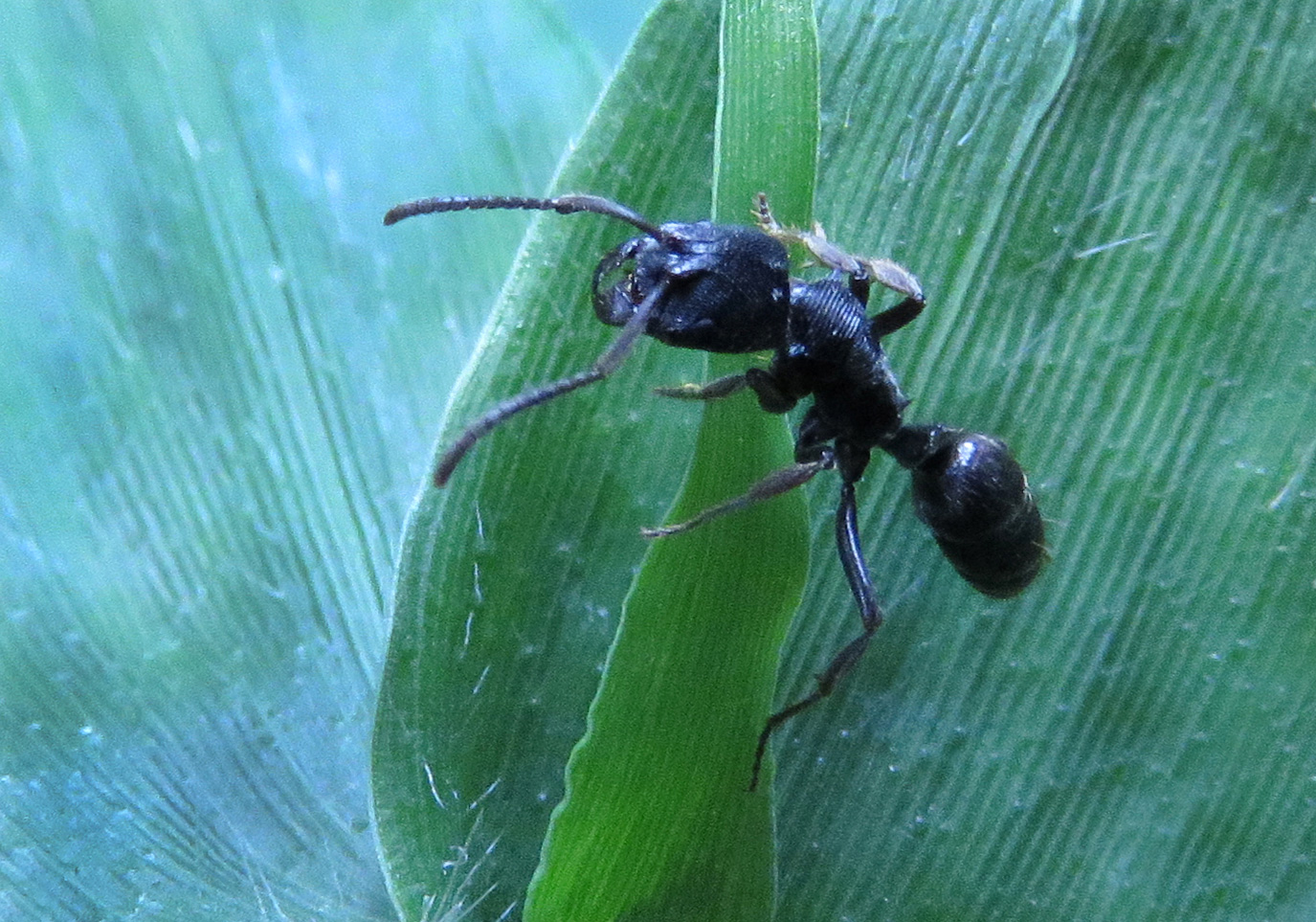
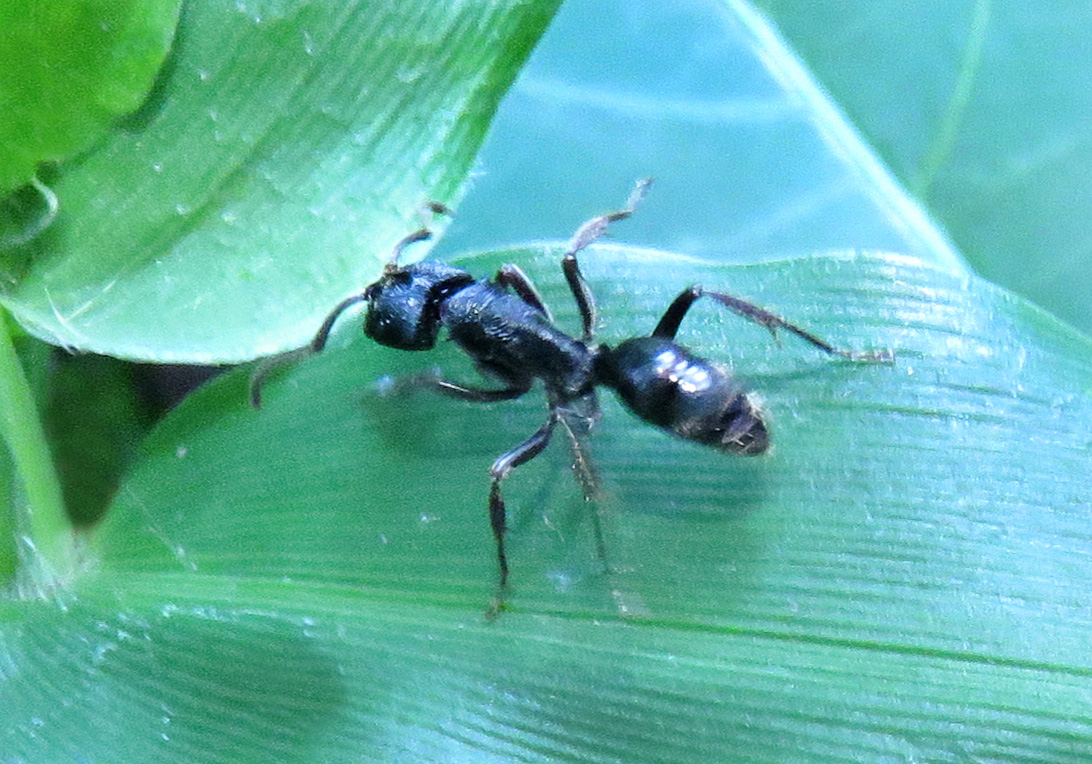
Species of Odontoponera are medium to large-sized ants with a robust and glossy body. They are typically dark brown to black in coloration. The head is broad with powerful mandibles bearing prominent teeth, reflecting the genus name and its predatory lifestyle. Antennae are geniculate, and the eyes are well developed, indicating reliance on visual as well as chemical cues.
A distinctive feature of Odontoponera is the strongly sculptured exoskeleton, often with coarse punctation or ridging on the head and mesosoma. The petiole consists of a single, thick node, and the gaster is smooth and oval. Like other ponerine ants, Odontoponera possesses a functional stinger connected to venom glands used for subduing prey and for defense.
Behaviorally, Odontoponera species are active, solitary foragers, preying on a wide range of arthropods and small invertebrates. Workers are often seen foraging on the ground during the day and are known for their aggressive behavior when disturbed. Colonies are relatively small compared to more derived ant groups and are usually established in soil, under stones, or at the base of vegetation.
Reproduction follows the typical ponerine pattern, with winged males and queens, holometabolous development, and haplodiploid sex determination. Social structure is comparatively simple, with little worker polymorphism.
The genus Odontoponera is a characteristic representative of tropical Asian Ponerini, distinguished by its powerful mandibles, aggressive predatory behavior, and adaptability to both natural and human-modified environments.