

Demon Butterflies (Genus Notocrypta)

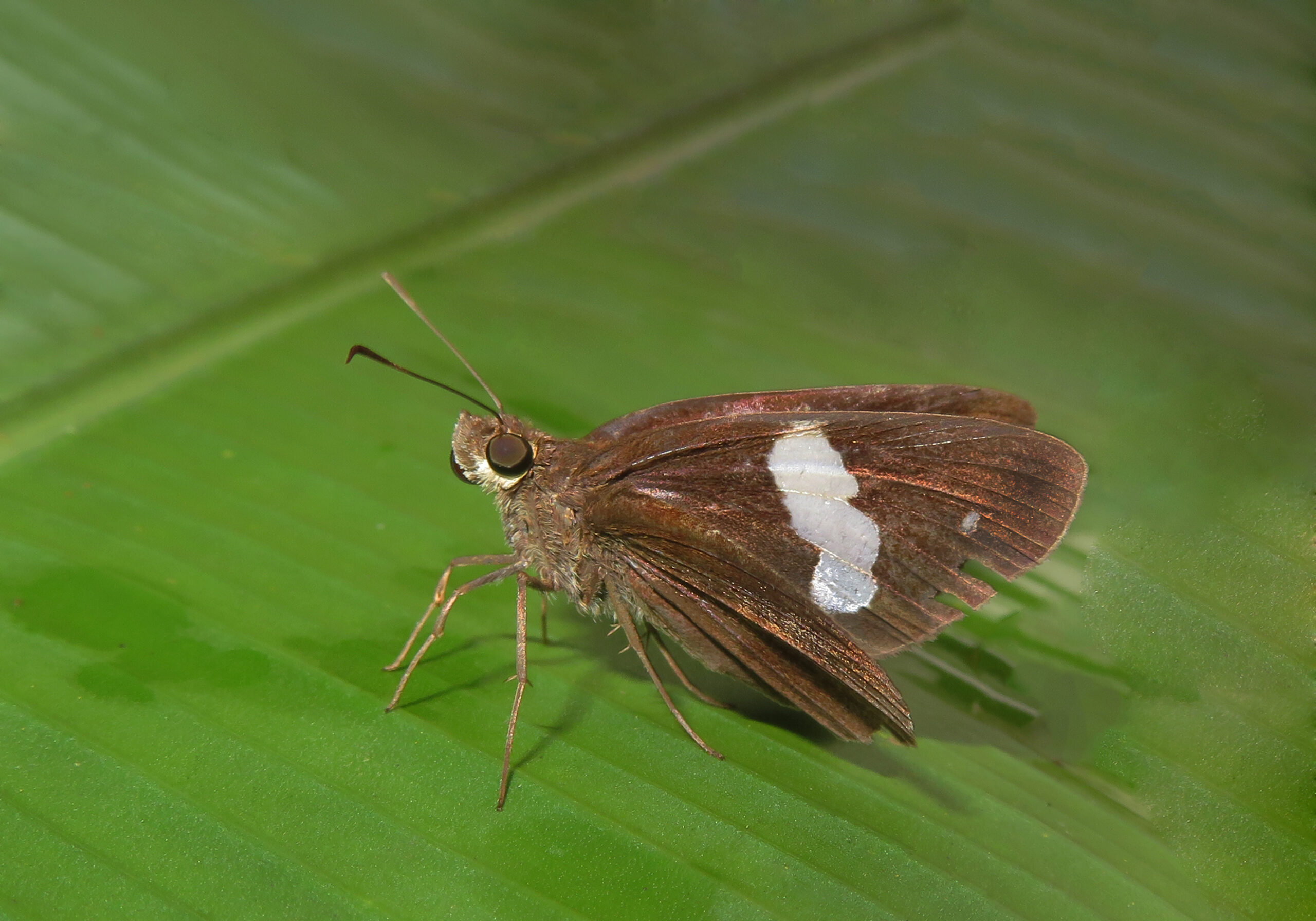
Notocrypta is a genus of grass skippers within the tribe Erionotini (Subfamily Hesperiinae, Family Hesperiidae, Superfamily Papilionoidea, Order Lepidoptera). Species of this genus are distributed throughout South Asia, Southeast Asia, southern China, Taiwan, and parts of the Indo-Pacific region. They are primarily associated with tropical and subtropical forests, forest edges, bamboo thickets, shaded gardens, plantations, and streamside vegetation, where their larval host plants are abundant.
Butterflies of the genus Notocrypta are generally medium-sized skippers characterized by a robust body, broad forewings, and the distinctive hooked antennae typical of the family Hesperiidae. Their wings are predominantly dark brown to black, often marked with conspicuous white, cream, or translucent spots and bands on the forewings. The underside is usually paler with additional markings that provide camouflage when the butterflies rest beneath leaves.
Adults are diurnal and are fast, agile fliers that move rapidly through shaded forest understories and along woodland paths. They frequently visit flowers to feed on nectar using their long, coiled proboscis and may also obtain nutrients from damp soil, tree sap, or decaying organic matter. Males commonly engage in mud-puddling, gathering on moist ground to acquire essential minerals.
The life cycle follows complete metamorphosis, consisting of egg, larva (caterpillar), pupa (chrysalis), and adult stages. Females lay eggs singly on suitable host plants. The caterpillars are smooth-bodied with a relatively large head and construct characteristic leaf shelters by folding or rolling leaves together with silk. Most species feed on monocotyledonous plants, particularly members of the families Zingiberaceae, Costaceae, and related groups. Pupation occurs within the protective leaf shelter.
The genus includes several well-known species, such as Notocrypta curvifascia, Notocrypta paralysos, Notocrypta feisthamelii, and Notocrypta clavata. Although generally inconspicuous because of their dark coloration and rapid flight, these butterflies are regular inhabitants of shaded tropical forests and forest margins.
Ecologically, Notocrypta butterflies contribute to pollination through nectar feeding and participate in plant–herbivore interactions during the larval stage. Their caterpillars and adults serve as prey for birds, reptiles, spiders, predatory insects, and parasitoids, making them important components of tropical forest food webs. Their close association with intact forest habitats and specialized host plants also makes them useful indicators of habitat quality and regional biodiversity.