Bali Wildlife
Every Spices Matter


Nerioidea is a superfamily within the zoosubsection Acalyptratae (Zoosection Schizophora, Infraorder Cyclorrhapha, Order Diptera). It comprises a group of slender, long-legged flies that are generally associated with vegetation, decaying organic matter, and humid environments. Members of Nerioidea are distributed worldwide, with the greatest diversity occurring in tropical and subtropical regions.
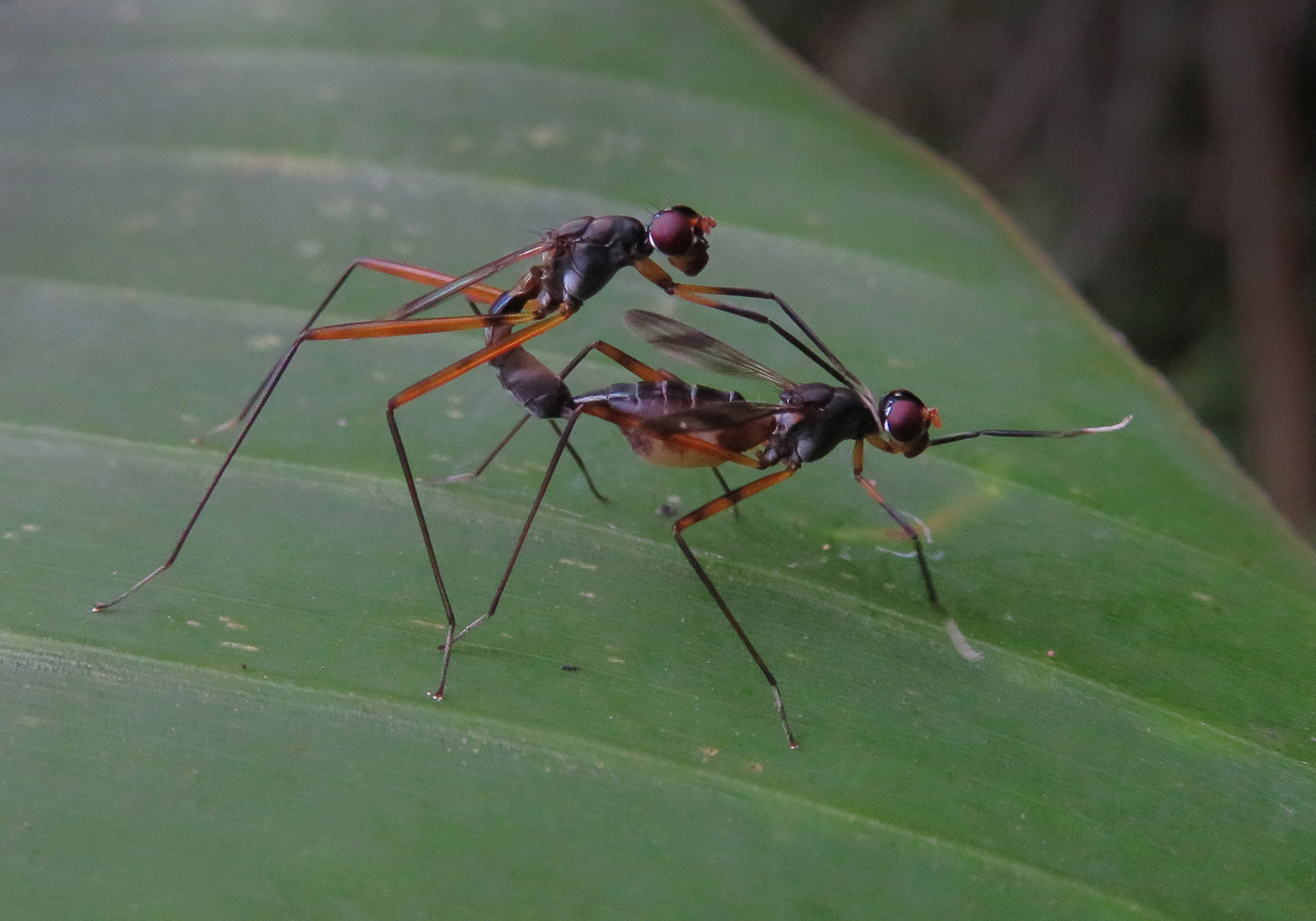
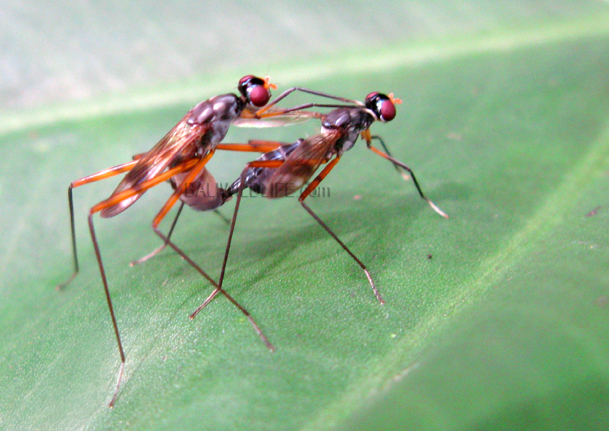
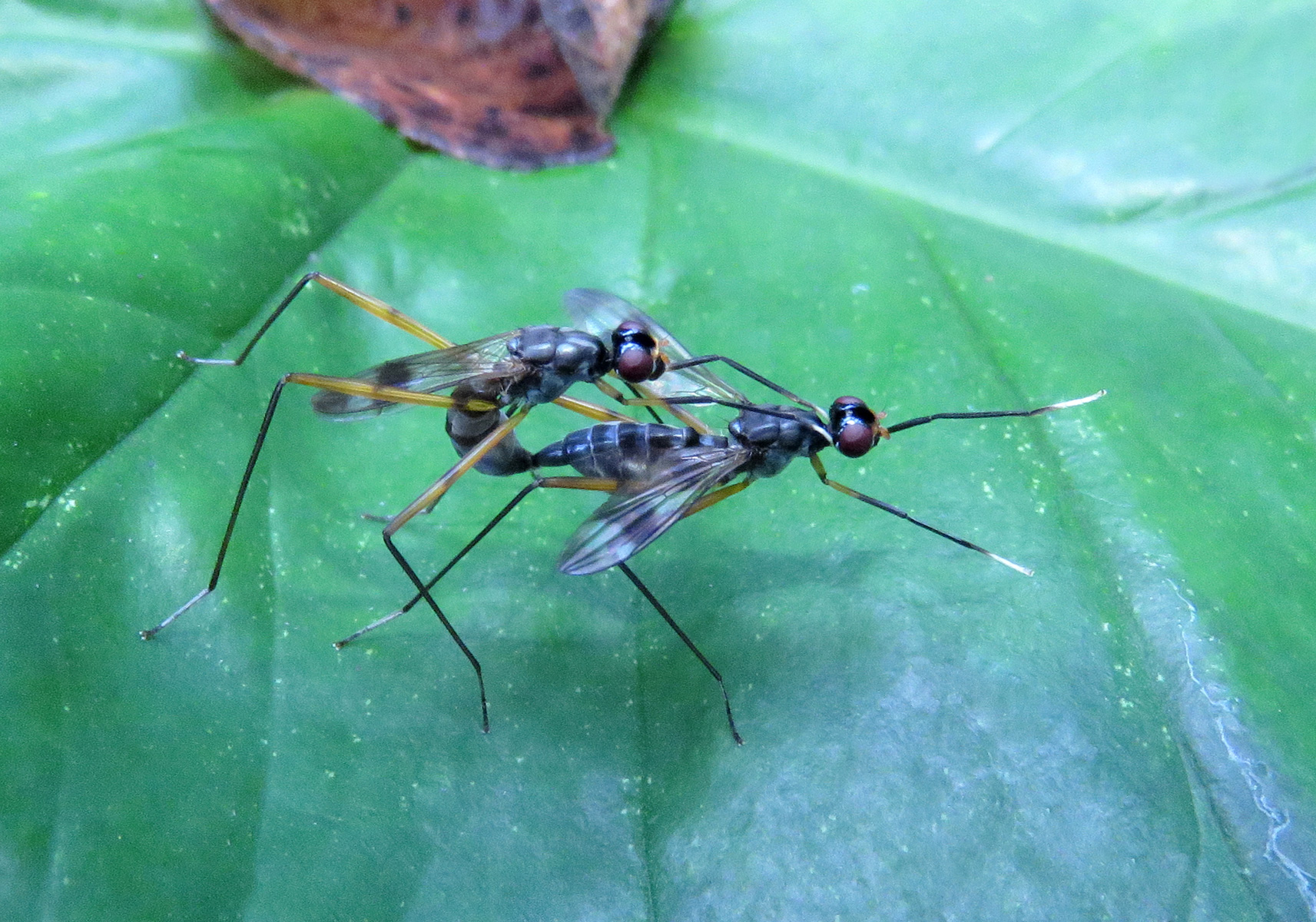
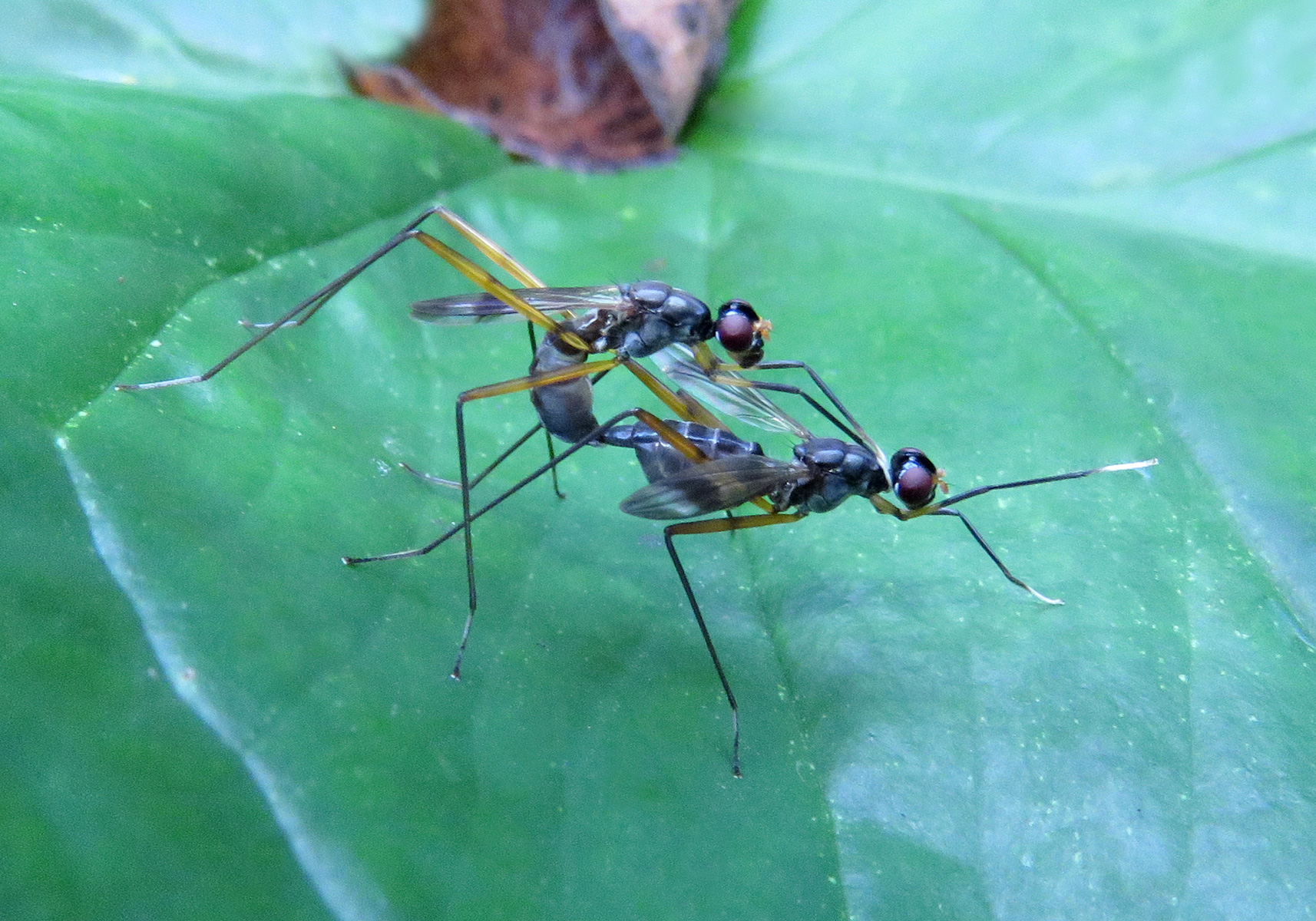
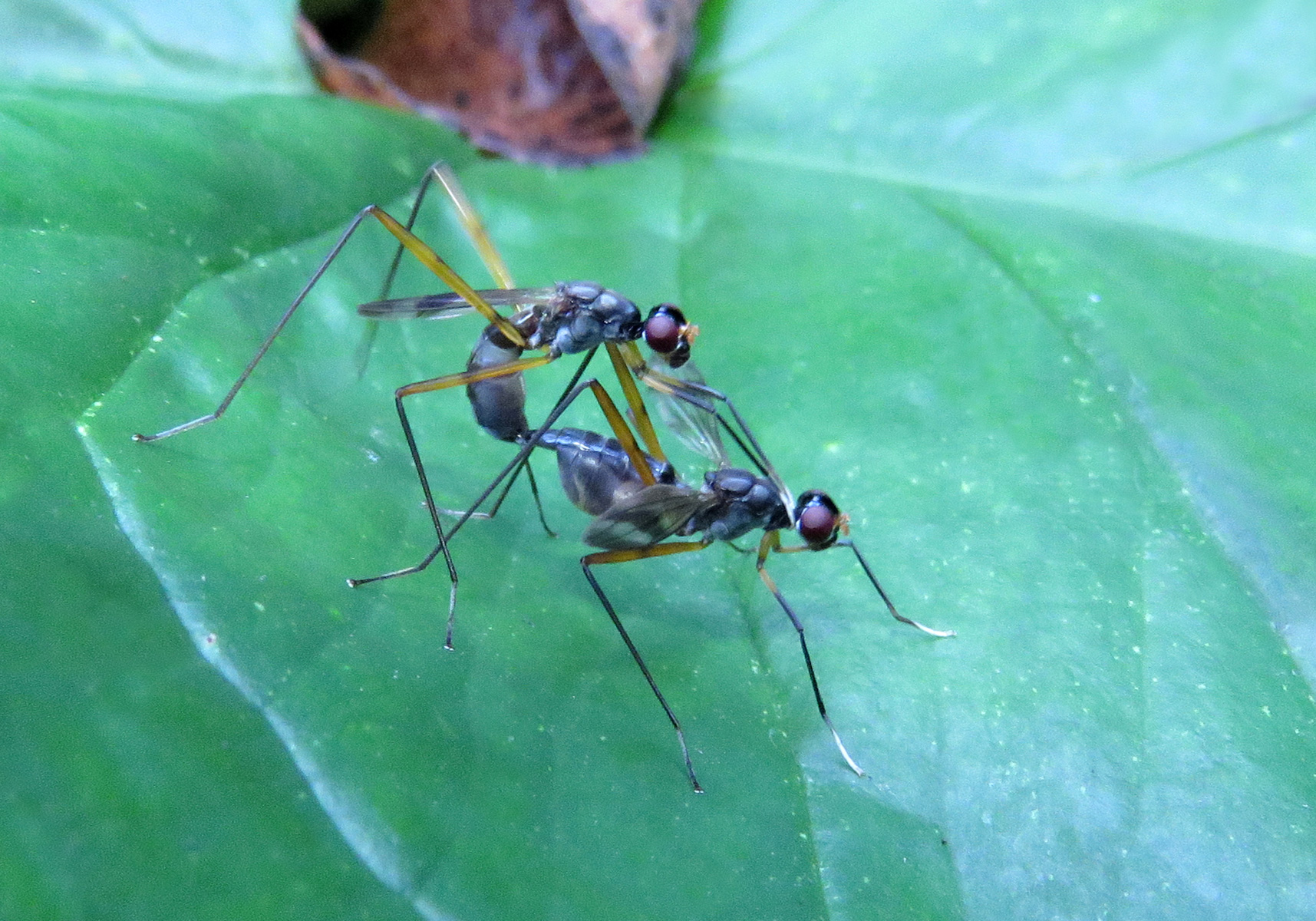
Flies of Nerioidea are typically characterized by an elongated body, long legs, and a somewhat delicate appearance. The head is often small with relatively large compound eyes, and the antennae are short with an arista. Many species exhibit unusual postures, sometimes holding their bodies or legs in a raised or angled position. In some families, such as Micropezidae, individuals resemble ants or wasps, providing protection through mimicry.
Wings are usually clear or lightly marked and are held flat over the abdomen when at rest. As acalyptrate flies, members of Nerioidea lack well-developed calypters. The overall body form is adapted for movement on vegetation or on the ground in search of food.
The life cycle involves complete metamorphosis. Larvae are typically found in decaying plant material, rotting wood, compost, or other organic substrates, where they feed on decomposing matter and microorganisms. Some species may have more specialized larval habitats, depending on their ecological niche.
The superfamily includes families such as Neriidae (banana stalk flies) and Micropezidae (stilt-legged flies). These families vary in behavior and morphology but share the general slender body form and association with organic substrates.
Ecologically, Nerioidea plays a role in decomposition and nutrient cycling through the activity of their larvae. Adults are often found on vegetation or near decaying material and may feed on plant exudates, decaying substances, or other organic resources. Although generally not economically important, they contribute to ecosystem processes and biodiversity, particularly in tropical environments.