Bali Wildlife
Every Spices Matter


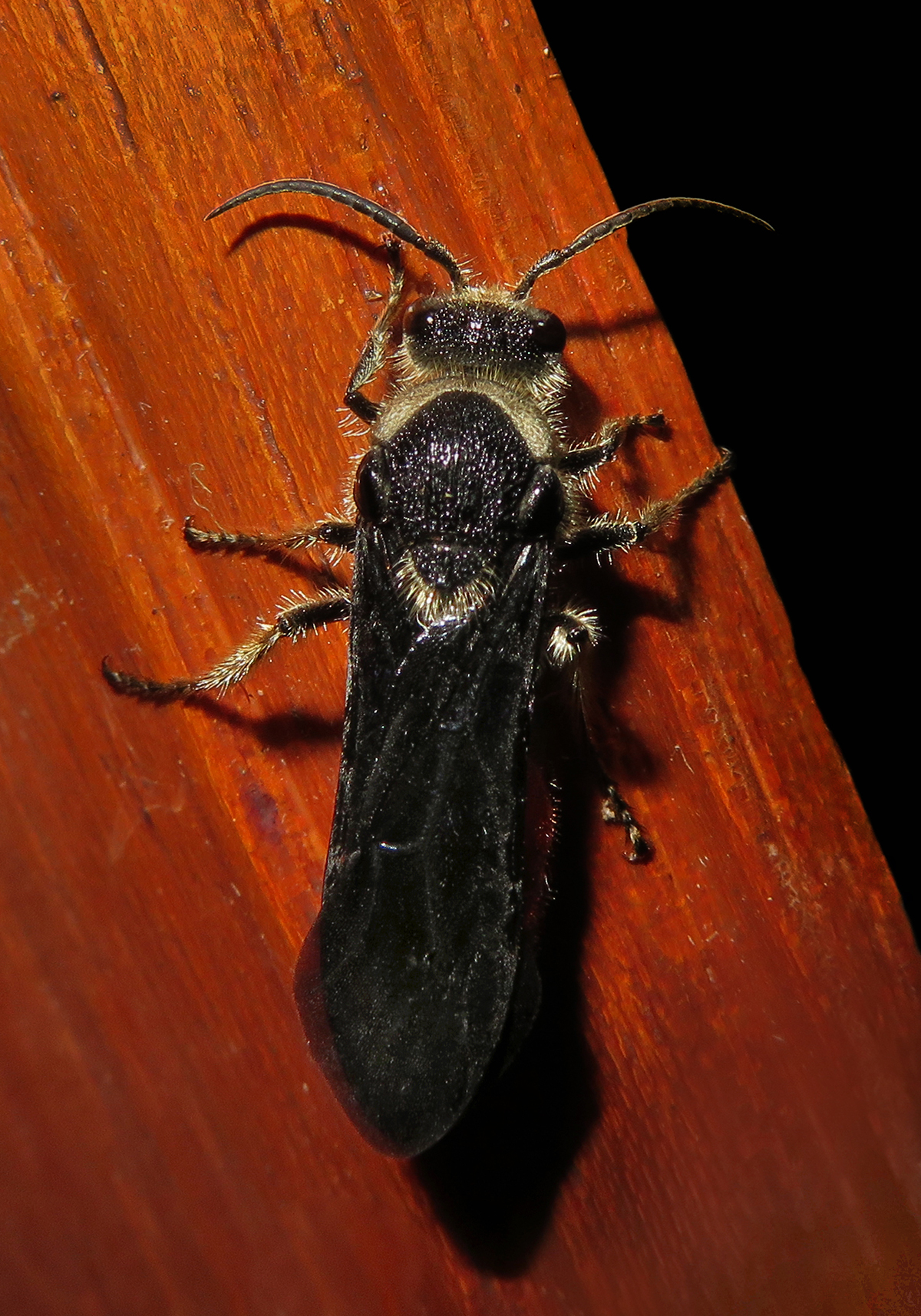
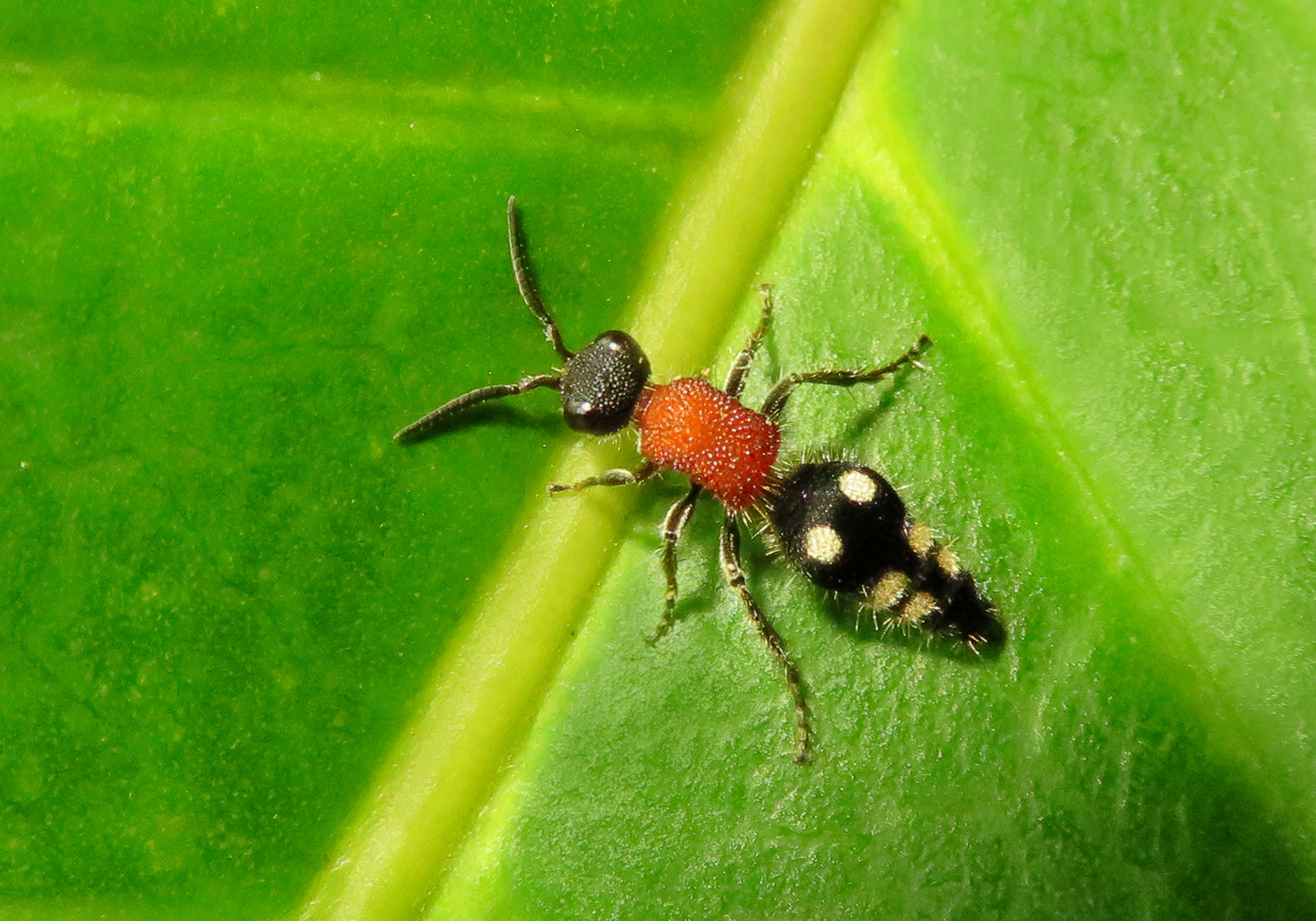
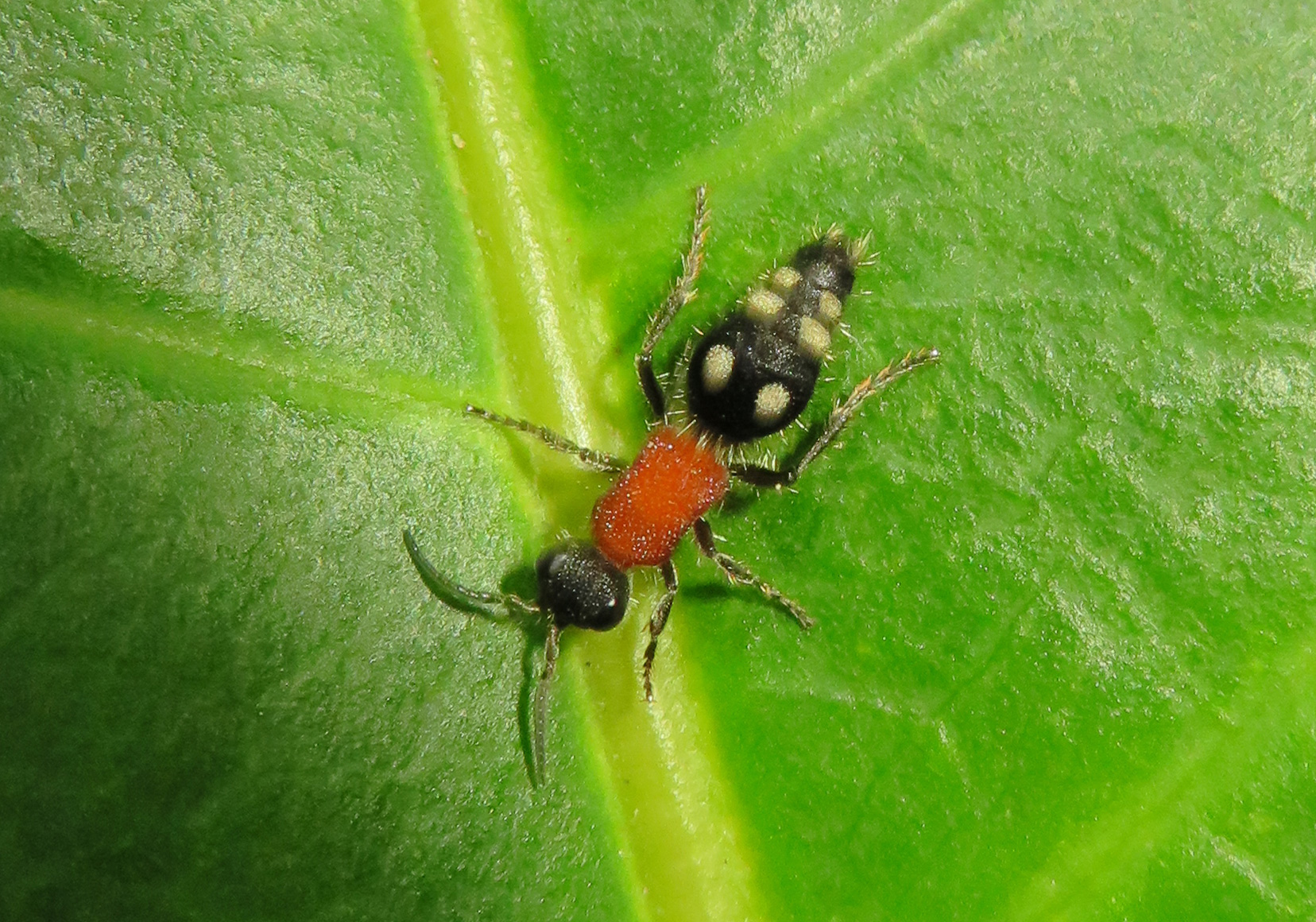
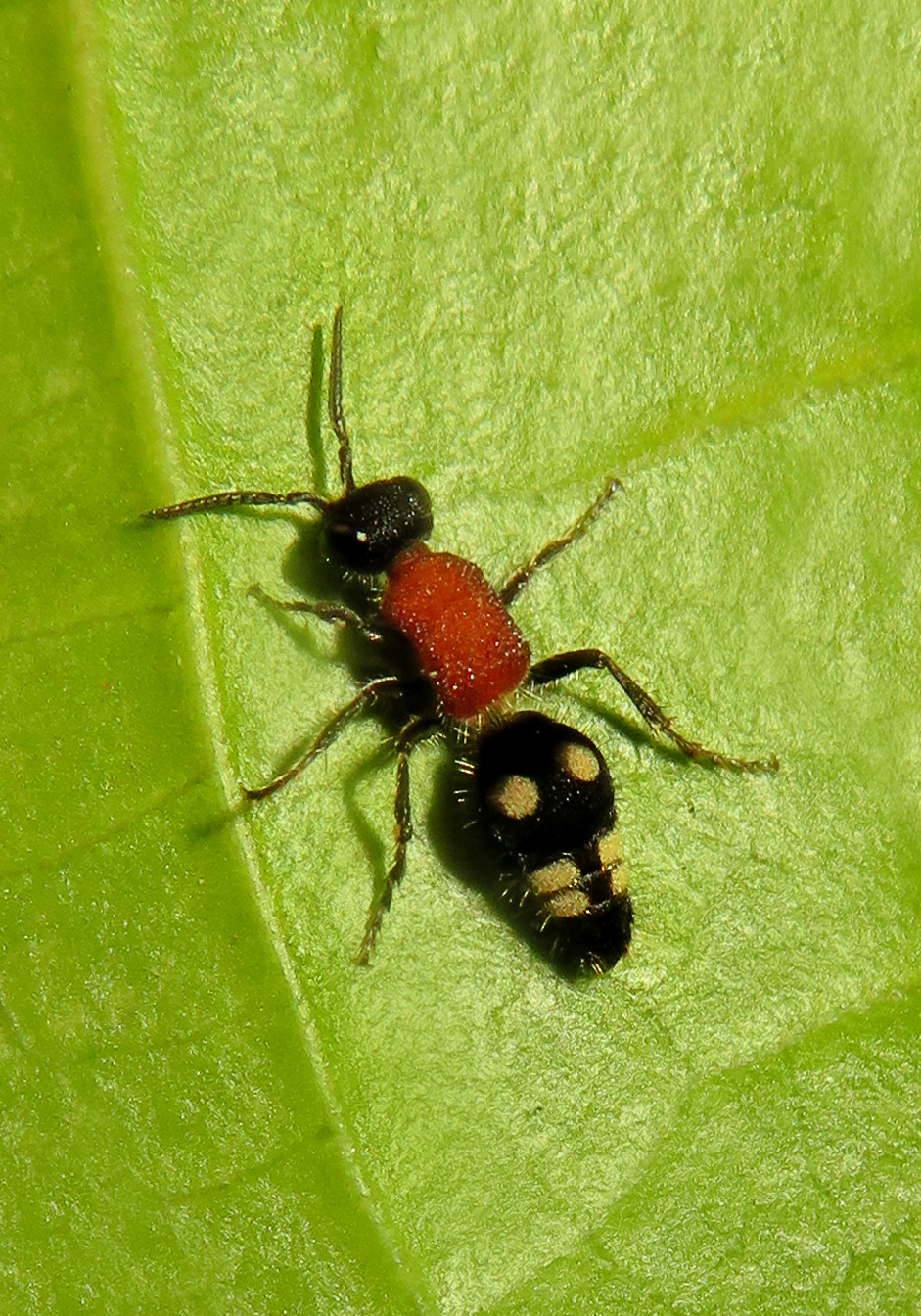
Mutillidae, commonly known as velvet ants, is a family within the superfamily Pompiloidea (Infraorder Aculeata, Suborder Apocrita, Order Hymenoptera). Despite their common name, velvet ants are actually wasps, not true ants, and are notable for their striking appearance and powerful defensive adaptations.
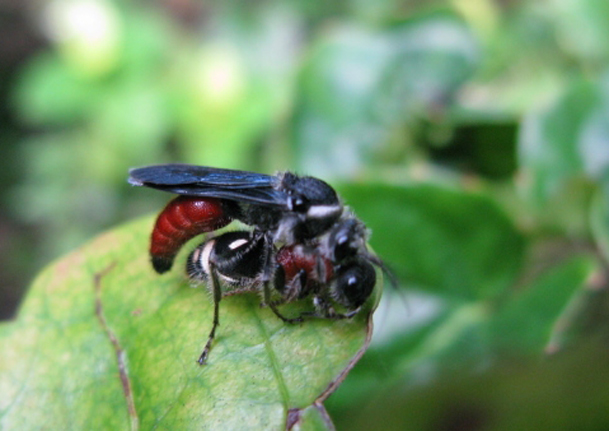
Members of Mutillidae are characterized by extreme sexual dimorphism. Females are wingless and ant-like in appearance, while males are typically winged and more wasp-like. Both sexes are usually densely covered in velvety setae, often brightly colored in red, orange, white, or yellow patterns that serve as aposematic warning coloration.
Velvet ants possess a very strong exoskeleton, making them difficult for predators to crush. Many species also produce audible stridulatory sounds when disturbed. Females are equipped with an exceptionally long and powerful stinger, capable of delivering a painful sting, which is used purely for defense rather than for prey capture.
Mutillidae are parasitoids, with females invading the nests of other solitary bees and wasps. An egg is laid on the host larva or pupa, and the developing mutillid larva consumes the host. Adults feed primarily on nectar and other plant-derived resources.
Ecologically, velvet ants play a role in regulating populations of other aculeate insects and contribute to pollination when visiting flowers. They are commonly found in open, sandy, or arid habitats, though many species also occur in forests and grasslands.
Development is holometabolous, with egg, larval, pupal, and adult stages. Reproduction involves solitary mating and does not include social behavior.
Family Mutillidae represents a highly specialized lineage of aculeate wasps, distinguished by ant-like females, vivid warning coloration, extreme defensive adaptations, and a parasitoid life history.