

Muntjacs and Tufted Deer (Tribe Muntiacini)
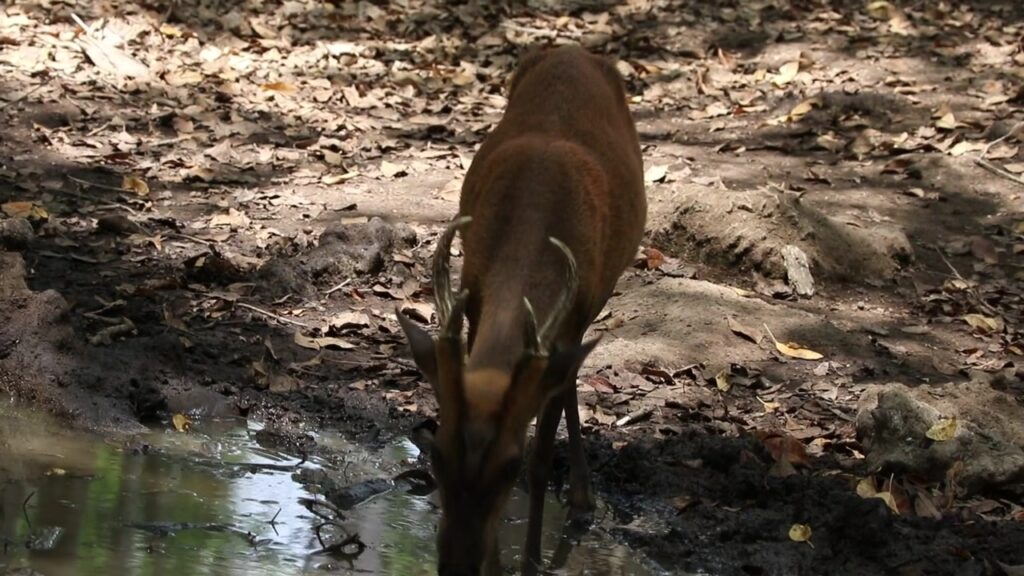
The tribe Muntiacini is a taxonomic group of deer belonging to the family Cervidae and subfamily Cervinae. Its best-known members are the muntjacs, often called barking deer because of the distinctive alarm calls produced by several species. These mammals are native primarily to South and Southeast Asia, where they inhabit tropical forests, subtropical woodlands, dense undergrowth, and forest margins. Muntjac deer are generally smaller than many other members of the deer family and are well adapted to moving through dense vegetation. Their relatively small size, secretive behaviour, and ability to exploit a variety of plant resources allow them to occupy habitats ranging from lowland forests to hilly and mountainous regions.
Members of Muntiacini typically have compact bodies, slender legs, rounded hindquarters, and relatively short tails. Their coats are commonly reddish brown, chestnut, yellowish brown, or dark brown, depending on the species and season. The underside is often paler, while the face may display contrasting markings around the muzzle, forehead, and eyes. Their large, mobile ears and prominent eyes contribute to their ability to detect movement and sounds in shaded forest environments. Although their appearance varies among species, muntjacs generally have a sturdy build that enables them to navigate tangled vegetation and move rapidly through the forest understory.
One of the most distinctive characteristics of muntjacs is the structure of the male head and its associated weapons. Males usually possess short, unbranched antlers supported by elongated bony pedicles on the skull. These antlers are often accompanied by prominent upper canine teeth that project downward from the mouth and can be used during aggressive encounters. The combination of small antlers, elongated pedicles, and enlarged canines distinguishes muntjacs from many other deer, which typically rely more heavily on larger, branched antlers during competition. Females generally lack antlers and have shorter pedicles, although the precise features vary among species. The development of these structures is associated with territorial behaviour and competition between males.
The geographic distribution of Muntiacini is centred on southern, eastern, and southeastern Asia. Different species occur across parts of the Indian subcontinent, southern China, mainland Southeast Asia, and the islands of the Malay Archipelago. They inhabit tropical rainforests, deciduous forests, bamboo thickets, secondary woodland, and forest edges. Some species are also found in mountainous areas, where they occupy suitable forested slopes and valleys. Although many muntjacs depend on vegetation for shelter, several species can tolerate disturbed habitats and may persist in fragmented landscapes when sufficient cover and food remain available. The distribution of individual species differs, and not every member of the tribe occurs throughout this broad region.
Muntjacs are primarily herbivorous and consume a varied diet of leaves, shoots, grasses, herbs, fruits, fallen seeds, buds, and other plant material. They often browse selectively on tender vegetation and may feed on fallen fruit when it is abundant. Their feeding behaviour changes according to seasonal conditions and the availability of preferred plants. Like other ruminants, muntjacs possess a multi-chambered stomach containing microorganisms that help break down fibrous plant material. This digestive system allows them to extract nutrients from vegetation that is difficult for many other mammals to digest. Their relatively small body size and flexible feeding habits help them exploit food resources in dense forests, where vegetation can vary considerably over short distances.
Unlike some larger deer that form herds, muntjacs are commonly solitary or occur in pairs, although social patterns differ among species and circumstances. Individuals often maintain relatively small home ranges and use familiar paths through the undergrowth. Scent marking, scraping, and vocal communication help regulate interactions between neighbouring animals. When disturbed, a muntjac may freeze, retreat silently into cover, or flee through dense vegetation. Several species produce sharp barking calls when alarmed, particularly when they detect a potential predator or an unfamiliar disturbance. These calls can draw attention to danger and may also occur during territorial encounters or other social interactions.
Reproduction in Muntiacini is notable for its flexibility. Many muntjac species are capable of breeding throughout much of the year when environmental conditions are favourable, rather than having a sharply defined annual breeding season. After mating, females give birth following a gestation period lasting several months, usually producing a single fawn. The newborn is generally concealed in dense vegetation during its early development, reducing the likelihood of detection by predators. The mother returns periodically to nurse and care for the young. As the fawn grows, it gradually becomes more mobile and begins to accompany the mother while learning to recognize food sources, shelter, and potential threats. The age at maturity and the timing of reproductive activity vary among species.
Muntjacs play an important ecological role as browsers and seed consumers in Asian forest ecosystems. By feeding on leaves, shoots, and seedlings, they influence the composition and regeneration of understory vegetation. Their consumption and movement of fruits may contribute to seed dispersal, although the effect depends on the plant species and how seeds are handled during feeding and digestion. Muntjacs also serve as prey for larger predators, including leopards, tigers, dholes, and other carnivores where their ranges overlap. Their presence can therefore influence predator diets and the wider structure of forest food webs. Changes in muntjac abundance may affect both vegetation and the availability of prey for larger animals.
The tribe Muntiacini has attracted scientific interest because of its distinctive antler morphology, reproductive biology, and evolutionary history. Muntjacs exhibit substantial variation in chromosome numbers among species, making them notable subjects for studies of mammalian chromosome evolution and speciation. Despite their relatively similar outward appearance, genetic and anatomical studies have revealed considerable diversity within the group. Taxonomic arrangements have changed as researchers have examined the relationships among muntjac species and their close relatives. The exact composition and rank of Muntiacini may consequently vary among classifications, and its boundaries should be interpreted in the context of the taxonomic system being followed.
Conservation concerns affecting muntjacs include habitat destruction, forest fragmentation, hunting, and pressure from expanding human populations. Some species are widespread and relatively adaptable, whereas others have restricted distributions and may be more vulnerable to environmental change. Forest conversion for agriculture, infrastructure, and commercial development can reduce the availability of cover and food, while hunting may exert considerable pressure on local populations. Conservation measures include protecting forest habitats, maintaining connections between fragmented areas, enforcing wildlife regulations, and monitoring populations to identify declines. Reliable species identification is essential because conservation needs differ considerably among muntjac species.
Overall, Muntiacini represents a distinctive tribe of Asian deer characterized by small body size, short antlers in males, prominent canine teeth, secretive behaviour, and adaptations to forest habitats. Its members occupy important positions in terrestrial ecosystems through their feeding activities and interactions with predators. Their unusual reproductive and chromosomal characteristics also make them valuable subjects for evolutionary research. Protecting the habitats and populations of muntjacs helps preserve not only these distinctive mammals but also the broader biodiversity of the forests in which they live.