

Scorpionflies, Hangingflies, and Allies (Order Mecoptera)
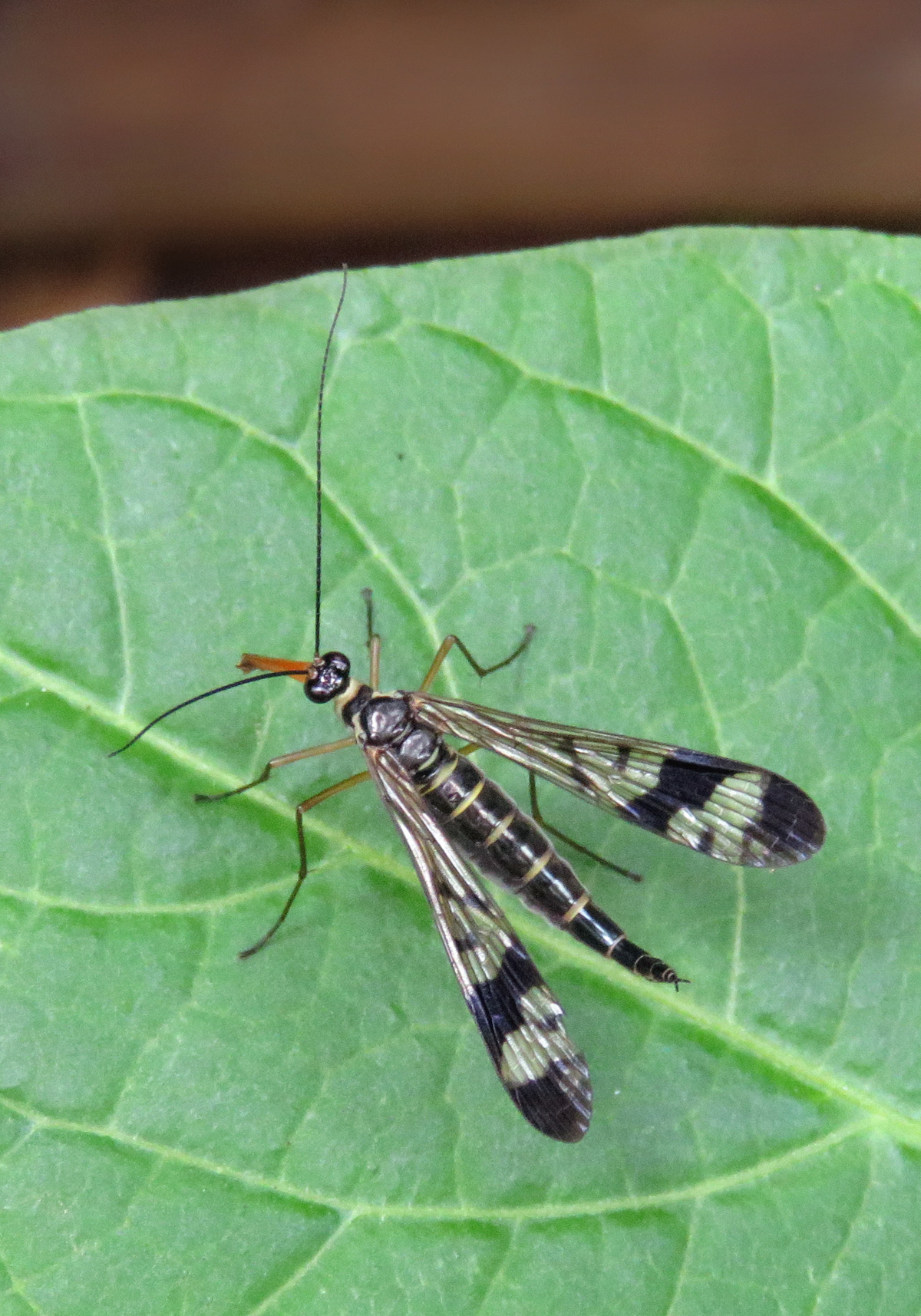
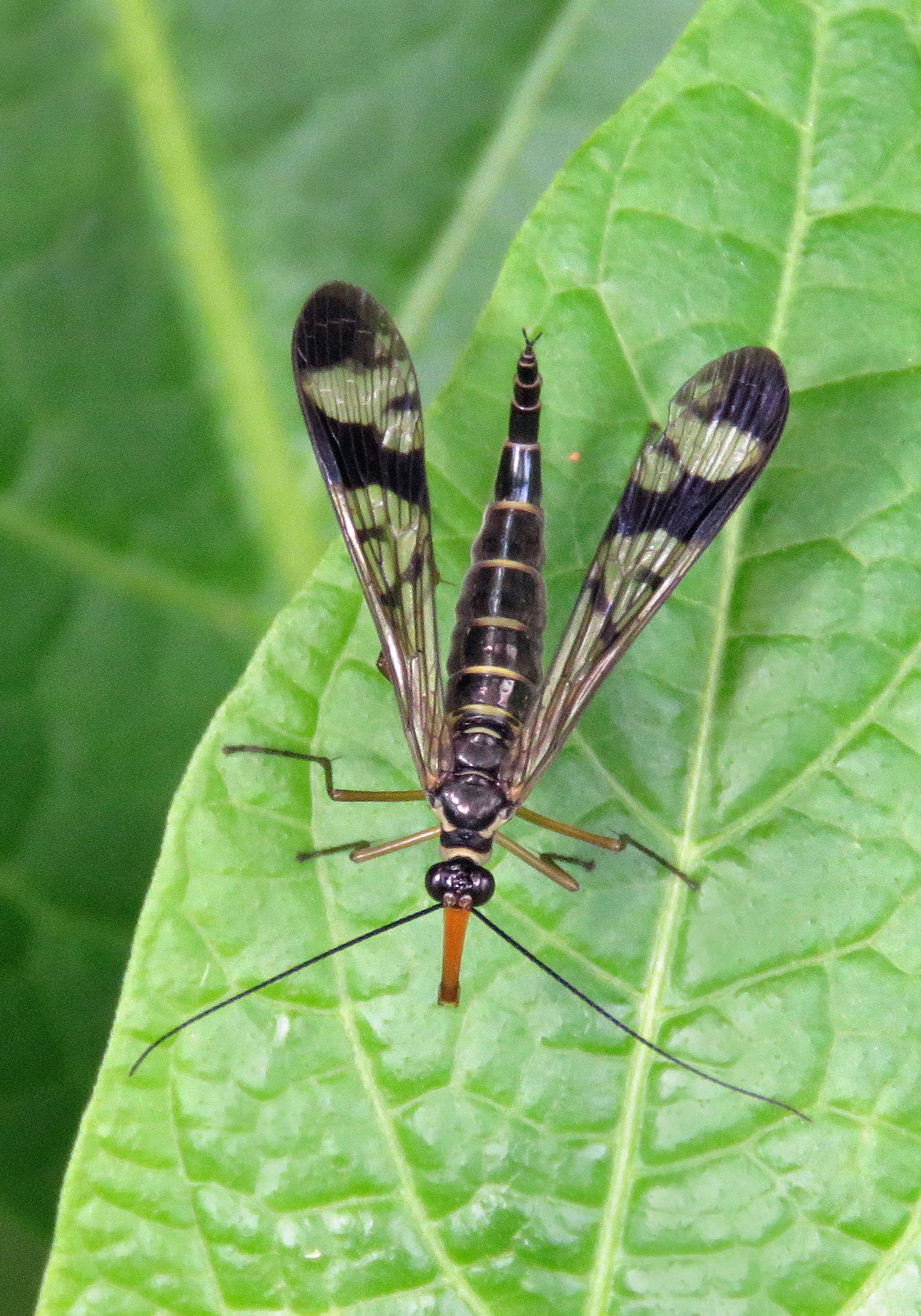
Mecoptera is an order of insects commonly known as scorpionflies and their relatives. This relatively small but distinctive group is distributed worldwide, with the greatest diversity in temperate and mountainous regions. Members of Mecoptera are typically found in moist, shaded habitats such as forests, along streams, and in areas with abundant vegetation.
Mecopterans are generally small to medium-sized insects characterized by an elongated face forming a beak-like rostrum, which bears the mouthparts. The head is well developed with large compound eyes and long, filamentous antennae. Most species have two pairs of membranous wings with a complex network of veins, which are typically held roof-like over the body when at rest. Some species, however, are wingless or have reduced wings.
A notable feature in many species, especially in the family Panorpidae, is the appearance of the male abdomen, which is often curved upward and resembles a scorpion’s tail—hence the common name “scorpionfly.” Despite this resemblance, they are harmless and do not possess a sting.
The life cycle involves complete metamorphosis, with egg, larval, pupal, and adult stages. Larvae are usually caterpillar-like with a well-developed head and thoracic legs. They are typically found in soil or leaf litter and may be scavengers, herbivores, or predators depending on the species.
Feeding habits of adults vary. Many species are scavengers, feeding on dead insects, decaying organic matter, or plant materials. Others may feed on nectar, pollen, or small living insects. Hangingflies (family Bittacidae), for example, are predators that capture prey while hanging from vegetation using their long legs.
The order includes several families, such as Panorpidae (common scorpionflies), Bittacidae (hangingflies), and others. These families exhibit a range of ecological adaptations and behaviors.
Ecologically, Mecoptera play roles in decomposition, predation, and pollination. They contribute to nutrient cycling by feeding on dead organisms and organic matter, and some species interact with plants as pollinators. Although not of major economic importance, they are an interesting and evolutionarily significant group, providing insight into the early diversification of holometabolous insects.