Bali Wildlife
Every Spices Matter


Macracantha is a genus of orb-weaving spiders within the subfamily Gasteracanthinae, family Araneidae (Order Araneae, Suborder Araneomorphae). The genus is distributed in South and Southeast Asia, where its members inhabit tropical forests, forest edges, and vegetated clearings.
Species of Macracantha are diurnal orb-web builders, constructing large, vertical orb webs between shrubs, small trees, or forest understory vegetation. The webs are used to capture flying insects, and the spiders typically rest at the center of the web during the day, displaying their conspicuous body form.
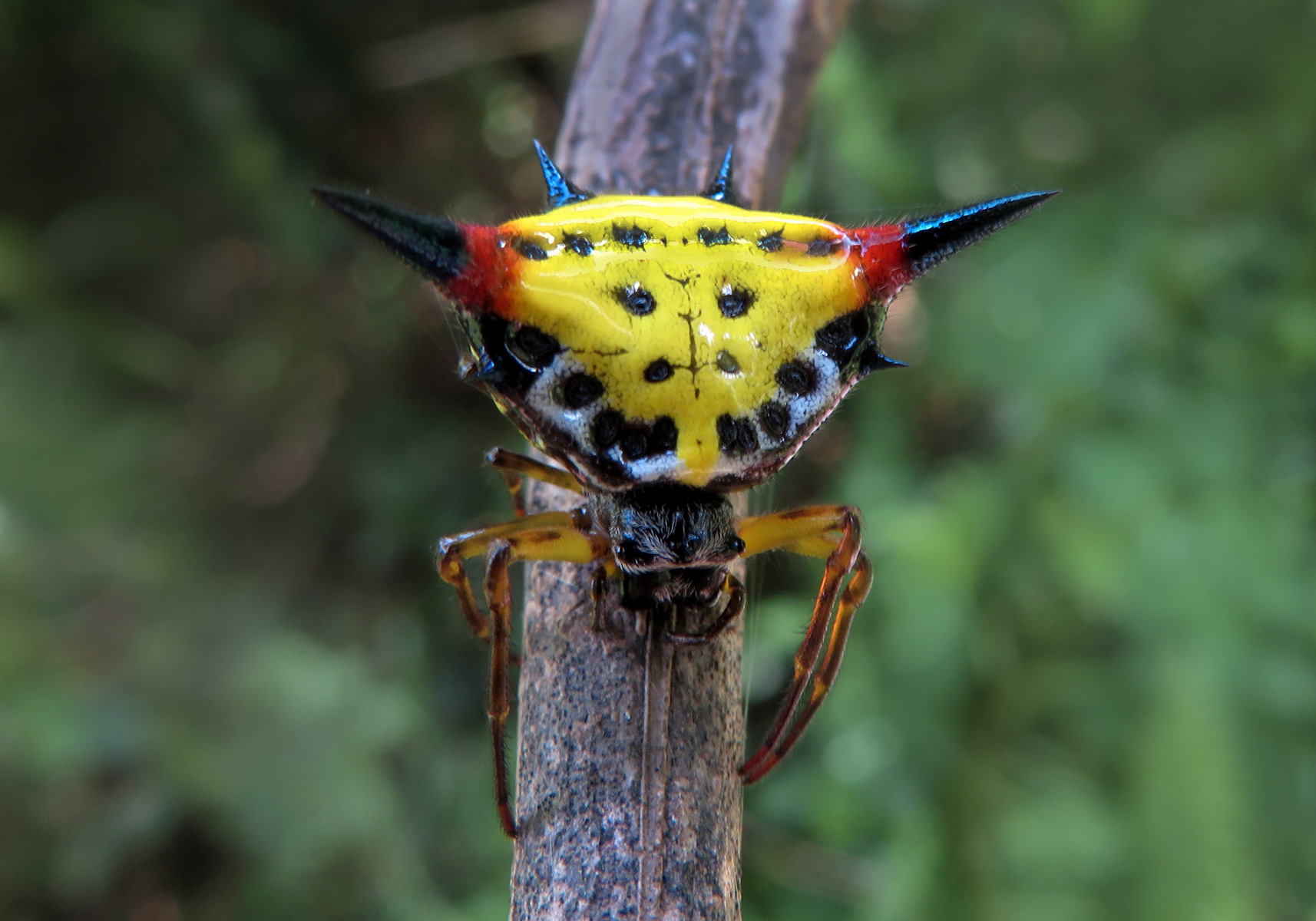
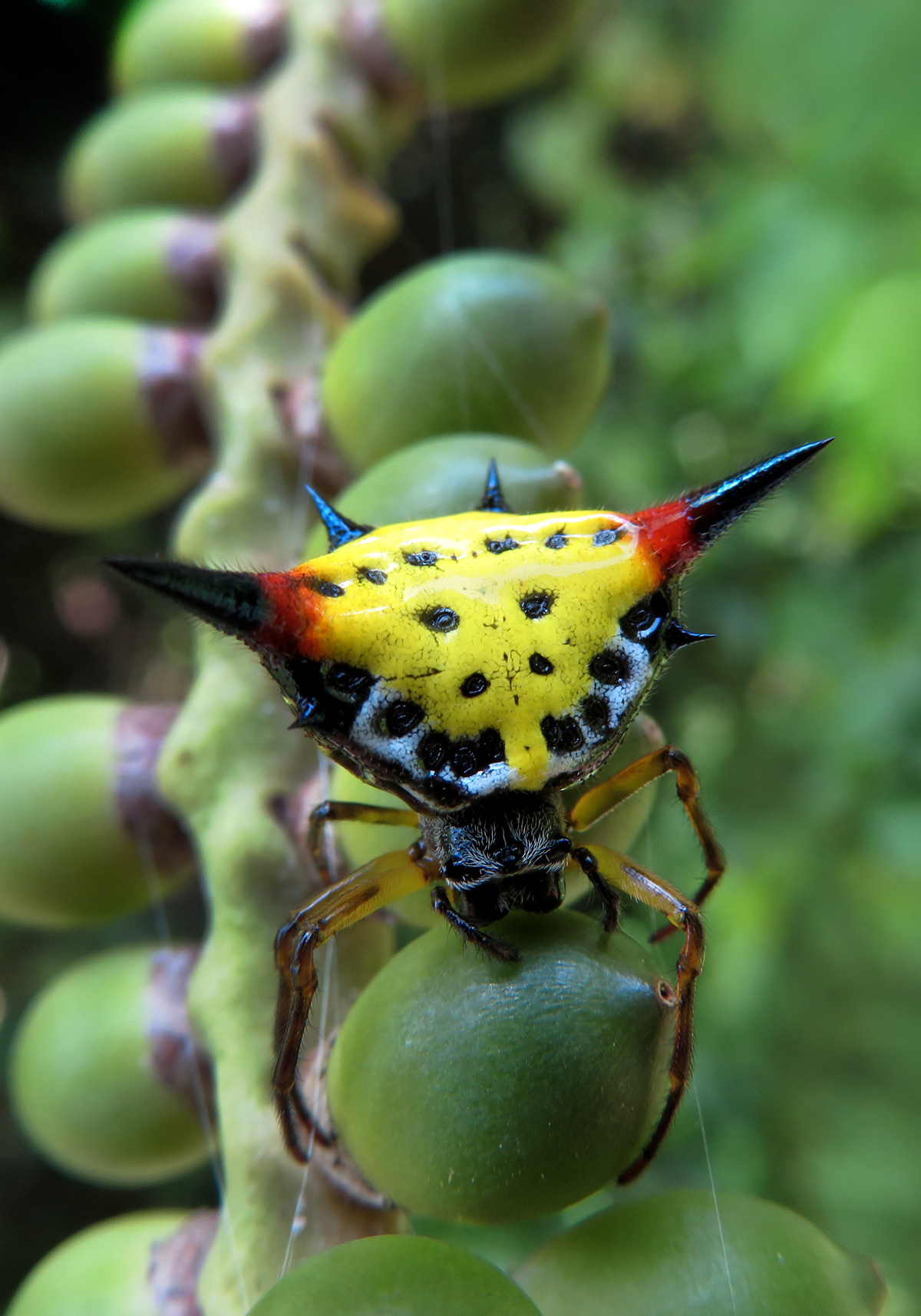
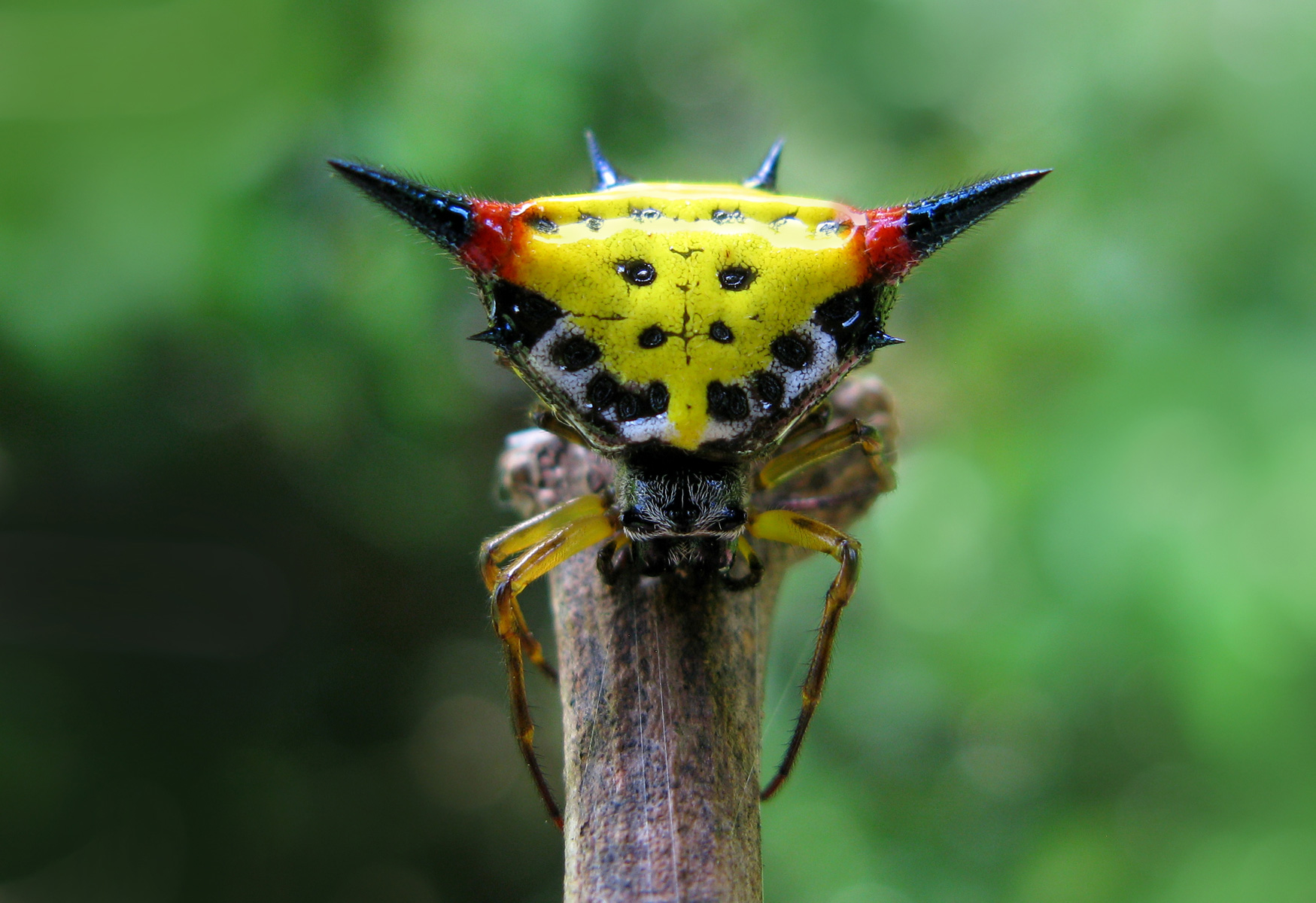
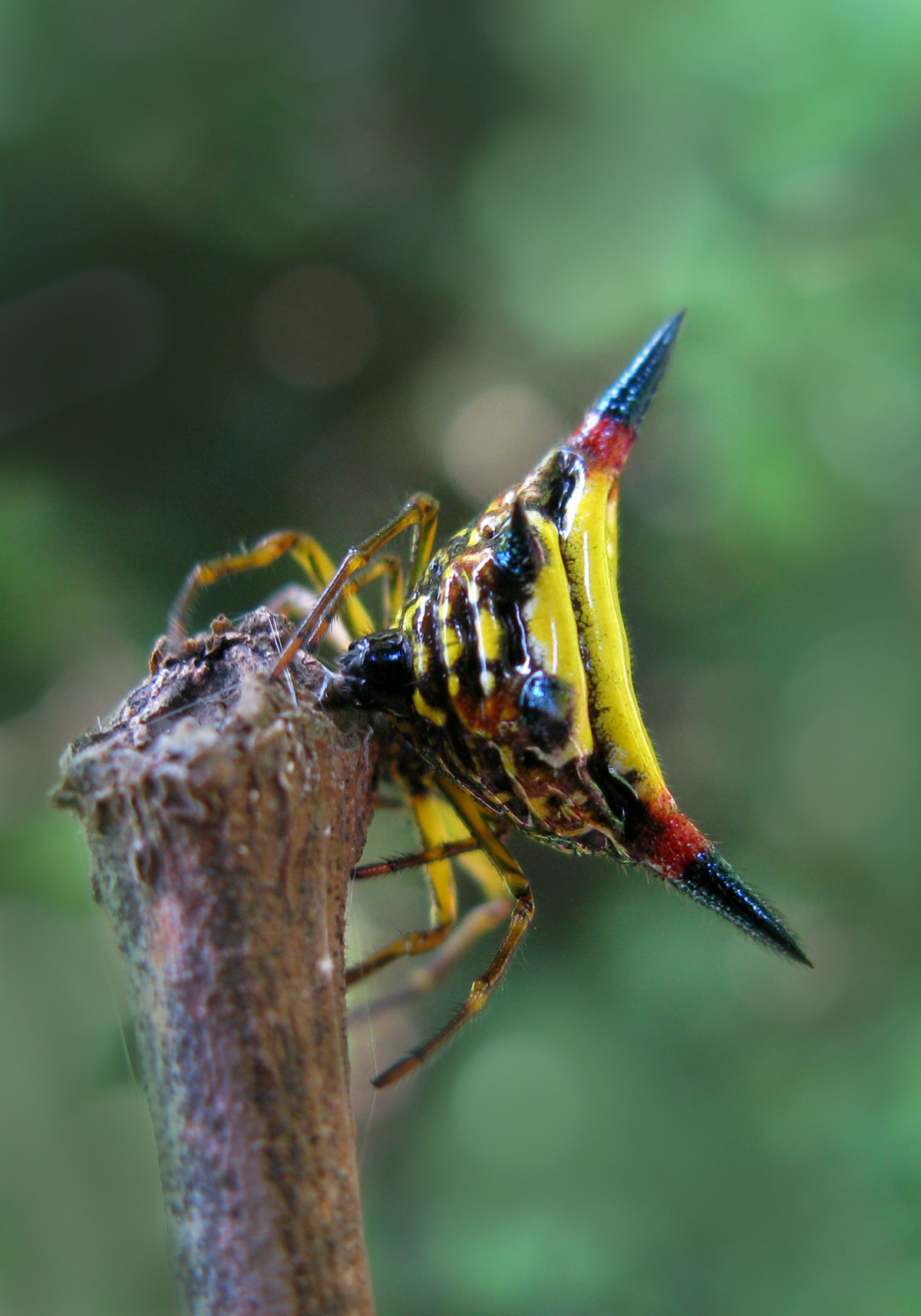
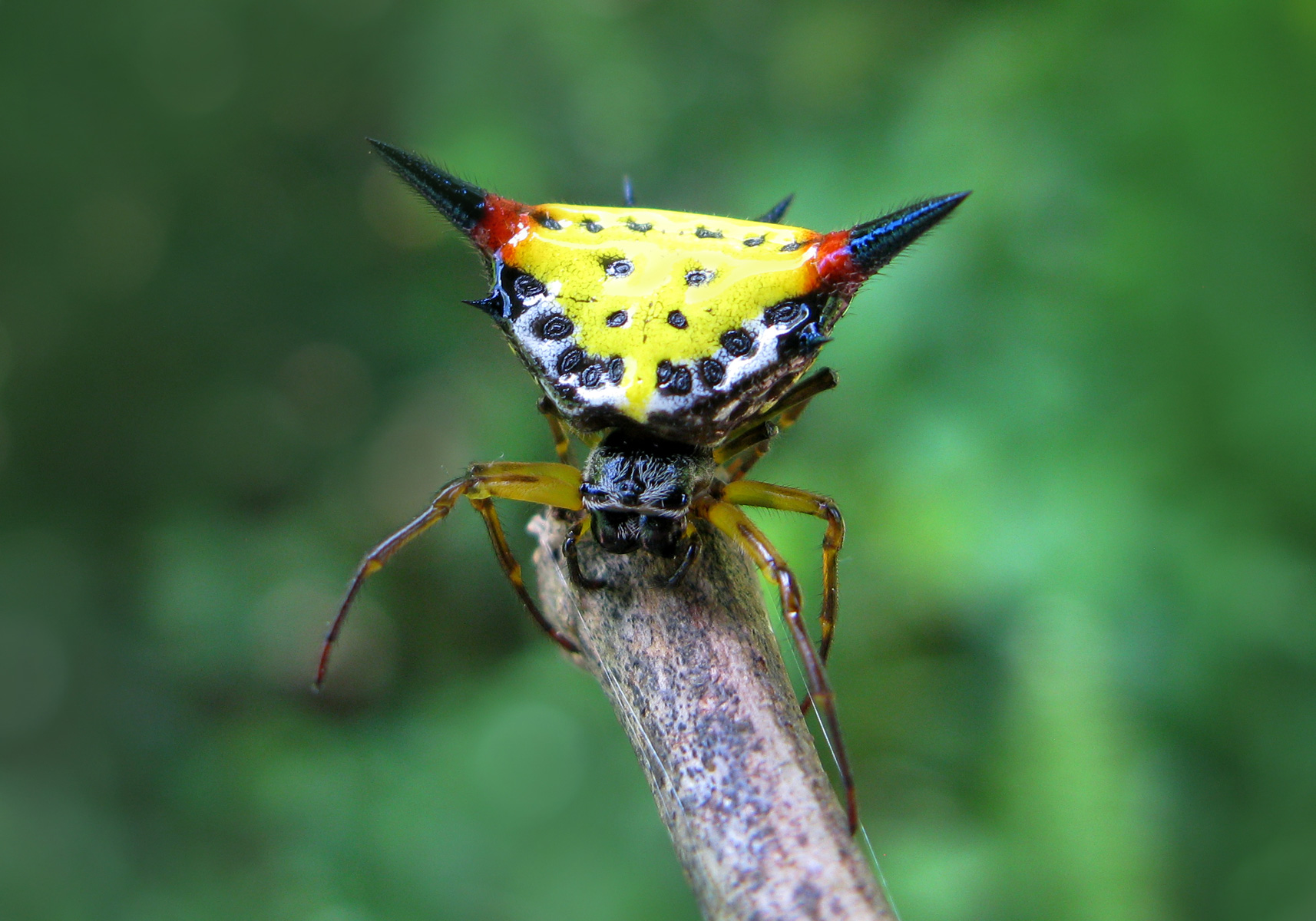
Morphologically, Macracantha is notable for its extremely elongated abdominal spines, which are among the longest relative to body size within the subfamily Gasteracanthinae. The abdomen is broad and heavily sclerotized, with lateral spines that extend outward far beyond the body margins, giving the spider a striking, star-like or cross-shaped appearance. Coloration often includes combinations of white, yellow, orange, black, or red, arranged in bold, contrasting patterns.
Females are significantly larger and more heavily ornamented than males. Males are much smaller, lack the exaggerated spines, and are often overlooked due to their cryptic appearance. The carapace is relatively small compared to the abdomen, and the legs are short to moderate in length, adapted for web maintenance rather than active hunting.
Female genitalia are entelegyne, with a well-developed epigyne characteristic of araneids. Male palpal organs are species-specific and used for identification within the genus.
Ecologically, Macracantha species function as effective aerial insect predators in tropical ecosystems. The exaggerated spines and bright coloration are thought to serve as defensive adaptations, deterring predators by increasing apparent size and making the spiders difficult to grasp or swallow.
Genus Macracantha represents one of the most visually dramatic lineages within Gasteracanthinae, exemplifying extreme morphological specialization combined with classic orb-weaving behavior.