

Macaques (Genus Macaca)

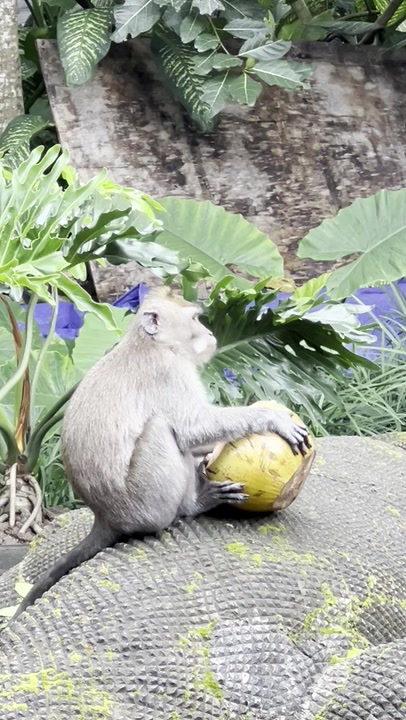
- Animals(Kingdom Animalia)
The genus Macaca comprises the macaques, one of the most diverse and geographically widespread groups of Old World monkeys. Macaques belong to the tribe Papionini, subfamily Cercopithecinae, and family Cercopithecidae. More than 20 living species are recognized, occurring naturally across a vast region extending from North Africa and southern Europe through South and Southeast Asia to Japan and the Indonesian and Philippine archipelagos.
Macaques are generally medium-sized, robust primates with rounded heads, relatively short faces, grasping hands and feet, and forward-facing eyes. Their tails vary greatly among species, from long and conspicuous in the long-tailed macaque (Macaca fascicularis) to extremely short or nearly absent in species such as the Barbary macaque (M. sylvanus) and stump-tailed macaques. This variation reflects the diverse environments occupied by the genus.
Their fur ranges from gray, brown, and olive to darker blackish shades, while some species have conspicuous facial, crown, or cheek hair. Adult males are generally larger than females and often possess particularly prominent canine teeth. Facial coloration can change with age, sex, and reproductive condition, providing important visual signals within social groups.
Macaques are exceptionally adaptable in their habitat use. Depending on the species, they inhabit rainforests, deciduous forests, mangroves, coastal areas, mountains, temperate forests, grasslands, and rocky landscapes. Japanese macaques (M. fuscata) famously tolerate snowy winters, while several Southeast Asian species live in lowland tropical forests and coastal environments.
Most macaques are omnivorous and opportunistic feeders. Their diets commonly include fruits, seeds, leaves, flowers, buds, fungi, insects, crustaceans, eggs, and small vertebrates. Coastal and wetland species may forage in tidal areas, while terrestrial macaques can spend considerable time searching the ground for seeds and invertebrates. Their flexible diets contribute greatly to their ability to exploit different environments.
Macaques are predominantly diurnal and are capable climbers, although many species also spend substantial time on the ground. They can walk and run quadrupedally, climb trunks and branches, leap between vegetation, and in some species swim readily. The long-tailed macaque is particularly associated with aquatic and mangrove environments, whereas several terrestrial species are adapted to rocky or open habitats.
Social behavior is a defining feature of the genus. Most macaques live in multi-male, multi-female groups that may contain several dozen individuals or, in some populations, considerably more. Females commonly remain in their natal groups, resulting in matrilineal social networks in which related females form long-term associations. Grooming, play, reconciliation, aggression, and vocal communication maintain relationships and group cohesion.
Macaque societies can possess complex dominance hierarchies. Social rank may influence access to food, resting places, mates, and other resources. Alliances between individuals can affect conflicts and social status, while maternal relationships strongly influence the position of young animals. Communication involves numerous vocalizations, facial expressions, body postures, gestures, and tactile behaviors.
Reproduction typically involves a relatively long gestation followed by the birth of a single infant. Infants receive intensive maternal care and are gradually integrated into the social group. Young macaques spend years developing feeding skills, locomotor abilities, communication, and knowledge of social relationships. In some species, other group members frequently interact with infants, providing additional opportunities for social learning.
The genus includes several particularly distinctive species. Rhesus macaques (M. mulatta) have one of the broadest distributions, ranging across much of South and East Asia. Long-tailed macaques (M. fascicularis) are widespread in Southeast Asia and frequently inhabit mangroves and other lowland habitats. Japanese macaques (M. fuscata) are adapted to temperate climates, while lion-tailed macaques (M. silenus) are restricted to the rainforests of India’s Western Ghats.
Other notable species include the Barbary macaque (M. sylvanus), the only macaque native to Africa and the only living wild macaque occurring naturally outside Asia; the pig-tailed macaques (M. nemestrina and relatives) of Southeast Asia; and several Sulawesi macaques, including the distinctive crested macaque (M. nigra). The genus contains numerous island-endemic species, particularly in Indonesia and the Philippines.
Macaques have important ecological roles as seed dispersers, predators of invertebrates, consumers of fruits and vegetation, and prey for larger carnivores. Their ability to transport seeds through forests can influence plant regeneration. In coastal ecosystems, some species also exploit marine and intertidal resources, linking terrestrial and aquatic food webs.
The close association between macaques and humans has produced both beneficial and problematic interactions. Some species readily use agricultural fields, villages, temples, tourist sites, and cities, where they may obtain food from human sources. This adaptability can result in crop damage, property damage, and other forms of human–macaque conflict, while also increasing exposure to traffic, disease, persecution, and other hazards.
Conservation status varies greatly among species. Habitat destruction, forest fragmentation, hunting, capture for the wildlife trade, agricultural expansion, and human–wildlife conflict threaten several macaques, particularly species with restricted island or forest distributions. Other species remain relatively widespread and adaptable. Conservation efforts therefore range from protection of intact forests and island habitats to management of human–macaque interactions.
Overall, Macaca represents one of the most evolutionarily, geographically, and behaviorally diverse genera of Old World monkeys. Its species demonstrate remarkable flexibility in habitat selection, diet, locomotion, social organization, and climate tolerance, making macaques an important group for understanding primate evolution, behavior, ecology, and adaptation.