

Forest Thicktail Scorpions (Genus Lychas)
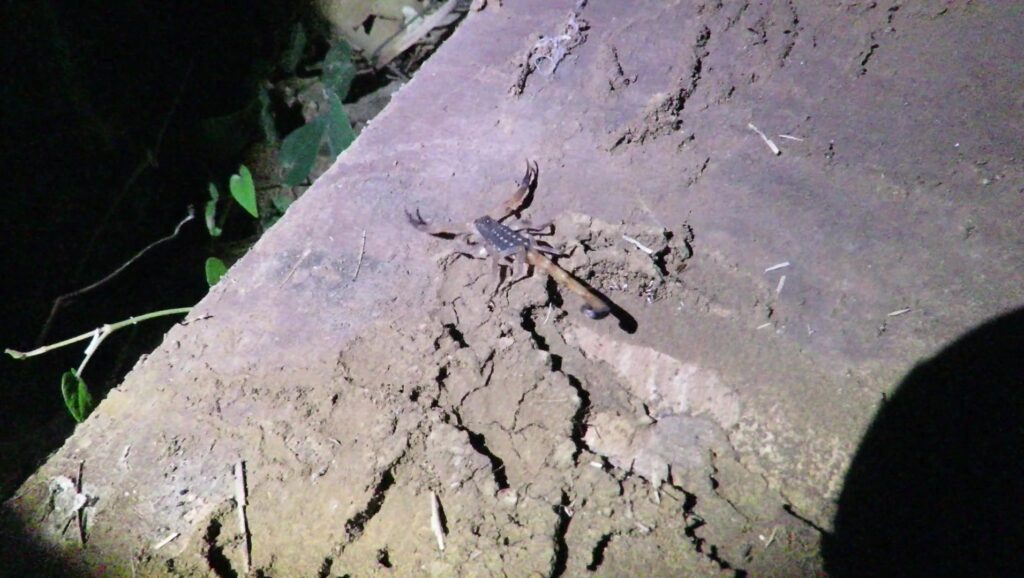
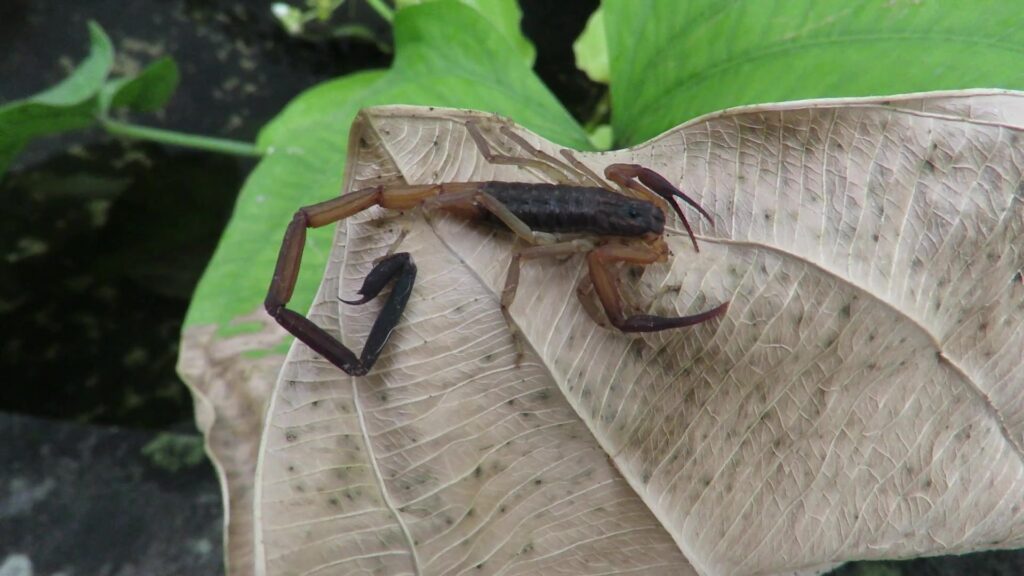
The genus Lychas is a group of scorpions belonging to the family Buthidae, one of the largest and most widely distributed families of scorpions. Members of this genus occur primarily in tropical and subtropical regions of Asia, Australasia, and parts of the Indo-Pacific. They are generally small to medium-sized scorpions that inhabit forests, woodland, plantations, and other environments offering suitable shelter and abundant invertebrate prey. Several species are associated with human-modified habitats, allowing them to persist in areas where natural vegetation has been disturbed.
Scorpions of the genus Lychas typically have relatively slender bodies, narrow pincers, and elongated tails ending in a venomous sting. Their body coloration varies among species and may include shades of yellow, reddish brown, dark brown, and nearly black. Some species display contrasting markings on the body, legs, or tail segments. As with other members of Buthidae, the pincers are generally more slender than those of many scorpions that rely heavily on physical strength to subdue prey. Their elongated metasoma, commonly called the tail, provides an effective means of delivering venom during prey capture and defense.
The genus is found across a broad region extending from South and Southeast Asia to parts of East Asia, Australia, and neighboring islands. Species occur in countries such as India, Sri Lanka, Thailand, Malaysia, Indonesia, the Philippines, and Australia, although the precise distribution differs considerably among individual species. The genus is particularly diverse in tropical environments, where warm temperatures and seasonal or year-round moisture support abundant insect populations. Its distribution across numerous islands and mainland regions reflects the ecological adaptability and evolutionary diversification of its members.
Lychas scorpions occupy a variety of microhabitats. They may shelter beneath loose bark, inside crevices, under stones, among leaf litter, or within decaying wood. Some species climb vegetation and can be found on tree trunks, branches, or beneath bark, while others spend more time close to the ground. They may also occur in gardens, agricultural areas, and buildings when suitable hiding places and prey are available. During the day, these scorpions generally remain concealed in protected locations, becoming more active at night when temperatures are lower and many potential prey animals are moving.
Members of Lychas are primarily nocturnal predators that feed on insects and other small arthropods. Their diet may include crickets, cockroaches, termites, beetles, spiders, and other invertebrates that they can overpower. They detect prey through sensory structures on their legs and specialized hairs that respond to vibrations and air movements. When a suitable prey item comes within reach, a scorpion may seize it with its pincers and use its sting when necessary to immobilize it. Venom helps subdue prey and reduces the risk of injury during feeding.
Like other scorpions, Lychas species possess a range of adaptations for survival in environments where prey availability and moisture levels may fluctuate. Their tough external exoskeleton offers protection, while their ability to remain concealed during daylight reduces exposure to predators and environmental stress. Their nocturnal habits also help limit water loss in warm climates. Depending on the species and habitat, potential predators may include larger arthropods, reptiles, birds, and small mammals. When threatened, a Lychas scorpion may retreat into a crevice, raise its tail defensively, or use its pincers and sting to deter an attacker.
Reproduction in Lychas follows the general reproductive pattern of scorpions. Males and females typically engage in a courtship sequence in which the male grasps the female’s pincers and guides her across the substrate before depositing a spermatophore. The female subsequently gives birth to live young rather than laying eggs. Newly born scorpions climb onto their mother’s back, where they remain until their first molt. After leaving her back, the young gradually develop through successive molts before reaching maturity. The timing of reproduction, brood size, and rate of development vary according to species and environmental conditions.
The venom of Lychas species is used primarily to capture prey and defend against threats. Stings may cause localized pain and other symptoms, with severity depending on the species, amount of venom delivered, and the individual affected. Although these scorpions are venomous, they are generally small and are not typically regarded as among the most medically significant scorpions. Nevertheless, they should not be handled casually, since species identification can be difficult and reactions to stings vary. In regions where they occur around homes or workplaces, reducing clutter and limiting access to suitable hiding places can help lower the likelihood of accidental encounters.
Ecologically, Lychas scorpions contribute to the regulation of invertebrate populations and serve as prey for animals capable of capturing them. Their presence can reflect the availability of suitable shelter and prey within a habitat, although their abundance alone is not a reliable measure of environmental quality. Some species tolerate disturbed landscapes, while others may depend more strongly on particular forest or microhabitat conditions. Habitat alteration, pesticide use, and the loss of dead wood or leaf litter can affect local populations by reducing prey availability and shelter.
The genus Lychas illustrates the diversity of small scorpions adapted to tropical and subtropical ecosystems. Its species combine effective nocturnal hunting, specialized sensory abilities, defensive venom, and flexible sheltering behavior. Although they are often overlooked because of their small size and secretive habits, these scorpions play a meaningful role in local food webs. Their wide but uneven distribution, varied habitat preferences, and differences among species make Lychas an important group for studies of scorpion diversity, biogeography, and adaptation to changing environments.