

Giant Agate Snails (Genus Lissachatina)
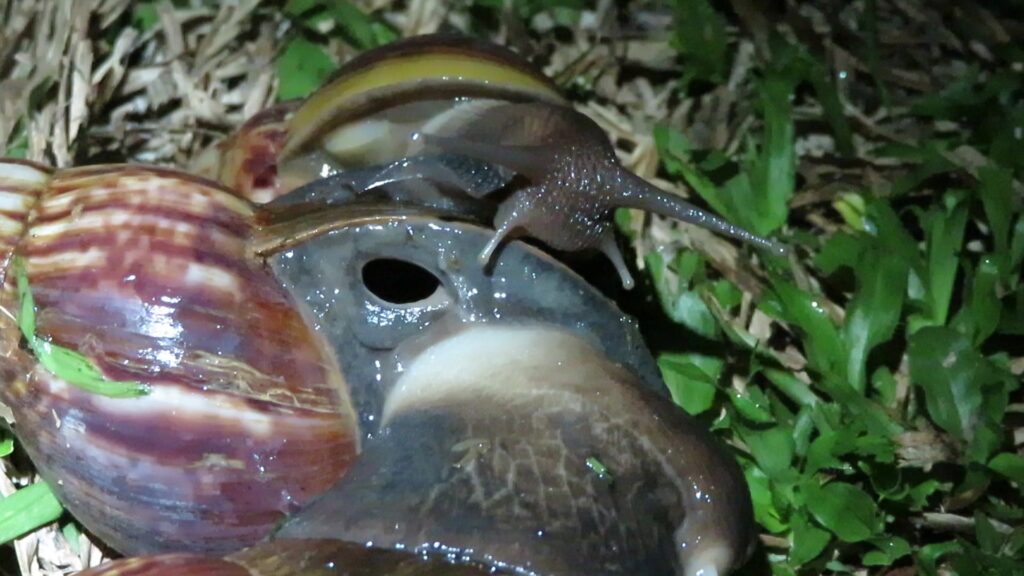
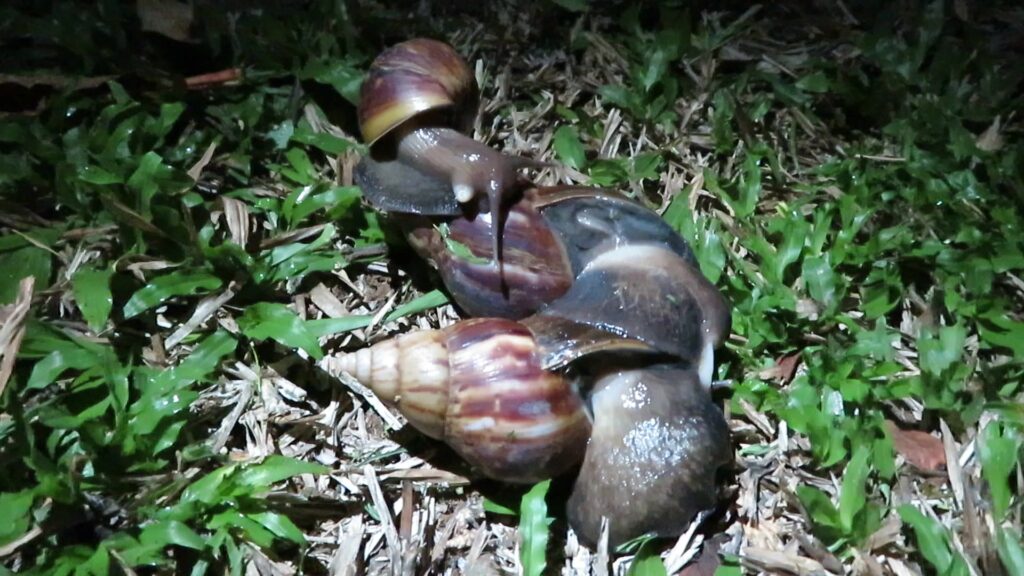
The genus Lissachatina comprises a group of large terrestrial gastropod mollusks in the family Achatinidae, commonly known as African land snails. These air-breathing snails are native to Africa and are noted for their elongated, spirally coiled shells, substantial body size, and adaptability to warm terrestrial environments. The genus includes Lissachatina fulica, the giant African land snail, a species that has become widely established outside its native range and is recognized as an important invasive pest in many tropical and subtropical regions.
Members of Lissachatina generally have tall, conical or oval-conical shells with multiple whorls and a relatively large body whorl toward the opening. The shell is composed mainly of calcium carbonate and provides structural protection for the soft body. Its coloration commonly includes shades of brown, cream, yellowish brown, and reddish brown, often with alternating stripes or irregular bands. Shell shape, color, and size vary among species and individuals, so shell appearance alone may not always be sufficient for reliable identification.
The body is soft and muscular, with a broad foot used for crawling across soil, vegetation, tree trunks, and other surfaces. Movement is powered by muscular waves along the foot and aided by mucus that reduces friction and helps the snail adhere to surfaces. Like other stylommatophoran snails, Lissachatina species possess two pairs of tentacles. The longer upper pair carries the eyes at the tips, while the shorter lower pair is used mainly for touch and chemical sensing. These structures help the animals investigate their surroundings and locate food and shelter.
The genus is associated mainly with warm, humid environments, including forest margins, plantations, gardens, agricultural land, and other habitats with abundant vegetation. Snails may be active after rainfall or during humid nights, when conditions help prevent dehydration. During dry or hot periods, they often shelter beneath leaf litter, logs, stones, or other protected objects. Their ability to exploit human-modified habitats has helped some species spread successfully beyond their original geographic ranges.
Members of Lissachatina are primarily herbivorous and detritivorous, feeding on a wide variety of plant materials and organic matter. Their diet may include leaves, shoots, fruits, vegetables, fungi, and decaying vegetation. A specialized feeding structure called the radula, which bears rows of microscopic teeth, allows them to scrape and process food. While this feeding activity contributes to the breakdown of organic material, abundant populations can cause serious damage to crops, ornamental plants, and native vegetation.
Reproduction is an important factor in the success of several species in this genus. Like many land snails, they are simultaneous hermaphrodites, possessing both male and female reproductive organs. Individuals can exchange sperm during mating and subsequently lay eggs in moist soil or sheltered locations. In Lissachatina fulica, high reproductive output, a broad diet, and tolerance of disturbed habitats help explain its ability to establish populations in many parts of the world.
The best-known species is Lissachatina fulica, which is native to East Africa and has spread through human transport to numerous tropical and subtropical regions, including parts of Asia and the Pacific. It is regarded as a major invasive pest because it consumes many kinds of cultivated and native plants and can compete with local land snails. The species can also serve as an intermediate host for the rat lungworm, Angiostrongylus cantonensis, a parasite associated with serious human illness. Avoiding direct contact with wild snails and washing produce thoroughly are sensible precautions in areas where the parasite occurs.
Taxonomically, Lissachatina has a complex history. It was previously treated as a subgenus within Achatina, and some publications continue to use combinations such as Achatina fulica. Other taxonomic sources recognize Lissachatina as a distinct genus, based in part on differences in reproductive anatomy and molecular evidence. Current species lists include L. fulica and several other named species, although the acceptance and placement of particular taxa may differ among authorities.
Overall, Lissachatina is a notable genus of African land snails whose members display adaptations for terrestrial life, including protective shells, mucus-assisted movement, flexible feeding habits, and efficient reproduction. While these snails play roles in terrestrial ecosystems, some species—especially L. fulica—have become significant invasive pests. Understanding their taxonomy, natural habitats, and biology is therefore important for land-snail research, agricultural protection, and invasive-species management.