Bali Wildlife
Every Spices Matter


Lemini is a tribe within the subfamily Criocerinae of the family Chrysomelidae (Order Coleoptera). Members of this tribe are a distinctive group of leaf beetles primarily associated with monocotyledonous plants, especially grasses (Poaceae), sedges, and related plant groups. Lemini has a broad distribution, occurring in temperate and tropical regions across multiple continents.
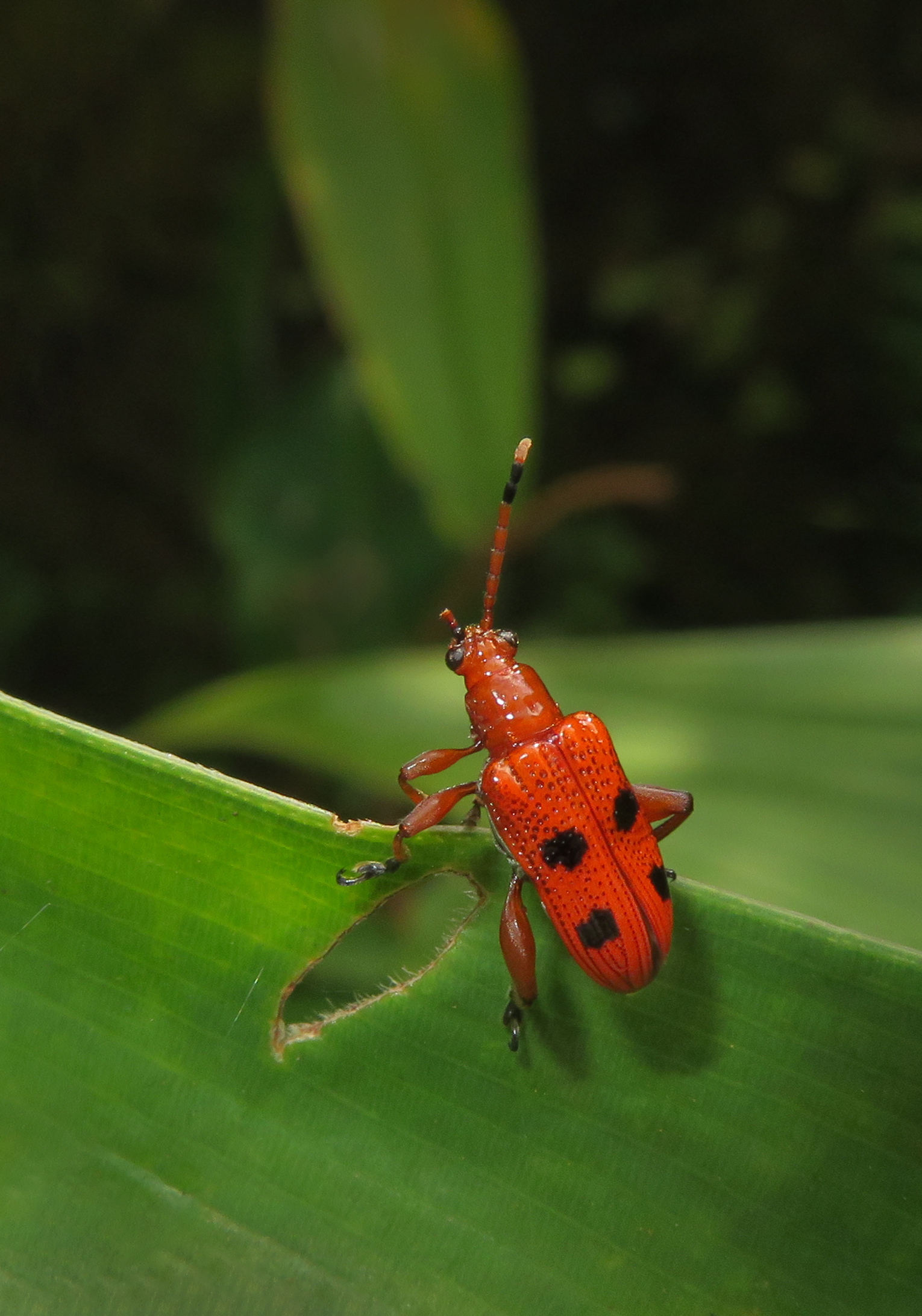
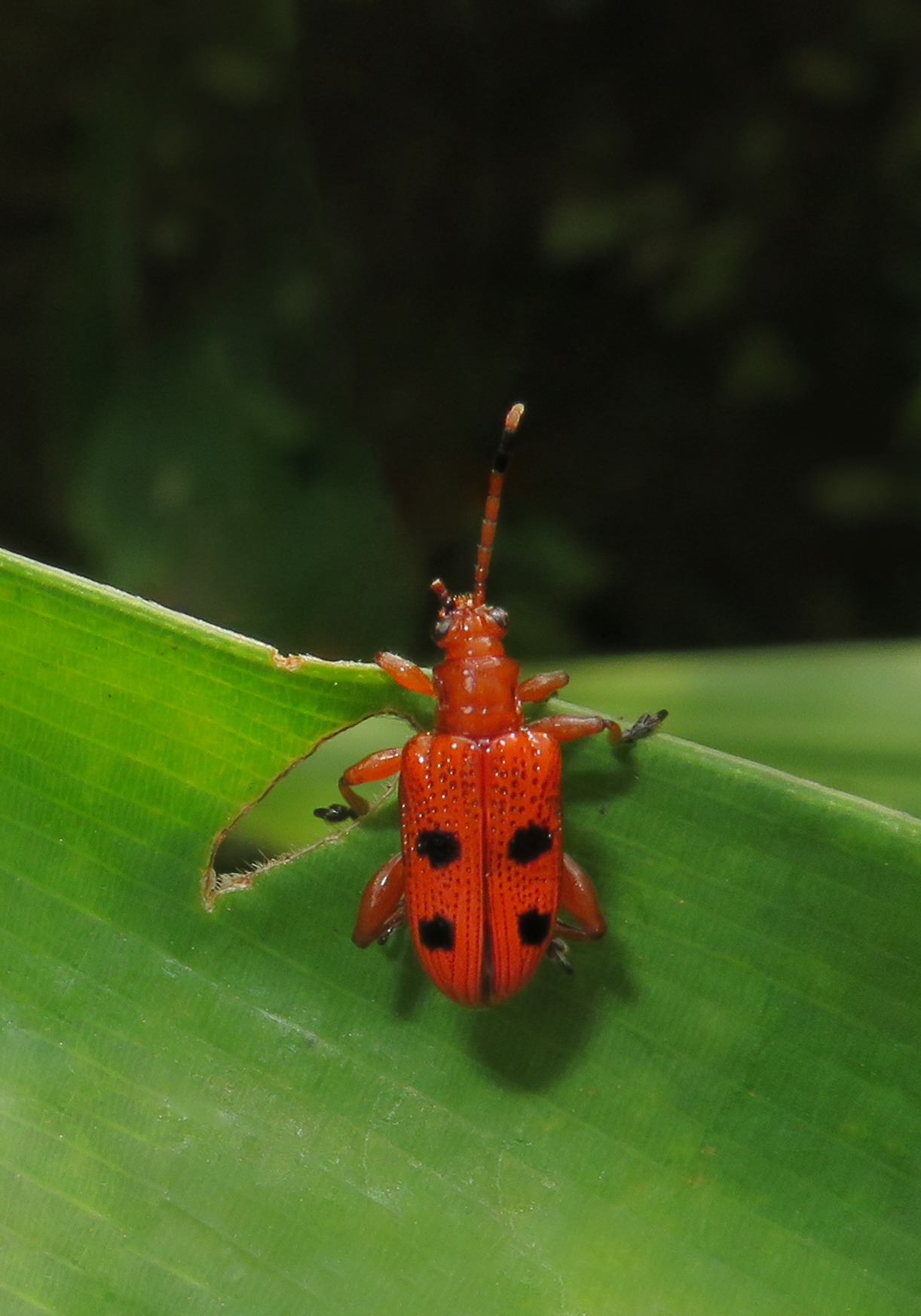
Adult Lemini are generally small to medium-sized beetles with elongate, narrow, and parallel-sided bodies. They often exhibit a smooth and shiny integument, with coloration ranging from metallic blue or green to reddish or dark brown, sometimes with contrasting patterns. The head is exposed and clearly visible from above, and the antennae are filiform and moderately long. Like other Criocerinae, the legs are well adapted for walking and clinging to vegetation.
Larvae of Lemini are external leaf feeders and share the characteristic criocerine behavior of covering themselves with a fecal shield. This coating of excrement and shed skins acts as an effective defense against predators and parasitoids. Larval feeding can result in characteristic longitudinal feeding scars on leaves, particularly on grasses and cereal crops.
The tribe includes well-known genera such as Oulema, which contains several economically important species. Some Lemini, notably the cereal leaf beetles, are serious agricultural pests, capable of causing significant damage to cereal crops such as wheat, barley, oats, and rice. Due to their economic impact, members of Lemini have been extensively studied in terms of life history, population dynamics, and biological control.
Ecologically, Lemini species play a role in grassland and agricultural ecosystems as herbivores and as prey for natural enemies. While their pest status makes them important from an economic perspective, they also contribute to ecosystem complexity and serve as indicators of plant–insect specialization within the leaf beetles.