

Genus Laccoptera
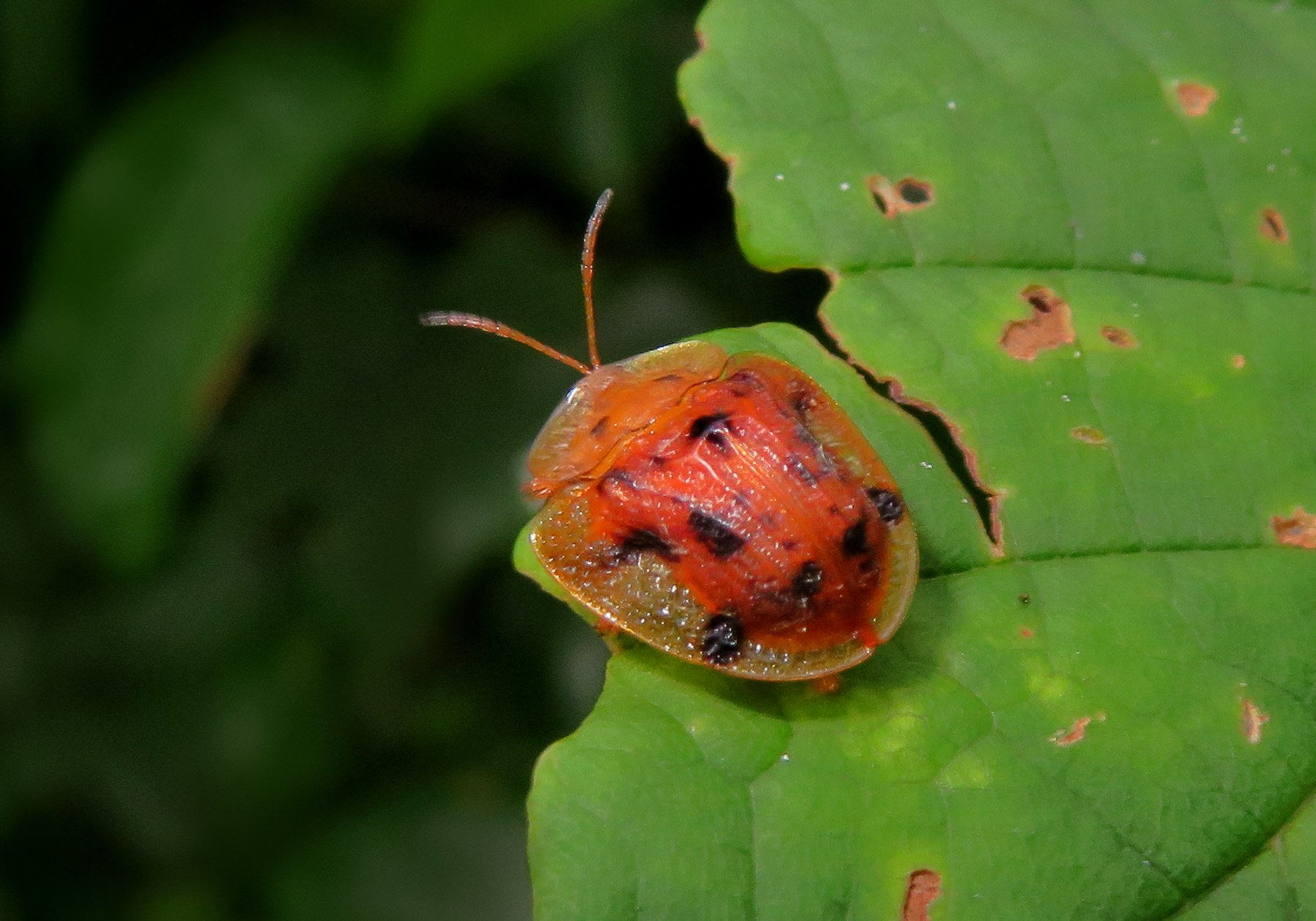
Laccoptera is a genus of tortoise beetles within the subfamily Cassidinae (Family Chrysomelidae, Order Coleoptera). The genus comprises numerous described species distributed throughout tropical and subtropical regions of Africa, South Asia, Southeast Asia, Australia, and the Indo-Pacific islands. Members inhabit tropical rainforests, secondary forests, woodland edges, shrublands, agricultural fields, plantations, parks, and gardens, where they are closely associated with herbaceous plants and climbing vines.
Beetles of the genus Laccoptera are generally small to medium-sized, measuring approximately 5–12 mm in body length. They possess the characteristic broad, flattened, shield-like body typical of tortoise beetles. The pronotum and expanded margins of the elytra largely conceal the head and legs when viewed from above, giving the beetles a compact, rounded appearance. Coloration varies among species and may include shades of yellow, green, brown, bronze, reddish-brown, or black, often with metallic reflections, translucent margins, spots, or intricate markings. This body shape and coloration provide effective camouflage on leaves and help protect the beetles from predators.
Adults are primarily diurnal, remaining on the surfaces or undersides of leaves where they feed and rest. They move slowly but can fly readily when disturbed. When threatened, individuals often press themselves tightly against the leaf surface, making it difficult for predators to grasp them. Their expanded body margins further enhance this defensive strategy by shielding the legs and head.
Members of Laccoptera are herbivorous, feeding mainly on the leaves of broad-leaved plants. Many species are associated with members of the family Convolvulaceae (morning glories and bindweeds), although some utilize plants from other families. Adults and larvae feed by scraping or chewing leaf tissue, producing characteristic window-like feeding patches or irregular holes. While most species occur at low densities, some may occasionally become minor pests of cultivated ornamental or agricultural plants.
The life cycle involves complete metamorphosis, consisting of egg, larva, pupa, and adult stages. Females lay eggs in small clusters on the undersides of leaves. Larvae are flattened and spiny, and like many tortoise beetle larvae, they carry a distinctive fecal shield, composed of excrement and shed skins held above the body by a forked appendage. This structure provides protection against predators and parasitoids. Pupation occurs attached to the host plant, where the pupa remains fixed until the adult emerges.
The genus includes numerous species that exhibit variation in coloration, host-plant preference, and geographic distribution but share the distinctive shield-shaped body and defensive adaptations characteristic of tortoise beetles. Many species remain poorly studied, particularly those occurring in tropical forests.
Ecologically, Laccoptera beetles are important herbivores that contribute to plant–insect interactions and nutrient cycling within terrestrial ecosystems. Both larvae and adults serve as prey for birds, reptiles, spiders, predatory insects, and parasitoid wasps, despite their effective defensive adaptations. Because many species are closely associated with specific host plants and respond to habitat disturbance, Laccoptera beetles are valuable indicators of habitat quality, ecosystem health, and regional biodiversity.