Bali Wildlife
Every Spices Matter


Hispini is a tribe within the subfamily Cassidinae of the family Chrysomelidae (Order Coleoptera). Members of this tribe are commonly referred to as hispine beetles and are distributed worldwide, with the greatest diversity occurring in tropical and subtropical regions. Hispini are closely associated with plants, particularly monocotyledons, and are most often found on grasses, palms, gingers, and other broad-leaved monocot plants.
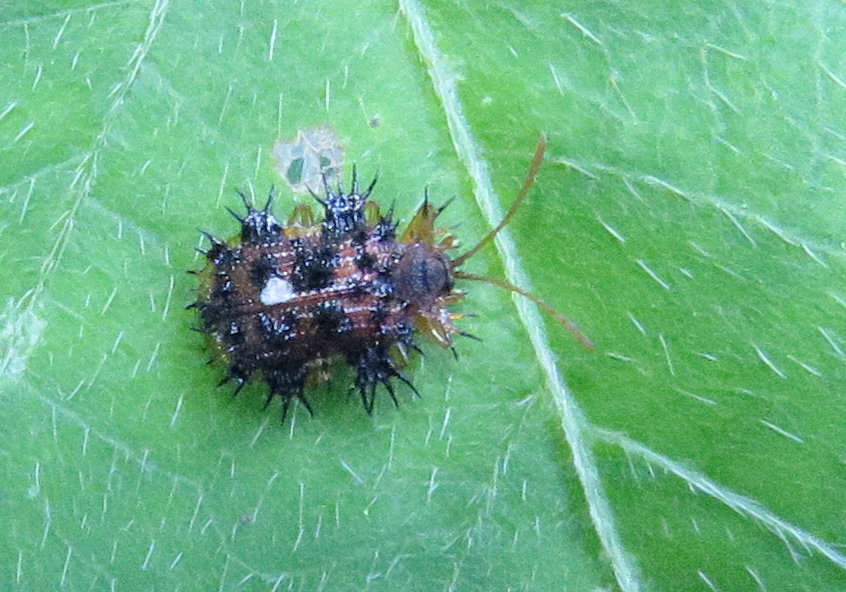
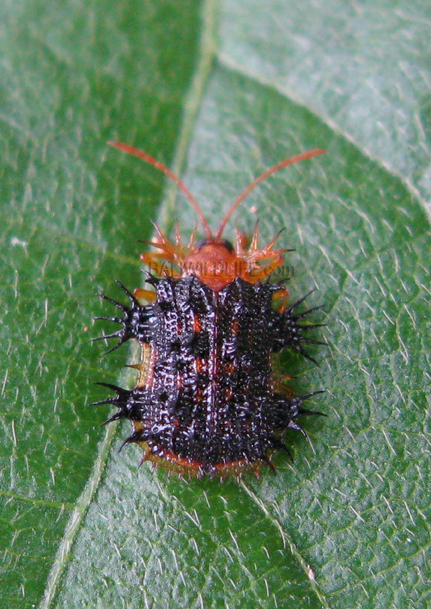
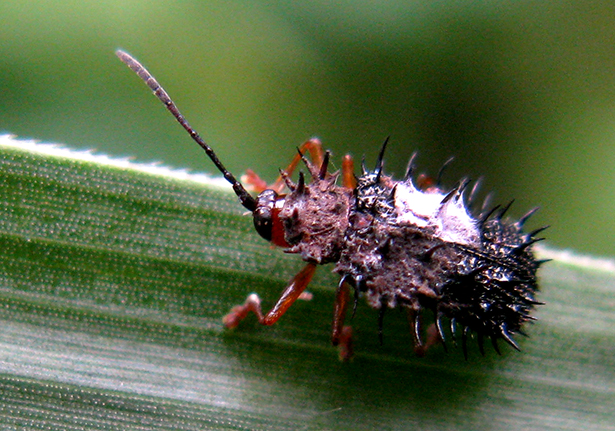
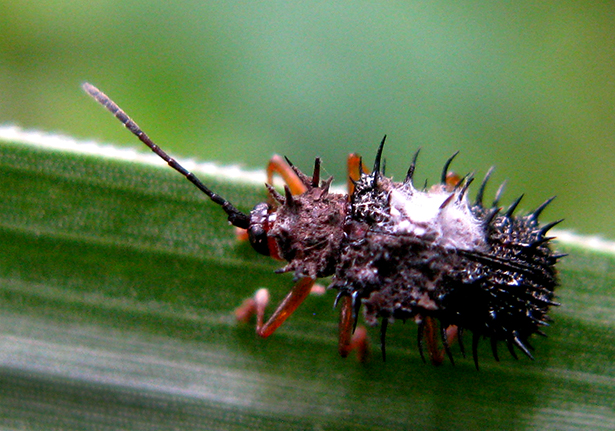
Adult Hispini are typically small to medium-sized beetles with an elongate, flattened body form. Unlike the rounded, shield-like tortoise beetles, hispines often possess conspicuous spines, ridges, or serrations on the pronotum and elytra, giving them a rough or armored appearance. Coloration is usually dark, metallic, or brownish, aiding in camouflage on plant surfaces. The head is usually exposed, and the legs are adapted for clinging to leaves.
Larvae of Hispini are primarily internal feeders. Many species are leaf miners, feeding within the tissues of leaves and creating characteristic linear or blotch mines. Others feed externally on leaves or within rolled or folded plant structures. These concealed feeding habits provide protection from predators and environmental stress.
The tribe Hispini includes numerous genera, such as Hispa, Brontispa, and Dicladispa. Some species are economically significant pests; for example, the coconut hispine beetle (Brontispa longissima) is a serious pest of coconut and other palm species in many parts of the world.
Ecologically, Hispini plays an important role in plant–insect interactions, influencing plant health and productivity. While many species are minor components of natural ecosystems, pest species can cause severe defoliation and economic losses in agriculture and forestry. The distinctive morphology, specialized feeding strategies, and close host-plant associations make Hispini a well-defined and ecologically significant tribe within Cassidinae.