Bali Wildlife
Every Spices Matter


Heteropodinae is a subfamily of huntsman spiders within the family Sparassidae (Order Araneae, superfamily Sparassoidea). The subfamily is widely distributed in tropical and subtropical regions, with particularly high diversity in Asia, Africa, Australia, and the Pacific islands. Members of Heteropodinae inhabit forests, shrublands, caves, rocky areas, and human dwellings, where they occupy bark crevices, leaf litter, and wall surfaces.
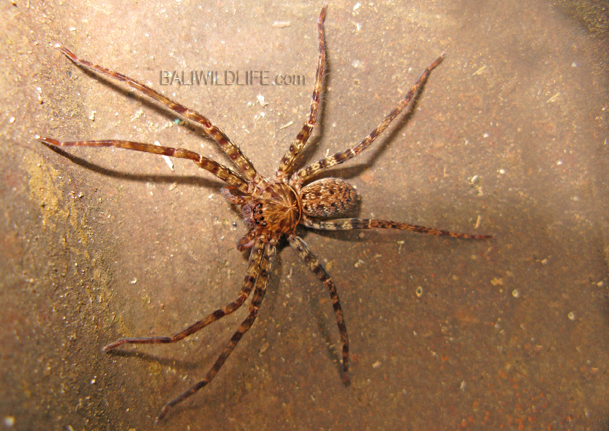
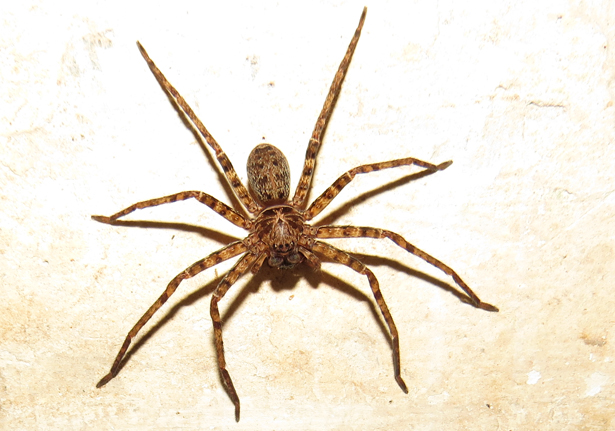
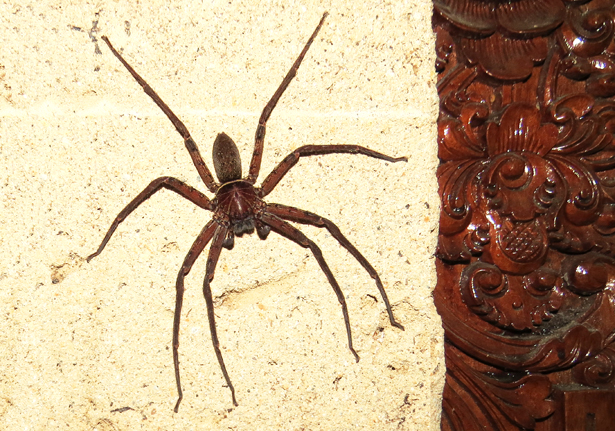
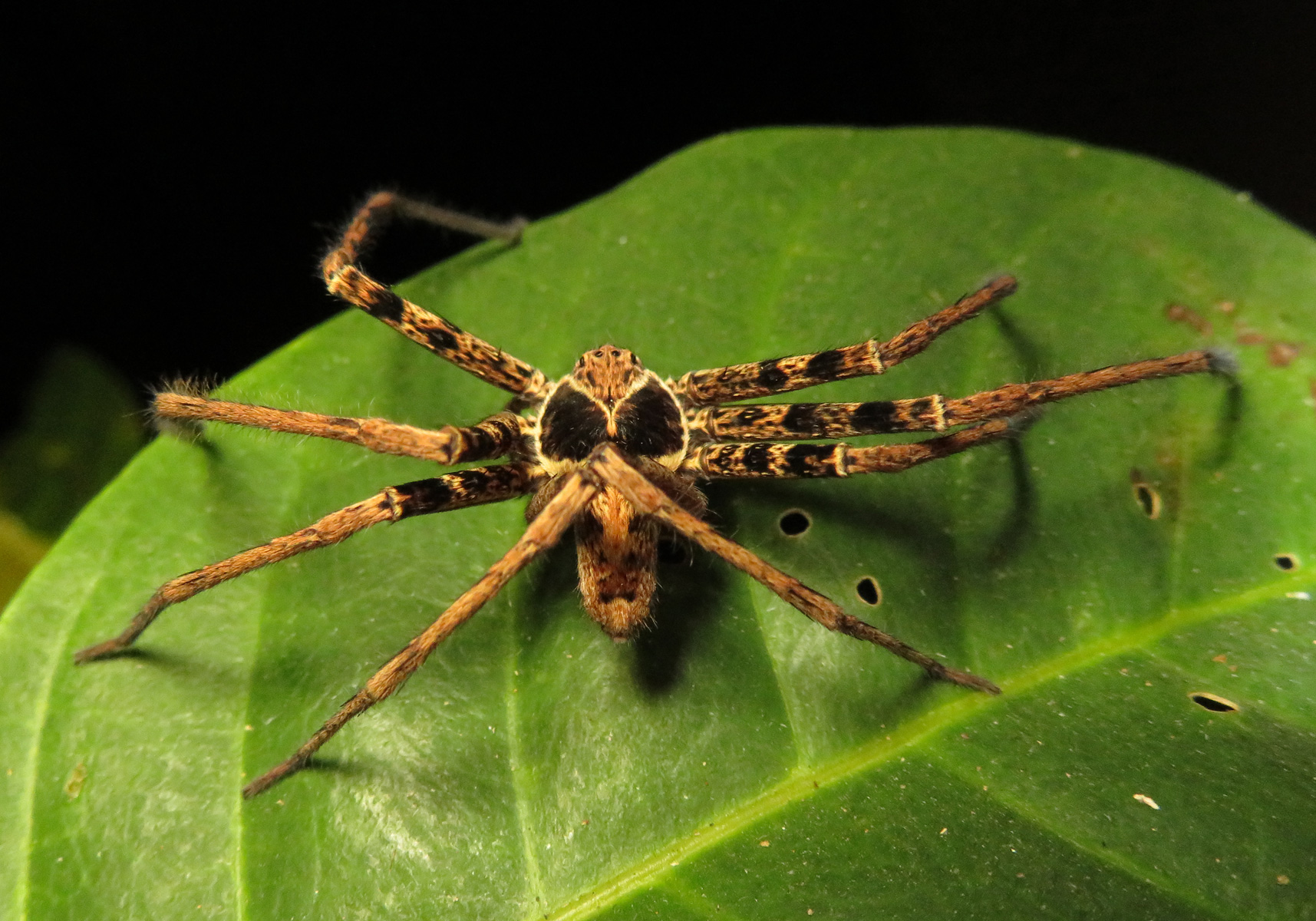
Spiders of the subfamily Heteropodinae are generally medium to very large-sized huntsman spiders characterized by their strongly laterigrade legs, which extend sideways in a crab-like fashion. The body is flattened dorsoventrally, allowing individuals to move easily into narrow spaces. Coloration is usually cryptic, ranging from light tan and gray to dark brown, often with banding or mottled patterns that provide effective camouflage.
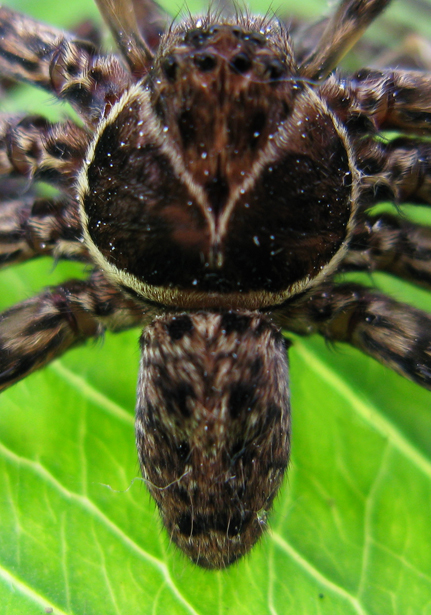
Morphologically, Heteropodinae exhibit a broad, flat cephalothorax and an oval to elongate abdomen. Legs are long, powerful, and adapted for rapid running rather than web building. The eyes are arranged in two rows, with the anterior row often slightly recurved. Diagnostic features for distinguishing genera and species are found primarily in the structure of the male palpal organs and the female epigyne.
Behaviorally, members of Heteropodinae are active, cursorial hunters. They do not build capture webs but rely on speed, agility, and stealth to ambush or pursue prey, which consists mainly of insects and other arthropods. Most species are nocturnal, hiding during the day and becoming active at night, though some may be crepuscular or occasionally active in low light.
Ecologically, Heteropodinae spiders are important predators in terrestrial ecosystems and play a role in controlling insect populations. Several species commonly occur in and around human dwellings, where they are often tolerated or valued for their role in reducing pest insects. The subfamily includes well-known genera such as Heteropoda and represents a prominent and diverse lineage within the huntsman spiders.