

Asian Forest Scorpions (Genus Heterometrus)
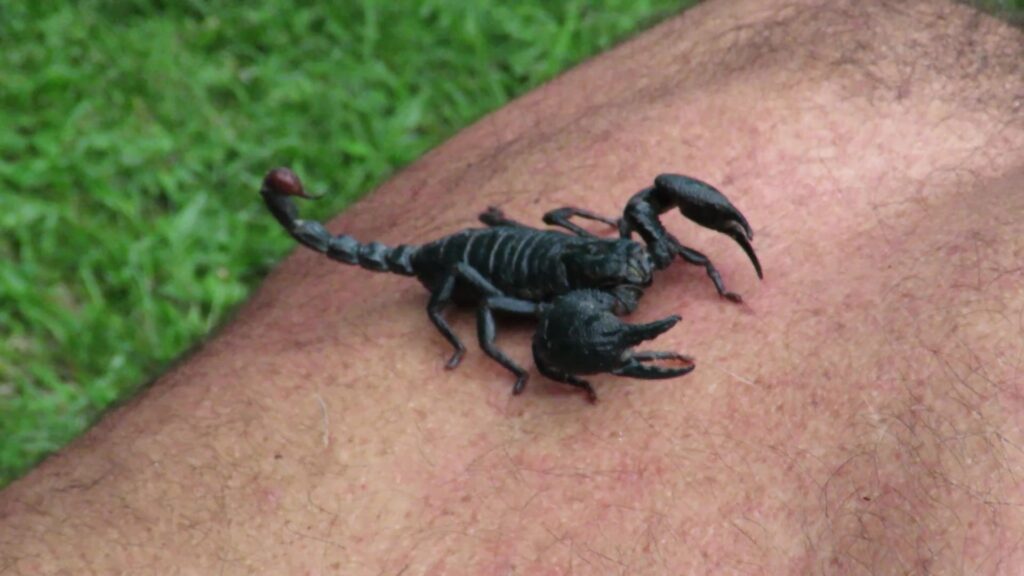
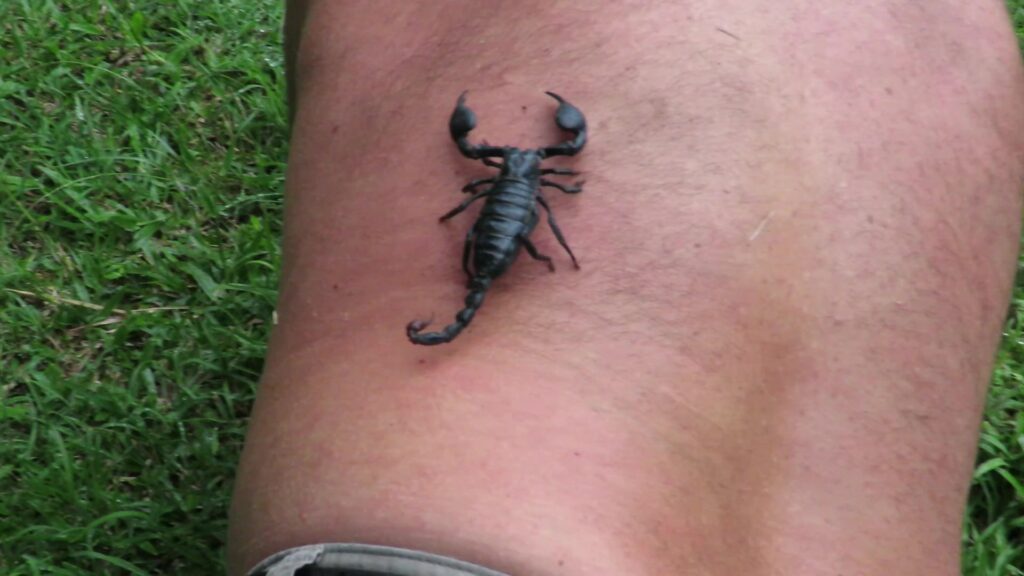
The genus Heterometrus comprises the Asian forest scorpions, a group of large, robust scorpions in the family Scorpionidae and subfamily Heterometrinae. These arachnids are native to South and Southeast Asia, where they inhabit tropical forests, woodland, plantations, and other environments with suitable soil and ground cover. They are particularly recognizable by their dark coloration, powerful pincers, and predominantly nocturnal lifestyle.
Species of Heterometrus are among the most conspicuous large scorpions in their native habitats. Their bodies are typically dark brown to glossy black, with a heavily armored appearance. Like other scorpions, they have two main body regions, four pairs of walking legs, a pair of large pedipalps ending in pincers, and a segmented tail that curves forward when the animal is threatened or preparing to sting.
One of the genus’s defining features is its powerful, broad pincers, which are used to seize prey, restrain struggling animals, and defend against predators. The relative proportions of the pincers and tail vary among species. Their robust build distinguishes them from many slender-tailed scorpions that depend more heavily on venom to subdue prey. Nevertheless, Heterometrus species also possess venom glands and a functional sting.
These scorpions are relatively large arachnids. Depending on the species and individual, adults may reach approximately 10–15 cm in total length, with some individuals appearing even larger. Their exoskeleton is usually dark and glossy, while the underside and joints may show brown, reddish, or lighter tones. Differences in body proportions, pincers, sensory structures, and reproductive anatomy are important for distinguishing closely related species.
The genus is distributed across South and Southeast Asia, including parts of the Indian subcontinent, mainland Southeast Asia, and the islands of the Malay Archipelago. Individual species may have relatively restricted ranges. Although the name “forest scorpion” suggests dependence on dense rainforest, research shows that Heterometrus species also inhabit tropical deciduous forests, savannas, and scrublands. All are fossorial, meaning they dig or occupy burrows in the ground.
Heterometrus species are primarily nocturnal ambush predators. During the day, they remain concealed in burrows, beneath stones, or among decaying vegetation. At night, they emerge to search for prey, using sensory structures that detect vibrations and movement in their surroundings. Their burrows provide shelter from predators and help buffer changes in temperature and moisture.
Their diet consists mainly of insects, spiders, and other small invertebrates. A scorpion typically grips its prey with its pincers, using its sting when necessary to subdue it. This combination of mechanical strength and venom makes Heterometrus an effective predator despite its relatively slow, deliberate movements.
Reproduction follows the characteristic scorpion life cycle. During courtship, the male grasps the female’s pedipalps and guides her through a coordinated movement before depositing a spermatophore for fertilization. Females give birth to live young rather than laying eggs externally. The newborn scorpions climb onto the mother’s back and remain there until their first molt, after which they gradually disperse and develop independently.
Representative species include Heterometrus spinifer, a large, dark Asian forest scorpion; H. longimanus, noted for its relatively elongated pincers; and H. swammerdami, a particularly large species associated with the Indian subcontinent and Sri Lanka. The genus has undergone significant taxonomic revision, so species names and boundaries in older references may differ from those used in modern classifications.
Ecologically, Heterometrus helps regulate populations of insects and other ground-dwelling invertebrates. It can also serve as prey for larger animals, including birds, reptiles, and mammals. Its burrowing activity contributes to the structure of the soil environment and creates sheltered spaces within the forest-floor ecosystem.
Some species are popular in the exotic pet trade because of their impressive size and appearance. However, they should not be handled casually: their pincers can inflict painful injuries, and their sting can cause significant pain or other symptoms. Habitat disturbance and collection may also affect wild populations, especially species with limited distributions.
Overall, Heterometrus is a distinctive genus of large, burrowing Asian scorpions whose robust bodies, powerful pincers, nocturnal habits, and live-bearing reproduction reflect adaptations to life on the forest floor and in other terrestrial habitats.