

Subfamily Heterometrinae
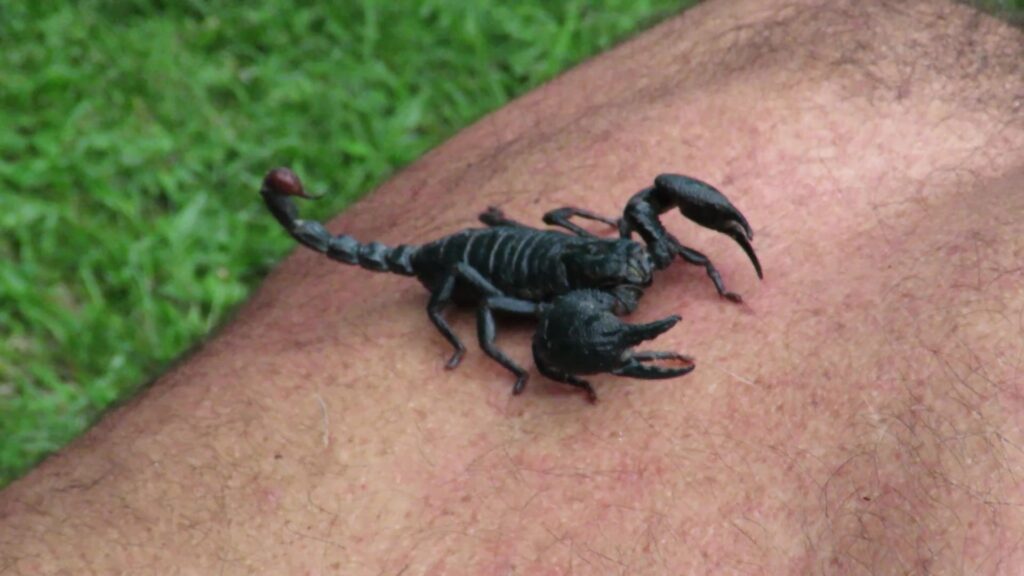
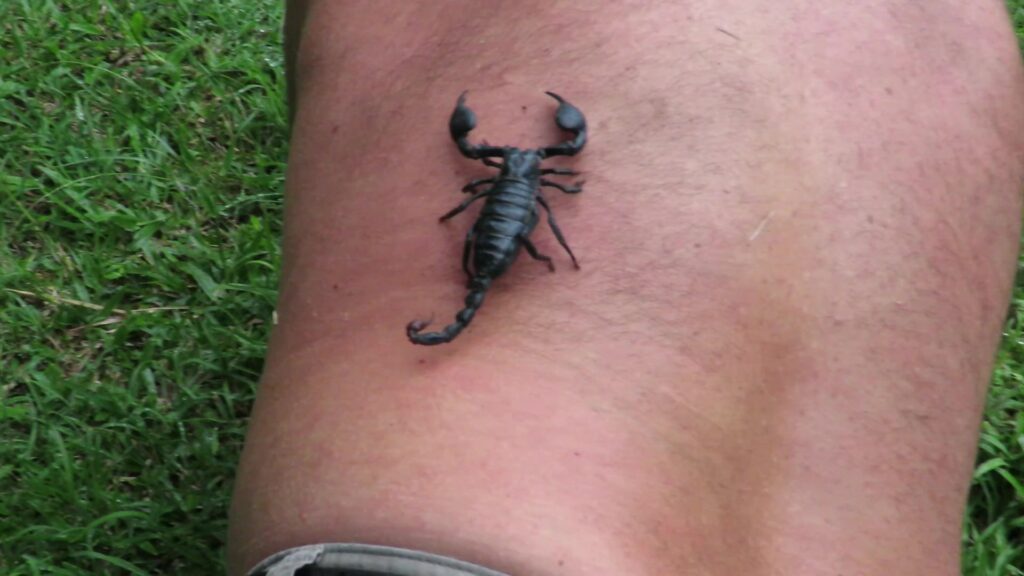
The subfamily Heterometrinae is a group of large, robust scorpions within the family Scorpionidae. Its members are commonly associated with tropical and subtropical regions of South and Southeast Asia, where they inhabit forests, woodland, plantations, and other environments that provide suitable ground cover and burrowing sites. Many are commonly called Asian forest scorpions because of their dark coloration, powerful pincers, and association with humid forest-floor habitats.
Heterometrinae belongs to the arachnid order Scorpiones. Like other scorpions, heterometrines have four pairs of walking legs, a pair of grasping pedipalps, and a segmented tail ending in a venom-bearing telson. Their exoskeleton is typically dark brown, reddish brown, or glossy black, although coloration and body proportions vary among species.
One of the subfamily’s most recognizable features is its large, strong pincers. These structures are used to seize prey, hold struggling animals, and defend against threats. In many species, the pincers are broad and heavily built, giving the scorpion a stocky appearance. The tail is usually proportionally less slender than that of some scorpions that rely more heavily on rapid stinging to capture prey.
Heterometrines are generally medium-sized to very large scorpions. Some species can reach lengths approaching or exceeding 10–15 cm, including the tail, although measurements vary by species and sex. Adult males and females may differ in body proportions, particularly in the shape and relative length of the pedipalps and tail. These differences, along with the arrangement of body plates and sensory structures, help specialists distinguish related species.
Heterometrines are burrowing, mostly nocturnal predators. They shelter in tunnels beneath stones, in open soil, or among forest-floor debris. Their burrows provide protection from predators and help buffer changes in temperature and humidity. Although many are associated with moist tropical forests, members of the subfamily also occur in tropical deciduous forests, savannas, and scrubland.
Their diet consists mainly of insects, spiders, and other small invertebrates. They seize prey with their pincers and may use their sting when necessary. Their broad pedipalps are important tools for capturing and restraining prey, while sensory structures on their legs and body help them detect vibrations and nearby movement in darkness.
Reproduction follows the general scorpion pattern. During courtship, the male grasps the female’s pedipalps and guides her in a coordinated movement before depositing a spermatophore for fertilization. Females give birth to live young, which climb onto the mother’s back shortly after birth and remain there until their first molt. The juveniles then disperse gradually as they grow and molt through successive developmental stages.
Representative genera include Heterometrus, the best-known Asian forest scorpions; Chersonesometrus; Deccanometrus; Gigantometrus; Javanimetrus; Sahyadrimetrus; and Srilankametrus. The modern classification of this group was substantially revised in a 2020 systematic study that combined anatomical characters with DNA evidence, transferring numerous species formerly assigned to Heterometrus into other genera.
Heterometrines contribute to terrestrial ecosystems by consuming insects and other invertebrates, helping regulate local prey populations. Their burrows also create sheltered spaces in the soil environment. They may themselves be eaten by larger predators, including some reptiles, birds, and mammals.
Although these scorpions are sometimes kept in captivity because of their impressive size and appearance, they should not be handled casually. Their powerful pincers can cause painful injuries, and their stings can be medically significant even though venom potency varies among species. Habitat disturbance, collection for the pet trade, and changes to forest-floor environments may affect local populations.
Overall, Heterometrinae is a distinctive subfamily of Asian forest and burrowing scorpions, characterized by robust bodies, powerful pincers, subterranean shelters, and nocturnal predation. Its members are well adapted to life close to the ground and illustrate the remarkable diversity of scorpions across South and Southeast Asia.