Bali Wildlife
Every Spices Matter


Hersiliinae is a subfamily of the spider family Hersiliidae (Order Araneae, superfamily Oecobioidea). The subfamily is widely distributed across tropical and subtropical regions of Africa, Asia, Australia, and parts of the Americas. Members of Hersiliinae are primarily arboreal or saxicolous, most commonly found on tree trunks, large branches, rocks, and walls where flat surfaces and crevices are available.
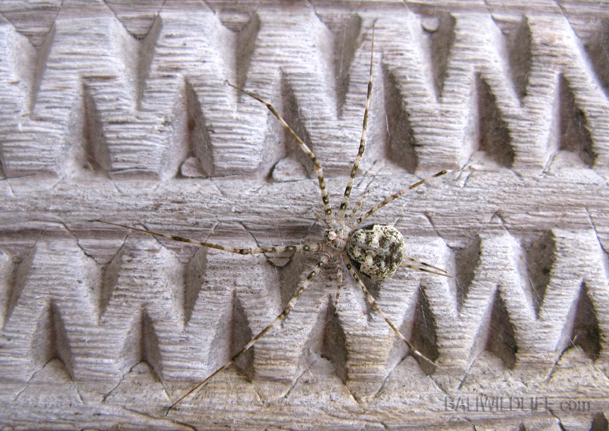
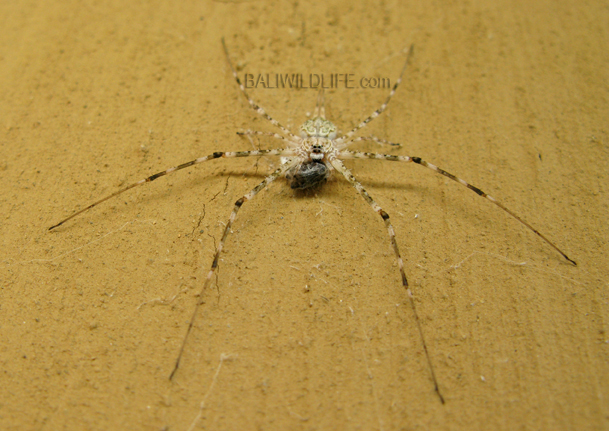
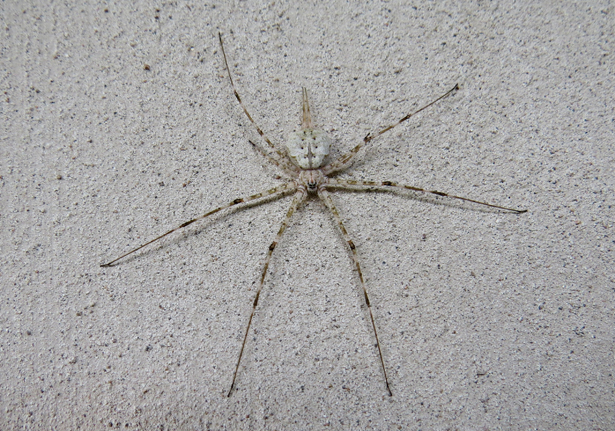
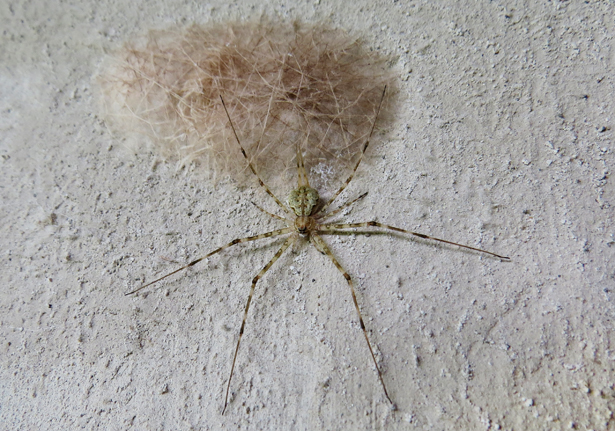
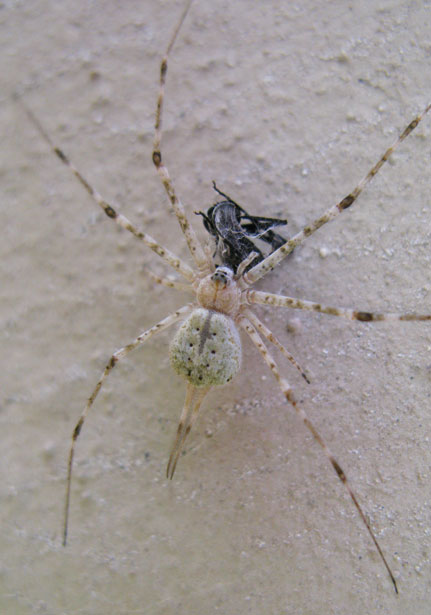
Spiders of the subfamily Hersiliinae are medium-sized and are immediately recognizable by their extremely elongated posterior spinnerets, which extend far beyond the abdomen and resemble a pair of tails. The body is dorsoventrally flattened, allowing the spider to remain closely pressed against the substrate. Coloration is typically cryptic, consisting of mottled browns, grays, and earthy tones that provide effective camouflage against bark and stone.
Morphologically, Hersiliinae exhibit a low, broad cephalothorax, an oval to rounded abdomen, and long, laterigrade legs arranged in a wide, radiating posture. These features enhance stability and speed on vertical or flat surfaces. Diagnostic characters for distinguishing genera and species are found mainly in the structure of the male palpal organs and the female epigyne.
Behaviorally, members of Hersiliinae are active hunters rather than web builders. They rely on speed and specialized silk use to capture prey, rapidly circling insects and wrapping them with silk released from the elongated spinnerets before biting. Most species are nocturnal or crepuscular, remaining motionless and well camouflaged during daylight hours.
Ecologically, Hersiliinae spiders are important predators of insects and other small arthropods in arboreal and rocky habitats. Their unique morphology and hunting technique make the subfamily a distinctive and ecologically specialized component of the two-tailed spiders.