

Superfamily Helicarionoidea
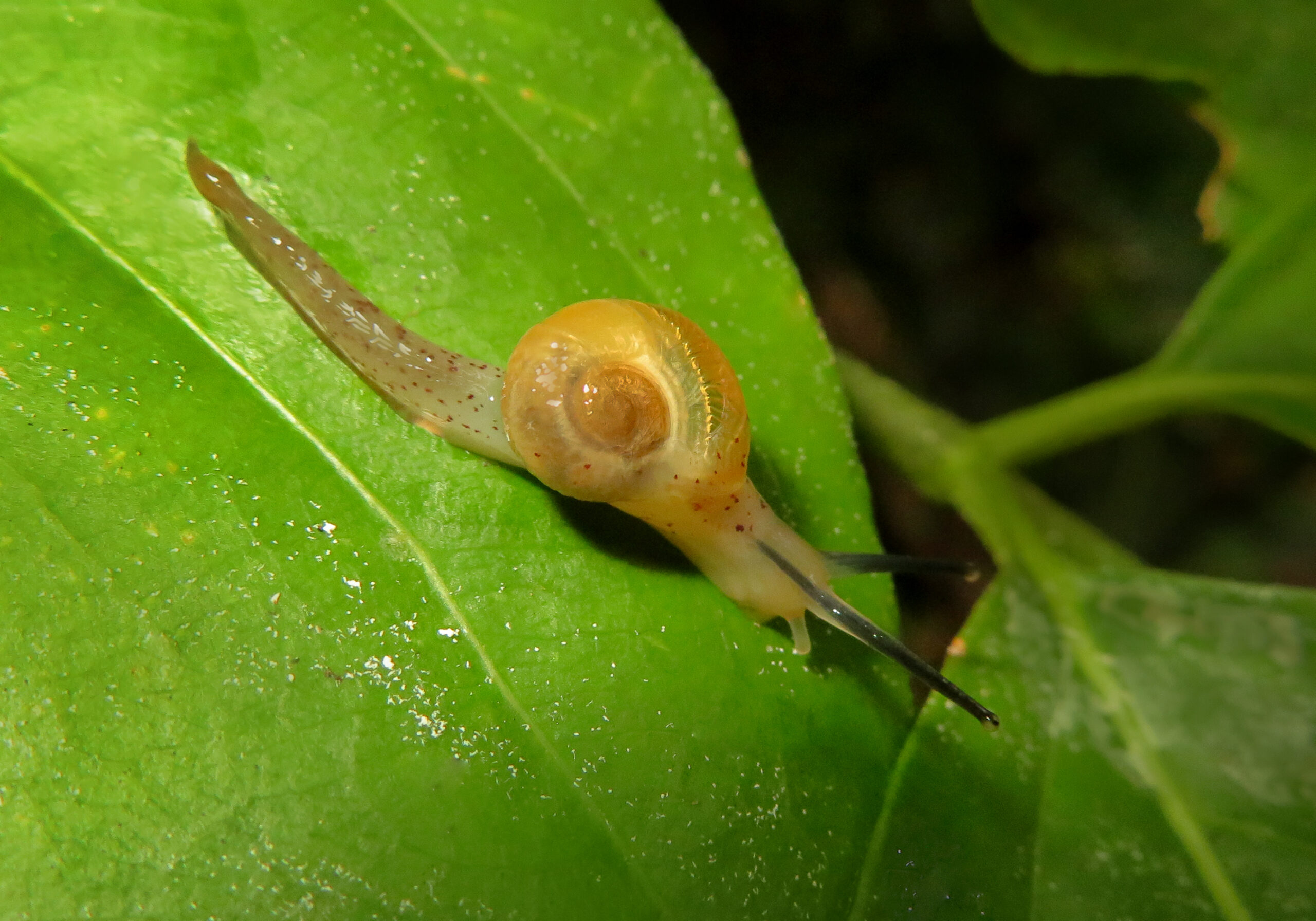
Helicarionoidea is a superfamily of terrestrial air-breathing snails and semi-slugs within the order Stylommatophora (Class Gastropoda, Phylum Mollusca). The superfamily comprises several families, including Helicarionidae, Ariophantidae, Urocyclidae, and related groups, with hundreds of described species distributed primarily throughout tropical and subtropical regions of Africa, Asia, Australia, and the Pacific islands. Members inhabit tropical rainforests, cloud forests, temperate forests, shrublands, limestone hills, caves, plantations, parks, and gardens, where moist microhabitats are available.
Members of the superfamily Helicarionoidea are generally small to medium-sized and include both fully shelled land snails and semi-slugs, in which the shell is greatly reduced and cannot fully accommodate the body. The shell, when present, is usually thin, flattened, and translucent to light brown, amber, or horn-colored. The soft body is often elongated and highly flexible, allowing semi-slugs to move rapidly through vegetation. Two pairs of retractable tentacles are present on the head, with the upper pair bearing the eyes and the lower pair functioning primarily in touch and chemoreception. A muscular foot secretes mucus that facilitates locomotion and reduces water loss.
Most helicarionoids are nocturnal or active during periods of high humidity, emerging after rainfall or during cool, damp conditions. During dry weather they seek shelter beneath logs, rocks, leaf litter, bark, or within crevices to avoid desiccation. Their relatively reduced shell allows many species to move more efficiently through dense vegetation and narrow spaces than fully shelled land snails.
Members of Helicarionoidea are primarily herbivorous or detritivorous, feeding on fresh leaves, fungi, algae, mosses, lichens, decaying plant material, and microorganisms growing on vegetation. Some species also consume flowers, fruits, seedlings, or carrion opportunistically. Their rasping radula enables them to scrape food from a wide variety of surfaces, contributing to decomposition and nutrient cycling.
The life cycle involves egg, juvenile, and adult stages. Most species are simultaneous hermaphrodites, possessing both male and female reproductive organs and exchanging sperm during mating. Females (or both mating partners) lay clusters of soft, spherical eggs in moist soil, beneath leaf litter, or within protected crevices. Juveniles emerge as miniature versions of the adults and gradually develop through continuous growth rather than metamorphosis.
The superfamily includes numerous genera within families such as Helicarionidae, Ariophantidae, and Urocyclidae. Many species exhibit remarkable diversity in shell reduction, body coloration, and ecological specialization, particularly in tropical forests where endemism is high.
Ecologically, Helicarionoidea snails and semi-slugs play important roles as decomposers and herbivores, contributing to nutrient recycling and the breakdown of organic matter in forest ecosystems. They also serve as prey for birds, reptiles, amphibians, mammals, beetles, and other invertebrate predators. Because they are highly sensitive to humidity, habitat disturbance, pollution, and climate change, helicarionoid snails are widely regarded as valuable indicators of forest health, habitat quality, and biodiversity.