

Honey Bees (Genus Apis)
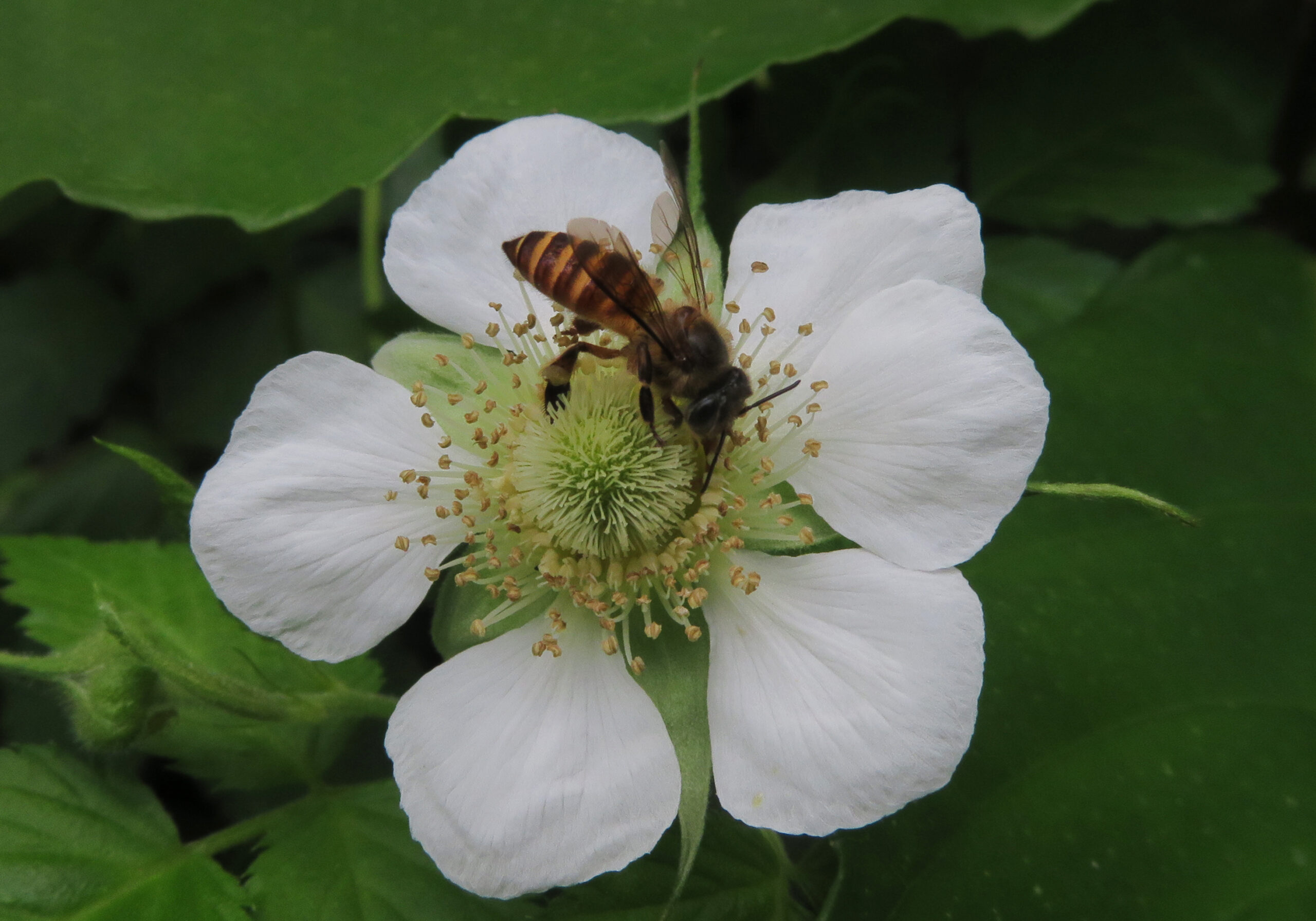
Apis is a genus of eusocial bees within the tribe Apini (Subfamily Apinae, Family Apidae, Order Hymenoptera). Commonly known as the true honey bees, the genus comprises eight extant recognized species and numerous subspecies distributed naturally across Europe, Africa, Asia, and the Middle East. Through beekeeping and accidental introductions, several species—especially Apis mellifera—are now found on every continent except Antarctica. Members inhabit tropical rainforests, temperate forests, savannas, grasslands, agricultural landscapes, orchards, parks, gardens, and urban environments wherever flowering plants are abundant.
Bees of the genus Apis are generally medium-sized, measuring approximately 10–20 mm in body length, depending on the species and caste. They possess a compact, densely hairy body adapted for efficient pollen collection. Their coloration typically consists of alternating bands of golden-brown, yellow, orange, and black on the abdomen, although patterns vary among species and subspecies. Workers possess specialized pollen baskets (corbiculae) on the hind legs for transporting pollen, while their long, hairy tongue enables efficient collection of nectar from a wide variety of flowers.
Members of Apis are diurnal and are among the most efficient pollinators of flowering plants. Workers forage over distances of several kilometers, collecting nectar as an energy source and pollen as the primary protein source for developing larvae. They communicate the location of profitable food sources through the remarkable waggle dance, which conveys the direction, distance, and quality of floral resources relative to the position of the sun. Workers also use pheromones extensively for colony communication, defense, and coordination of daily activities.
The life cycle involves complete metamorphosis, consisting of egg, larva, pupa, and adult stages. Honey bees are eusocial, living in highly organized colonies composed of a single fertile queen, thousands of sterile female workers, and seasonally produced males (drones). Colonies construct intricate hexagonal wax combs that serve for brood rearing and for storing pollen and honey. Honey is produced by processing floral nectar and serves as a long-term food reserve during periods when flowers are scarce. New colonies are established through swarming, in which the queen leaves the original nest accompanied by a large group of workers.
The genus includes eight recognized living species: Apis mellifera (Western Honey Bee), Apis cerana (Eastern Honey Bee), Apis dorsata (Giant Honey Bee), Apis laboriosa (Himalayan Giant Honey Bee), Apis florea (Dwarf Honey Bee), Apis andreniformis (Black Dwarf Honey Bee), Apis nigrocincta (Philippine Honey Bee), and Apis koschevnikovi (Koschevnikov’s Honey Bee). These species differ in nesting habits, colony size, defensive behavior, and geographic distribution, but all exhibit advanced social organization.
Ecologically, Apis bees are among the world’s most important pollinators, contributing to the reproduction of thousands of wild flowering plants and a large proportion of economically important crops. Their pollination services are fundamental to ecosystem functioning, biodiversity, and global food security. In addition to pollination, honey bees produce honey, beeswax, propolis, royal jelly, and bee venom, all of which have ecological, cultural, and economic importance. Because their populations are affected by habitat loss, pesticide exposure, parasites, pathogens, and climate change, Apis species are widely regarded as key indicators of environmental health, pollinator conservation, and ecosystem sustainability.