

Parallel-spined Spiny Orbweaver (Gasteracantha diardi)
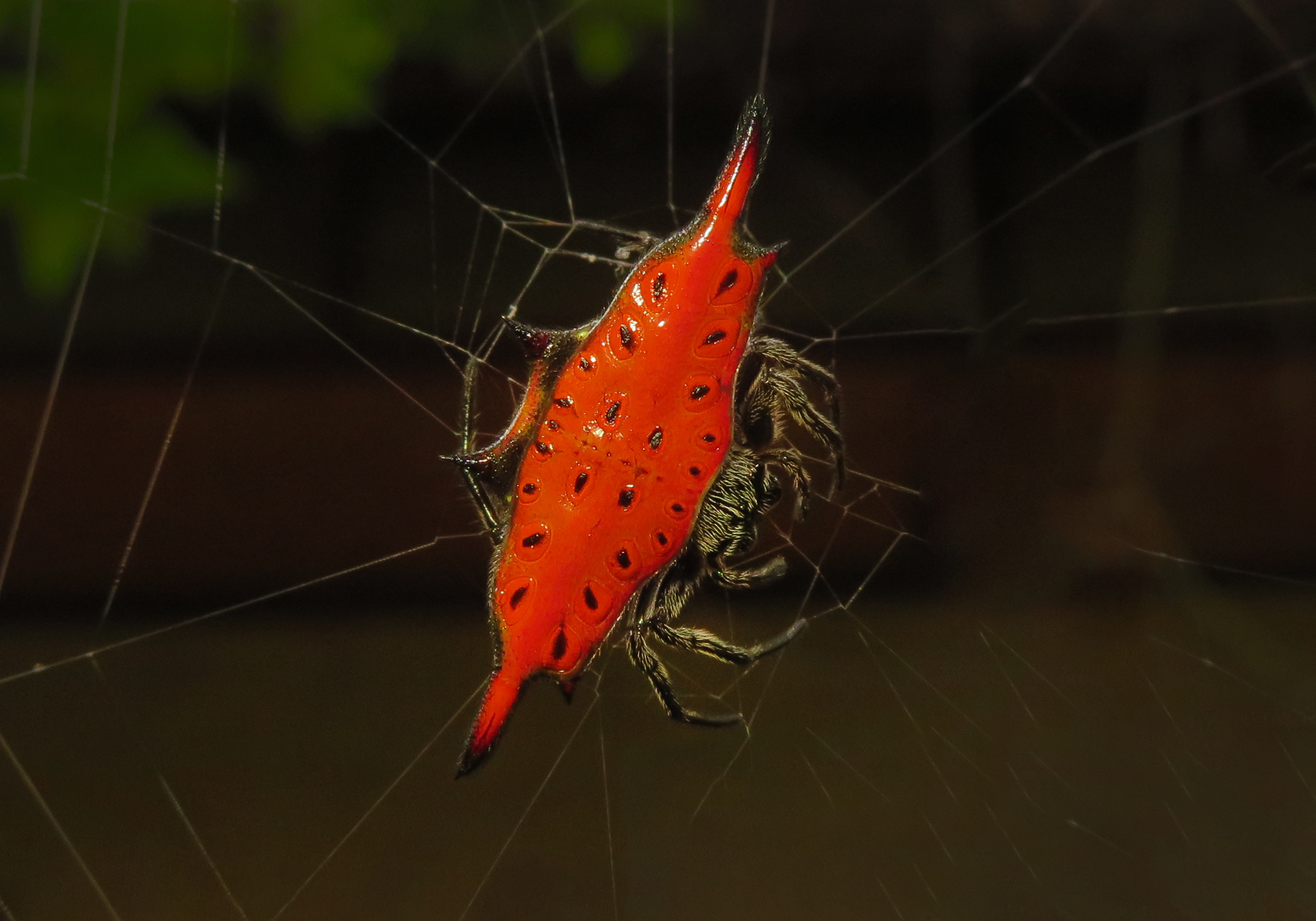
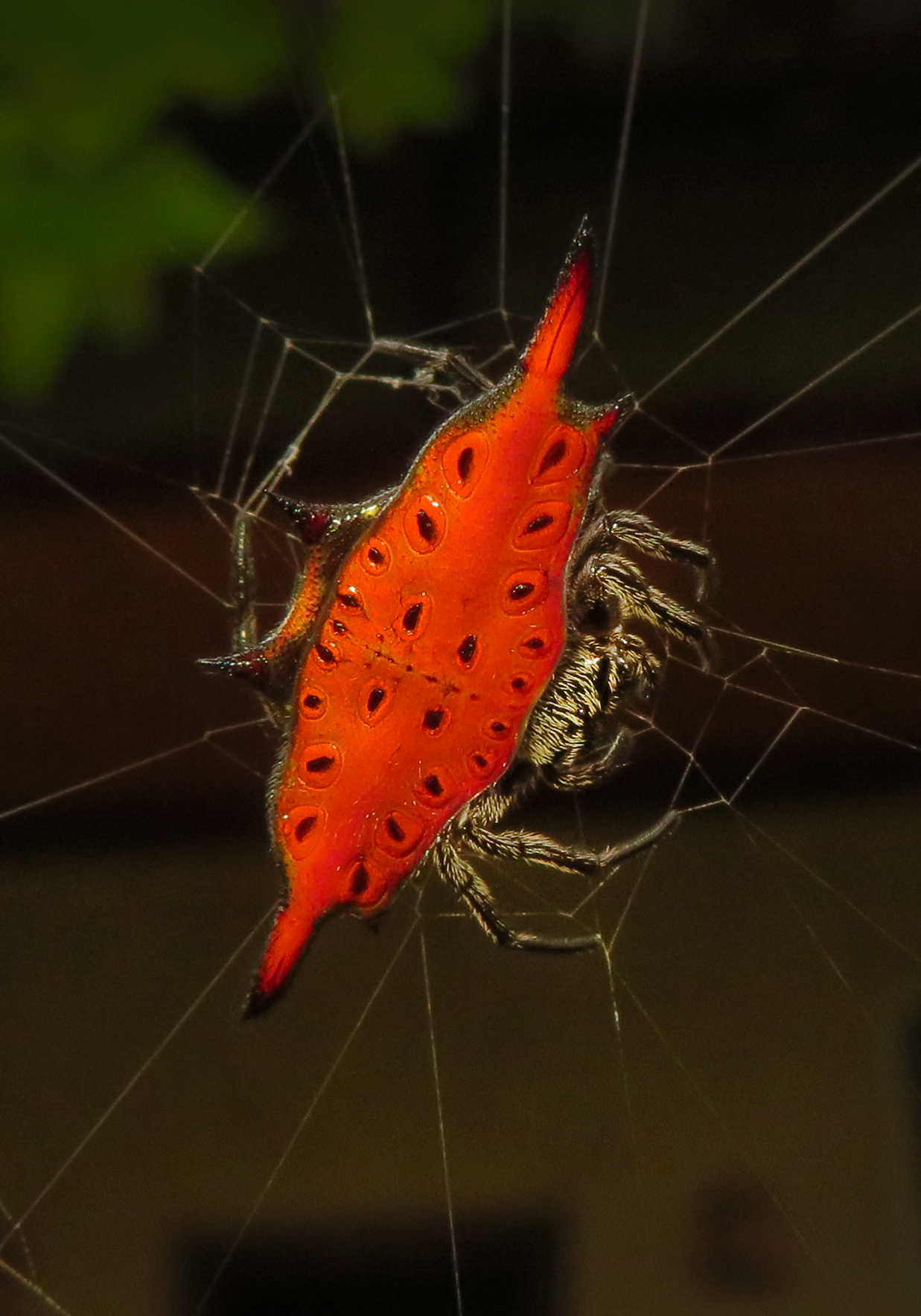
Gasteracantha diardi is a species of orb-weaving spider belonging to the genus Gasteracantha (Family Araneidae, Order Araneae, Class Arachnida). Commonly known as Diard’s Spiny Orb-weaver, it is distributed throughout South and Southeast Asia, including southern Thailand, Peninsular Malaysia, Singapore, Indonesia, Brunei, and parts of the Philippines. The species inhabits tropical rainforests, secondary forests, woodland edges, mangroves, plantations, parks, gardens, and other well-vegetated habitats, where it constructs its web among shrubs and small trees.
Gasteracantha diardi is a small to medium-sized orb-weaving spider, with females measuring approximately 8–15 mm in body length, while males are much smaller and more slender. The species is readily recognized by its broad, hardened, nearly circular abdomen bearing six prominent spines, a characteristic feature of the genus. The abdominal coloration is highly variable but commonly includes bright white, yellow, orange, or crimson, often marked with contrasting black spots or bands. The rigid, spiny abdomen serves as an effective defense against predators and makes the spider highly conspicuous. The cephalothorax is relatively small, and the legs are black to dark brown with short spines.
Adults are primarily diurnal, remaining motionless at the center of their orb web during the day with the underside facing downward. The web is typically suspended vertically between branches or shrubs and is rebuilt or repaired regularly. When disturbed, the spider may vibrate rapidly within the web or drop on a silk safety line to escape predators.
Gasteracantha diardi is a carnivorous predator that feeds mainly on flying insects, including flies, mosquitoes, moths, butterflies, beetles, bees, and small wasps. Prey becomes entangled in the sticky spiral threads of the orb web, after which the spider rapidly approaches, immobilizes it with venom delivered through its chelicerae, and wraps it in silk before feeding. Like other orb-weavers, the venom is adapted for subduing small arthropods and is not considered medically significant to humans.\
The life cycle includes egg, spiderling, juvenile, and adult stages. After mating, the female deposits several hundred eggs within a silken egg sac attached to leaves or hidden among vegetation. The eggs hatch into tiny spiderlings that disperse by ballooning, releasing fine silk threads that carry them on air currents to new habitats. Juveniles pass through multiple molts before reaching maturity, constructing progressively larger orb webs as they grow.
Ecologically, Gasteracantha diardi is an important natural predator of flying insects and contributes to regulating insect populations in tropical ecosystems. In turn, it serves as prey for birds, lizards, frogs, parasitic wasps, and larger spiders. Because it depends on structurally complex vegetation for web construction and is sensitive to habitat disturbance, Gasteracantha diardi is considered a useful indicator of healthy forest edges, gardens, and other well-vegetated habitats.