Bali Wildlife
Every Spices Matter


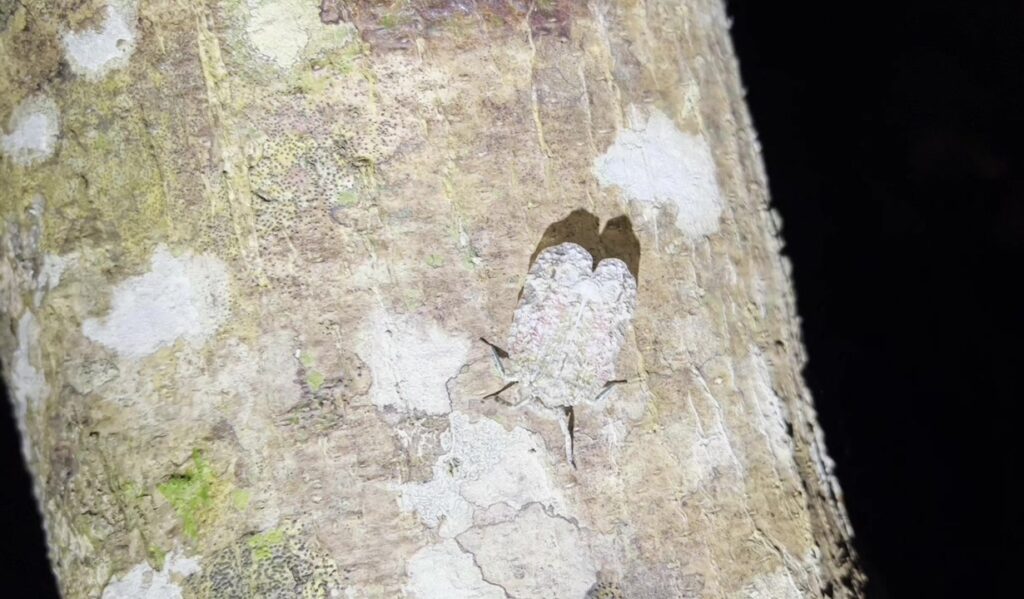
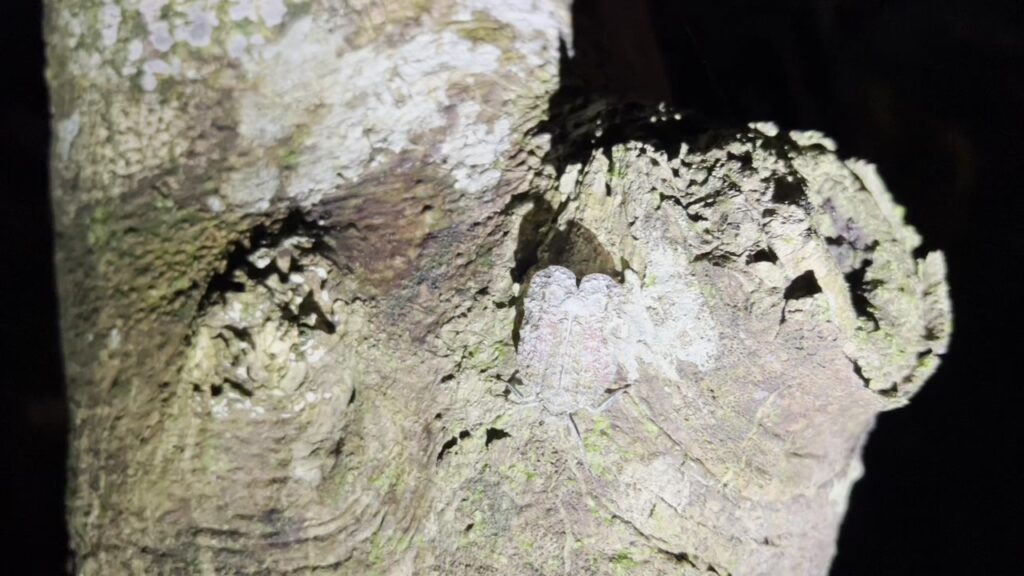
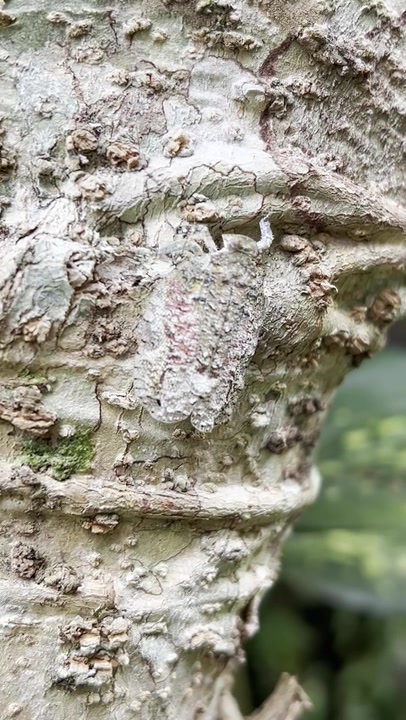
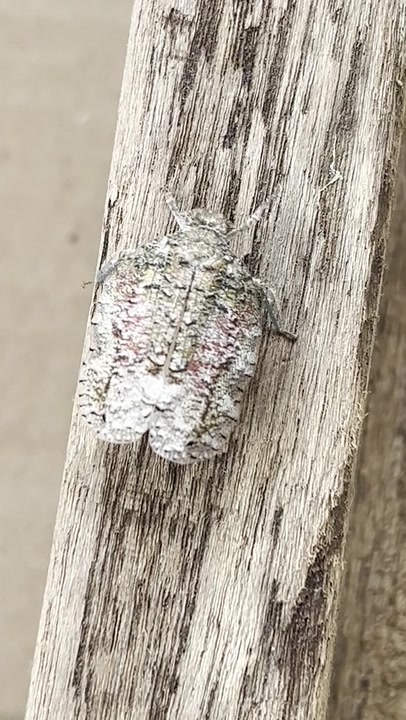
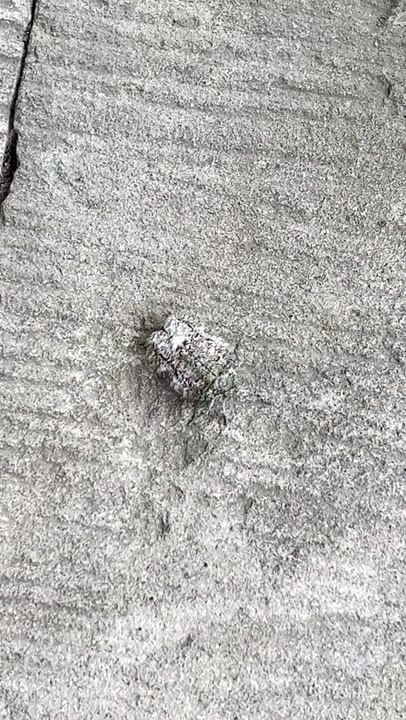
Eurybrachidae is a family of planthoppers within the superfamily Fulgoroidea (Infraorder Fulgoromorpha, Order Hemiptera). Commonly known as eurybrachid planthoppers, the family comprises approximately 200 described species distributed primarily throughout tropical and subtropical regions of Africa, South Asia, Southeast Asia, Australia, and the Indo-Pacific islands. Members inhabit tropical rainforests, secondary forests, woodland edges, mangroves, plantations, orchards, parks, and gardens, where they are closely associated with shrubs, trees, and other woody vegetation.
Planthoppers of the family Eurybrachidae are generally medium to large, measuring approximately 10–35 mm in body length. They possess a broad, robust body, a short head, and two pairs of well-developed wings that are held roof-like over the abdomen when at rest. The forewings are often broad and brightly colored, displaying combinations of green, brown, black, yellow, orange, white, or red, sometimes with intricate spots, bands, or translucent patches. The hindwings are usually broader and more membranous. Many species exhibit striking coloration and wing patterns that function in camouflage, startle displays, or mimicry. Nymphs commonly produce conspicuous waxy filaments from specialized abdominal glands, which help protect them from predators and desiccation.
Adults are primarily diurnal, although some species are most active during dawn and dusk. They spend much of their time resting on leaves, stems, or tree trunks, moving by walking, short hops, or rapid flights when disturbed. Like other members of Fulgoroidea, they possess piercing–sucking mouthparts adapted for extracting plant sap from stems, branches, and leaves.
Members of Eurybrachidae are phytophagous (plant-feeding), feeding exclusively on the phloem sap of a variety of woody plants, shrubs, vines, and occasionally herbaceous vegetation. Most species exhibit relatively specific host plant associations, although the biology of many tropical taxa remains poorly studied. Because they feed on nutrient-poor plant sap, they excrete excess sugars as honeydew, which often attracts ants and supports the growth of sooty molds.
The life cycle involves incomplete metamorphosis, consisting of egg, nymph, and adult stages. Females deposit eggs on the bark, stems, or undersides of leaves, often covering them with waxy secretions for protection. Wingless nymphs resemble adults but are more flattened and frequently covered with white waxy filaments. They undergo several molts before developing wings and reaching maturity, remaining on the same host plants throughout development.
The family includes numerous genera, such as Eurybrachys, Messena, Purusha, Nicidus, Thessitus, and Loxocephala. Many species are admired for their remarkable wing patterns and unusual body forms, although they are seldom abundant enough to become significant agricultural pests.
Ecologically, Eurybrachidae planthoppers are important components of tropical forest ecosystems, participating in plant–herbivore interactions and serving as prey for birds, reptiles, spiders, predatory insects, and parasitoid wasps. Their honeydew supports diverse communities of ants and microorganisms, contributing to forest food webs. Because many species are closely associated with intact woody vegetation and respond to habitat disturbance, eurybrachid planthoppers are valuable indicators of forest health, habitat quality, and regional biodiversity.