

Genus Emertonius
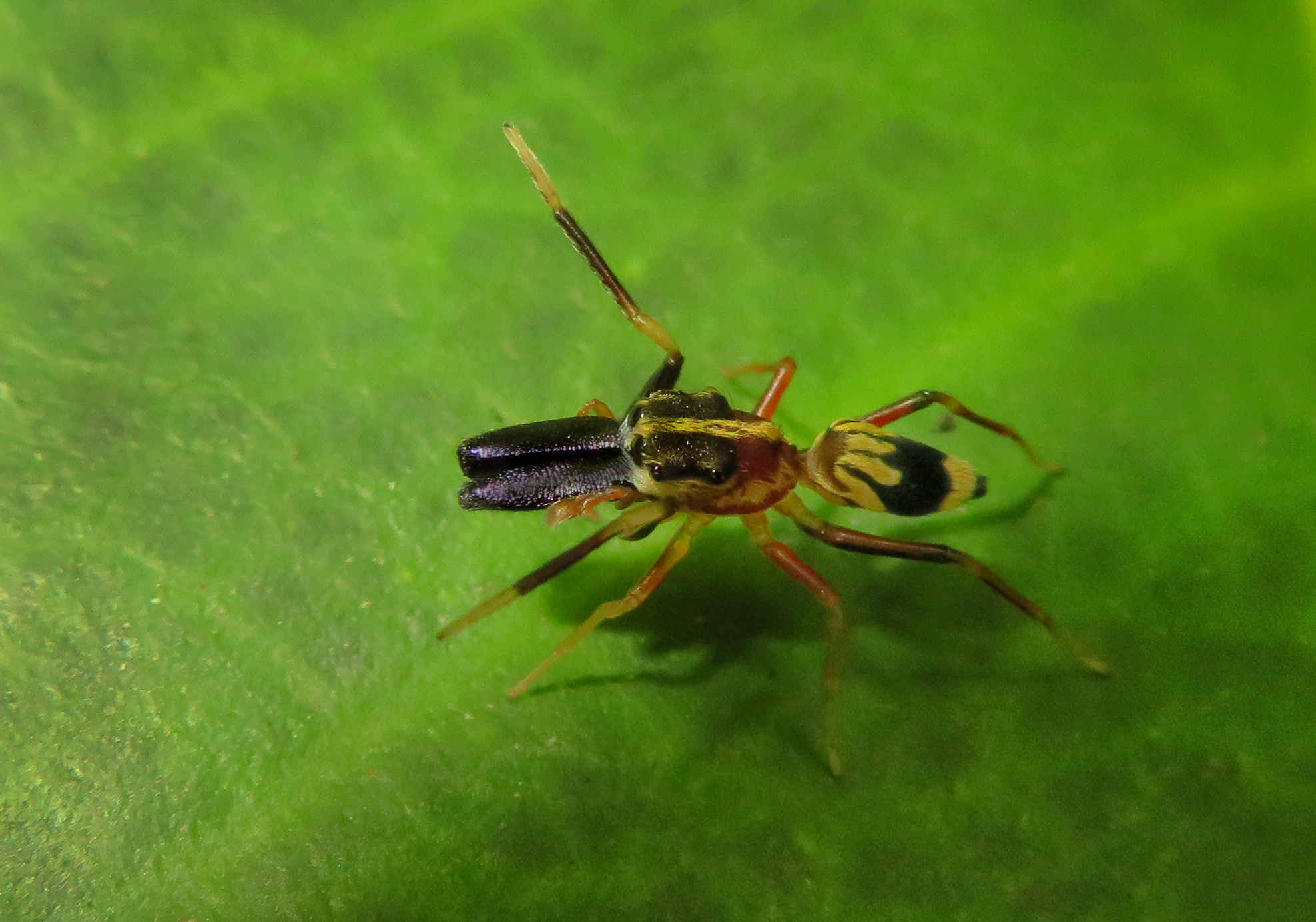
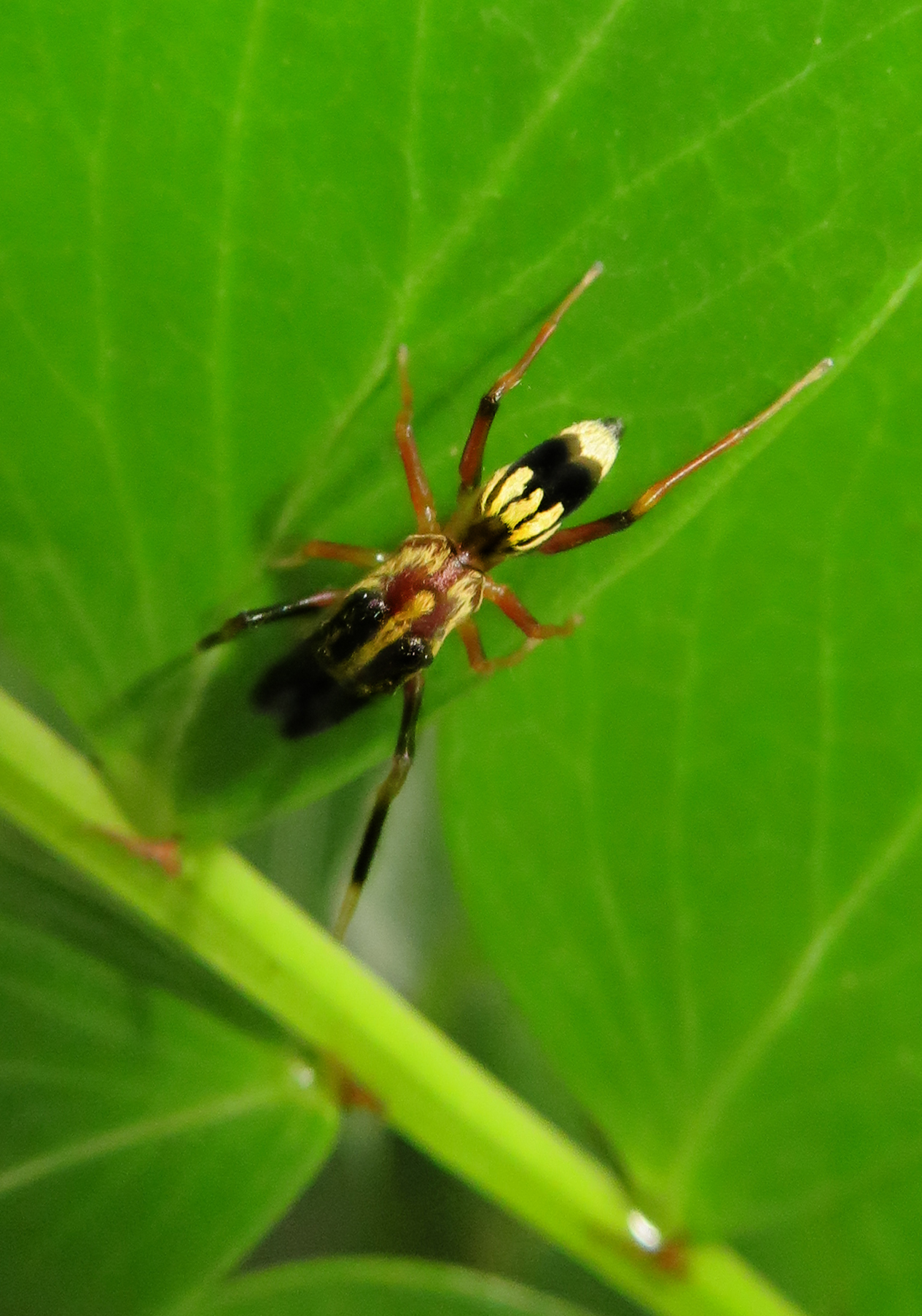
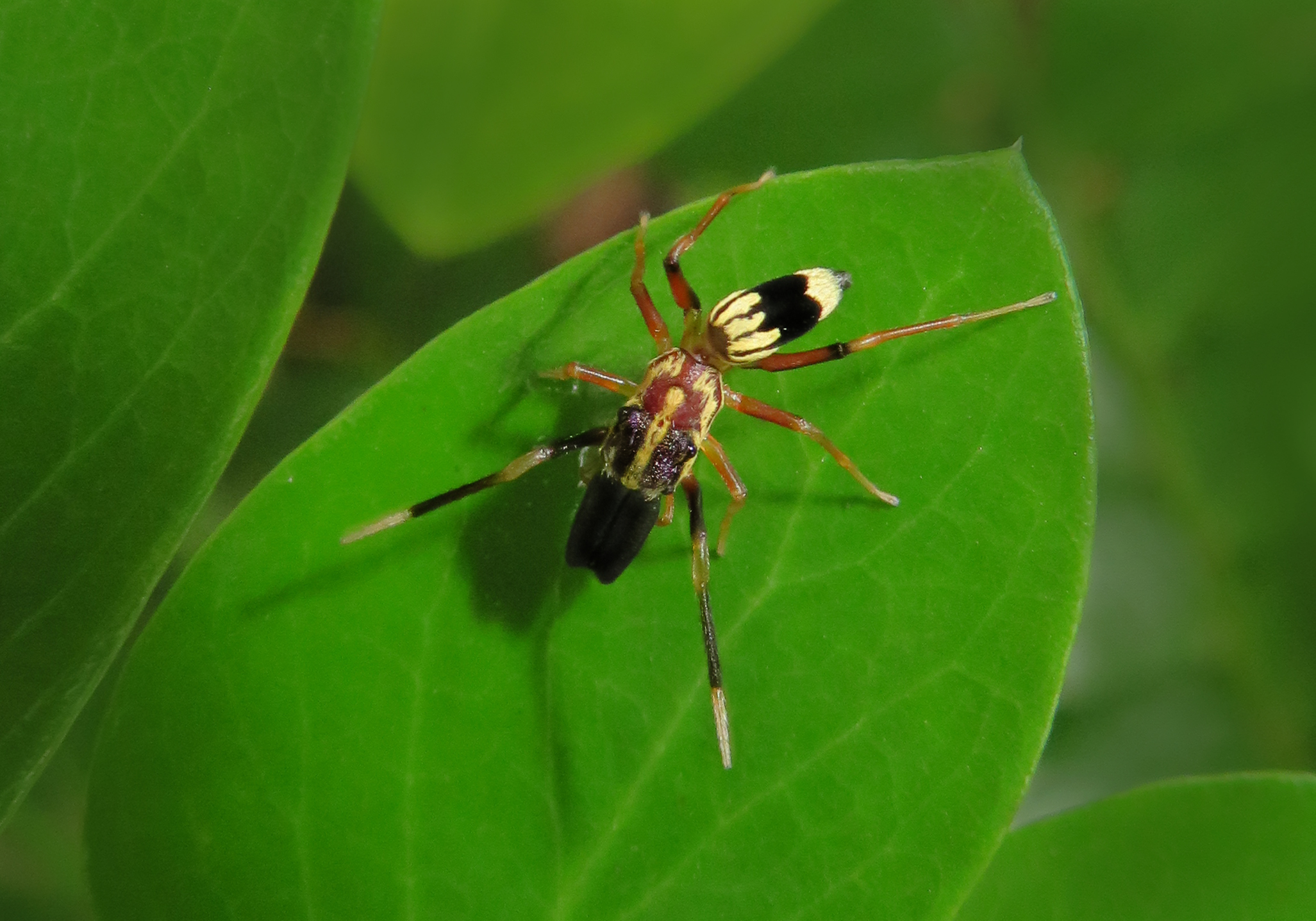
Emertonius is a genus of jumping spiders within the subfamily Salticinae (Family Salticidae, Order Araneae, Class Arachnida). Species of this genus are distributed primarily throughout South and Southeast Asia, extending into parts of East Asia and the Indo-Australian region. They inhabit tropical rainforests, secondary forests, woodland edges, mangroves, plantations, parks, gardens, and other vegetation-rich environments, where they are commonly found on leaves, shrubs, tree trunks, and low vegetation.
Spiders of the genus Emertonius are generally small, with body lengths ranging from approximately 3–8 mm. Like other jumping spiders, they possess a compact body, relatively short and sturdy legs, and a body covered with fine hairs and iridescent scales. Their coloration varies among species and may include shades of black, brown, gray, reddish-brown, or metallic green, often accented by white, yellow, or orange markings. The genus is characterized by the typical salticid eye arrangement, with a pair of exceptionally large forward-facing anterior median eyes that provide outstanding binocular vision, depth perception, and motion detection.
Adults are diurnal and are active visual hunters rather than web-builders. They move with deliberate, stop-and-go movements while scanning their surroundings for prey. Before making a jump, they attach a silken dragline to the substrate, which acts as a safety line if the leap is unsuccessful. Males perform elaborate courtship displays involving leg waving, body movements, and vibrational signals to attract females while reducing the risk of being mistaken for prey.
Members of Emertonius are carnivorous predators, feeding mainly on small insects and other arthropods, including flies, mosquitoes, leafhoppers, aphids, ants, and tiny moths. They stalk their prey carefully before capturing it with a rapid, accurate leap and subduing it with venom delivered through the chelicerae. Like other jumping spiders, their venom is adapted for immobilizing small arthropods and is not considered medically significant to humans.
The life cycle consists of egg, spiderling, juvenile, and adult stages. Females deposit eggs within a silken egg sac concealed beneath leaves, loose bark, or inside folded foliage, and often remain nearby to guard the developing brood. Spiderlings hatch after several weeks and undergo multiple molts before reaching maturity, gradually acquiring the coloration and morphology of adults.
The genus includes several described species, many of which remain poorly studied because of their small size and cryptic habits. Ongoing taxonomic research continues to improve understanding of the diversity and relationships within Emertonius and related jumping spider genera.
Ecologically, Emertonius spiders are important predators of small arthropods, helping regulate insect populations in forest and garden ecosystems. In turn, they serve as prey for birds, lizards, frogs, larger spiders, mantises, and predatory insects. Their dependence on structurally diverse vegetation and healthy microhabitats makes Emertonius species useful indicators of habitat quality, ecosystem health, and regional biodiversity.