

Large Banded Hawkmoth (Elibia dolichus)
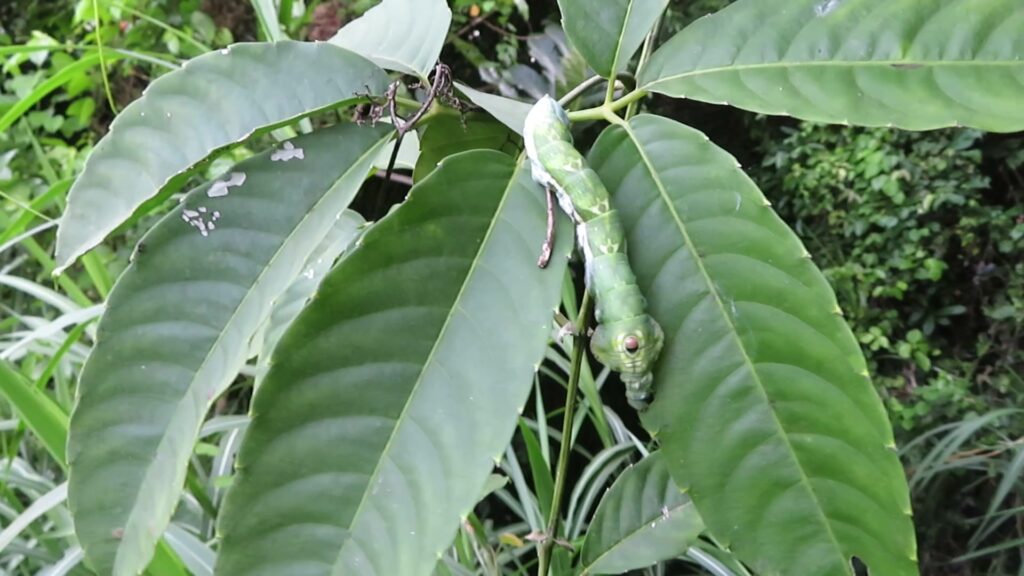
Elibia dolichus is a species of hawk moth belonging to the family Sphingidae, subfamily Macroglossinae, and tribe Macroglossini. It is associated with tropical and subtropical regions of Asia, where suitable forested habitats and host plants support its life cycle. Like other hawk moths, it has a streamlined body, elongated wings, and flight adaptations that enable efficient movement through vegetated environments. Its wings typically display subdued brown and gray tones with contrasting markings that provide camouflage among leaves, branches, and other natural surfaces. The species undergoes complete metamorphosis, developing through egg, larval, pupal, and adult stages. During the larval stage, the caterpillars feed on the foliage of suitable host plants, accumulating the resources needed for growth and pupation. Adult moths may feed on floral nectar using their elongated proboscis, contributing to interactions between moths and flowering plants. Their activity and life cycle are influenced by temperature, rainfall, vegetation, and the availability of host plants. As part of terrestrial food webs, the larvae and adults may serve as prey for birds, bats, parasitoid insects, and other predators. Although the detailed biology and ecological requirements of Elibia dolichus are less extensively documented than those of some better-known hawk moths, its survival depends on suitable vegetation and functioning natural habitats. Habitat degradation, changes in land use, and pesticide exposure may affect local populations. Through its specialized development and ecological relationships, Elibia dolichus represents a member of the diverse hawk moth fauna of tropical Asian ecosystems.