

Gliding Lizards (Genus Draco)
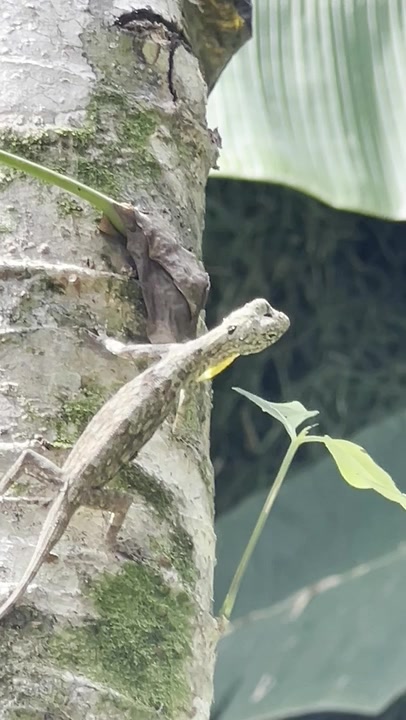
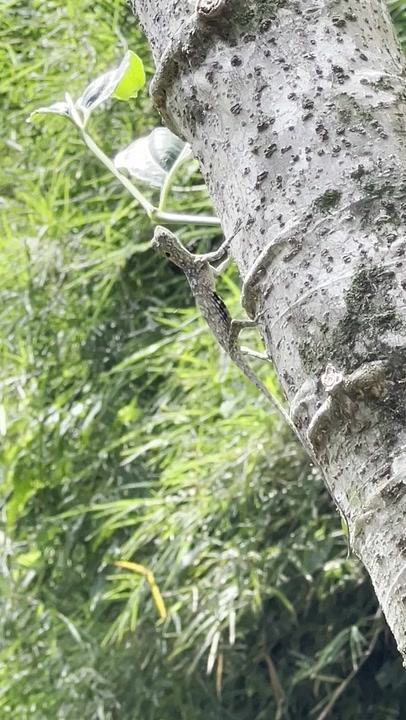
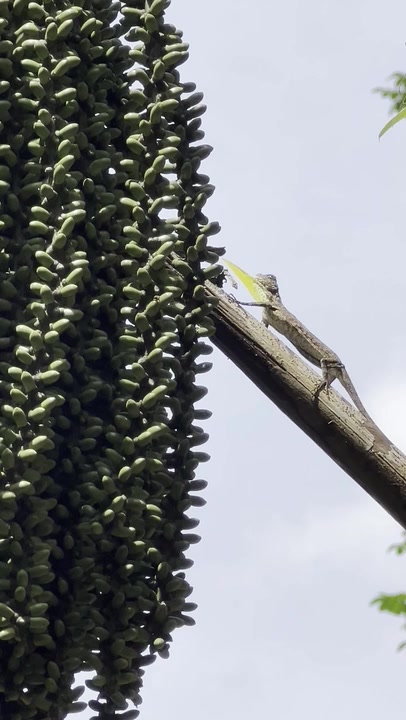
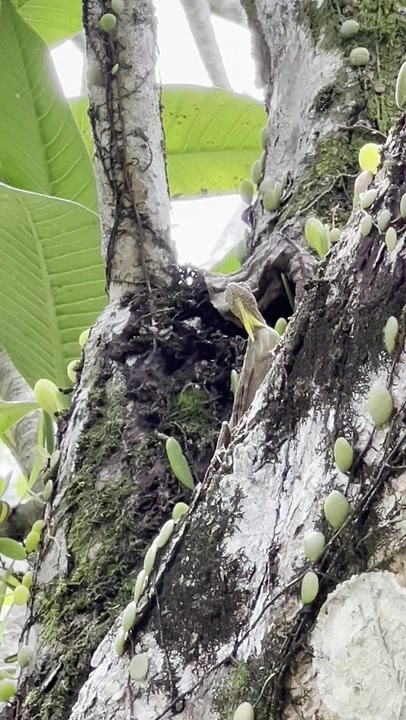
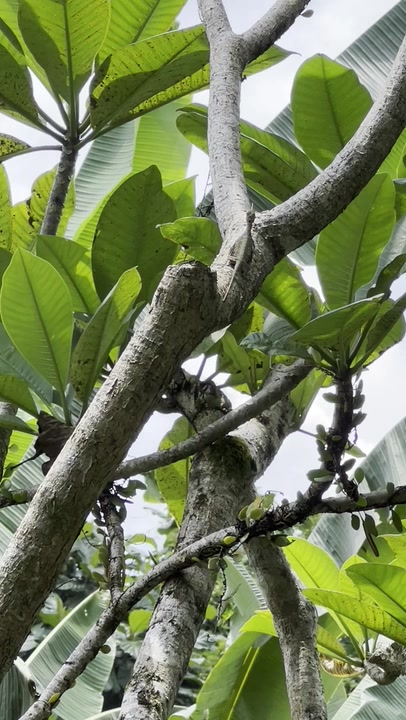
Draco is a genus of small gliding lizards in the family Agamidae, subfamily Draconinae, commonly known as flying dragons. Despite their spectacular gliding ability, these reptiles do not truly fly; instead, they use elongated ribs supporting broad skin membranes to glide between trees. The genus is native primarily to South and Southeast Asia, with its greatest diversity occurring in the tropical forests of the Malay Archipelago and surrounding regions.
Species of Draco are relatively small and slender, usually measuring around 20–30 cm in total length, with much of this length contributed by the long tail. Their bodies are typically brown, gray, or mottled, providing camouflage against tree trunks and branches. The head is relatively small, the limbs are well developed, and the toes possess claws suited for gripping bark. Males and females may differ in the shape and coloration of their throat fan, known as the dewlap, which is used in visual communication.
The most remarkable feature of Draco is the patagium, a membrane of skin stretched between greatly elongated ribs along the sides of the body. When the lizard extends these ribs, the membrane unfolds into a broad aerodynamic surface. The animal can then launch from a tree and glide considerable distances to another trunk, controlling its trajectory with movements of the limbs, body, tail, and patagium. This adaptation allows Draco to move efficiently through the forest canopy without repeatedly descending to the ground.
Gliding is particularly useful in the complex three-dimensional environment of tropical forests. Rather than climbing down one trunk and traveling along the forest floor, a Draco can cross gaps directly between trees, escape predators, search for feeding sites, or move toward potential mates. Although individual gliding distances vary according to species, launch height, wind, and habitat structure, these lizards can travel many times their body length during a single glide.
Draco species are predominantly arboreal and diurnal. They spend most of their lives on tree trunks and branches, where their cryptic coloration helps them remain inconspicuous. Individuals commonly position themselves vertically against trunks and can move rapidly around the bark when disturbed. Their flattened bodies and coloration further reduce their visibility against tree surfaces.
Their diet consists mainly of small arthropods, especially ants and termites. Some species also consume other small insects and occasionally plant material. Their position on tree trunks allows them to exploit abundant arboreal and wood-associated insects. The ability to move rapidly between trees may also help them locate patchily distributed food resources.
Communication in Draco relies heavily on visual displays. Males often defend territories and use their brightly colored dewlaps and body postures to signal to rivals and attract females. The dewlap can be extended conspicuously beneath the throat, creating a visual signal that is especially effective in the bright, open spaces between tree trunks and branches. Territorial interactions may involve head movements, body postures, and other displays rather than prolonged physical combat.
Reproduction is oviparous. Unlike their highly arboreal adult lifestyle, females descend to the forest floor to lay eggs. A female typically excavates a small nest chamber in loose soil or leaf litter, deposits a small clutch of eggs, and covers the site before returning to the trees. The young hatch independently and eventually adopt the arboreal lifestyle characteristic of adults.
The genus includes numerous species, with examples such as Draco volans, Draco maculatus, Draco sumatranus, Draco blanfordii, and Draco haematopogon. Species often have relatively restricted geographic distributions, particularly on islands, and can differ in body proportions, patagium coloration, dewlap structure, and habitat preferences. Taxonomy within Draco has been refined through morphological and molecular studies, revealing substantial diversity across Southeast Asian forests.
Ecologically, Draco occupies an important niche as a small arboreal insectivore and prey species. Its consumption of ants, termites, and other arthropods contributes to the regulation of insect populations, while the lizards themselves provide food for snakes, birds, mammals, and larger reptiles. Their dependence on trees also makes them closely associated with the structural complexity and continuity of tropical forest habitats.
The genus is particularly notable from an evolutionary perspective because its gliding apparatus represents one of the most specialized forms of arboreal locomotion among lizards. The modification of elongated ribs into a deployable gliding membrane has allowed Draco to exploit the forest canopy in a way that few other reptiles can. Habitat loss, forest fragmentation, and degradation of mature trees can therefore pose significant threats to localized populations. Draco remains one of the most distinctive examples of convergent evolution toward aerial locomotion in vertebrates, illustrating how lizards can evolve remarkable adaptations for life in the forest canopy.