Bali Wildlife
Every Spices Matter


Dacinae is a large and economically important subfamily within the family Tephritidae (Superfamily Tephritoidea, Order Diptera), comprising many of the true fruit flies. Members of this subfamily are widely distributed across tropical and subtropical regions, particularly in Asia, Africa, Australia, and the Pacific, with some species extending into temperate zones.
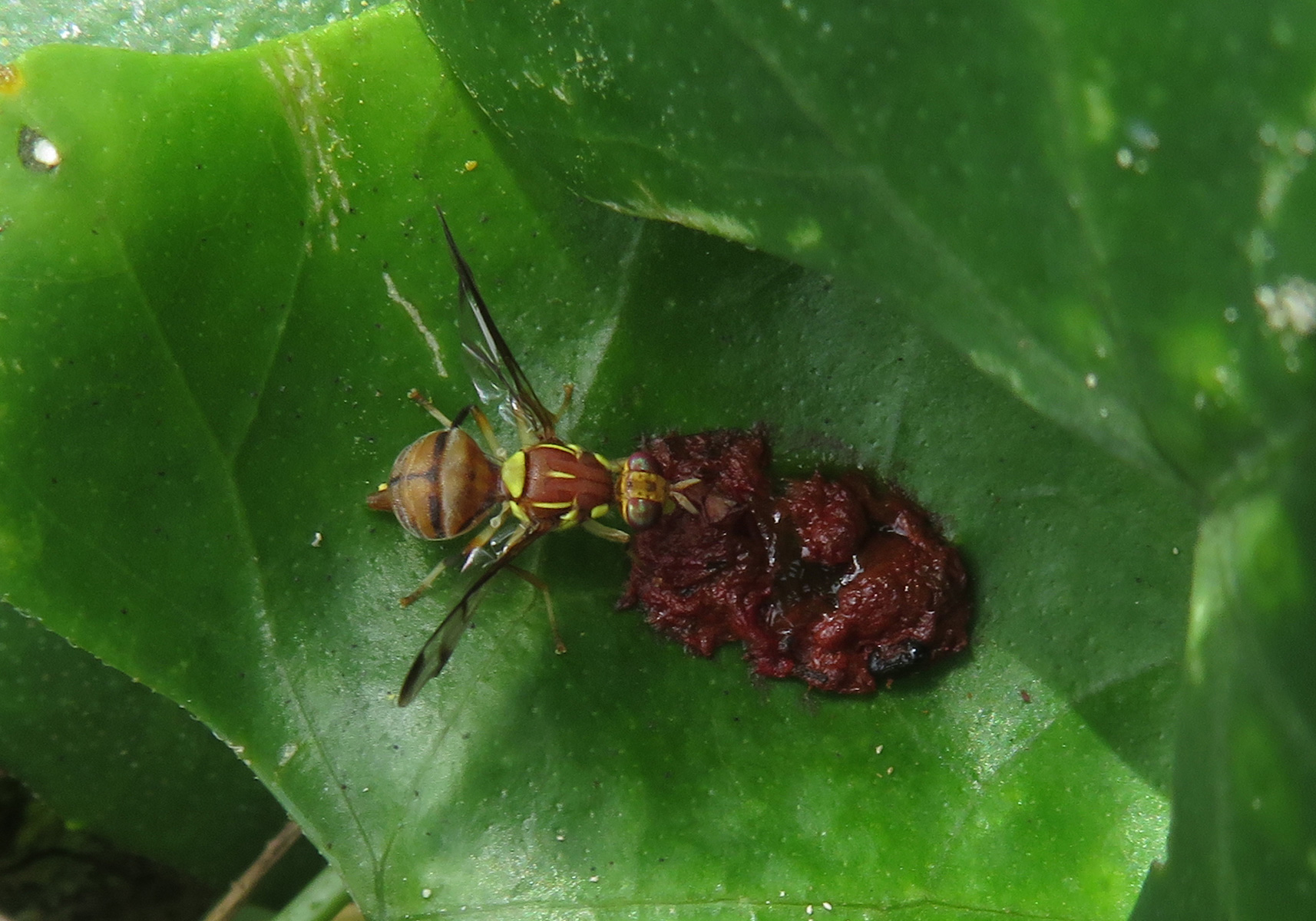
Flies of the subfamily Dacinae are generally small to medium-sized and often display bright or contrasting coloration, including combinations of yellow, black, brown, and sometimes metallic hues. The body is compact, with large compound eyes and short antennae bearing an arista. Wings may be clear or patterned, and many species exhibit distinctive wing movements used in communication and courtship.
A defining feature of Dacinae is their close association with plants, particularly fruit-bearing species. Females possess a well-developed ovipositor used to insert eggs into plant tissues, especially fruits. After hatching, larvae develop within the host, feeding on the internal tissues. This behavior makes many species significant agricultural pests.
The life cycle involves complete metamorphosis. Larvae (maggots) feed within fruits, seeds, or other plant tissues, protected from external conditions. Pupation typically occurs in the soil beneath the host plant.
The subfamily includes several economically important genera, such as Bactrocera, Dacus, and Zeugodacus. Many species within these genera are known for causing extensive damage to fruit and vegetable crops, leading to major economic losses worldwide.
Ecologically, Dacinae plays a role as herbivores that influence plant populations and interactions. While many species are considered pests, others are part of natural ecosystems and contribute to biodiversity. Due to their economic impact, they are also extensively studied in pest management and agricultural research.