

Cosmophasis valerieae
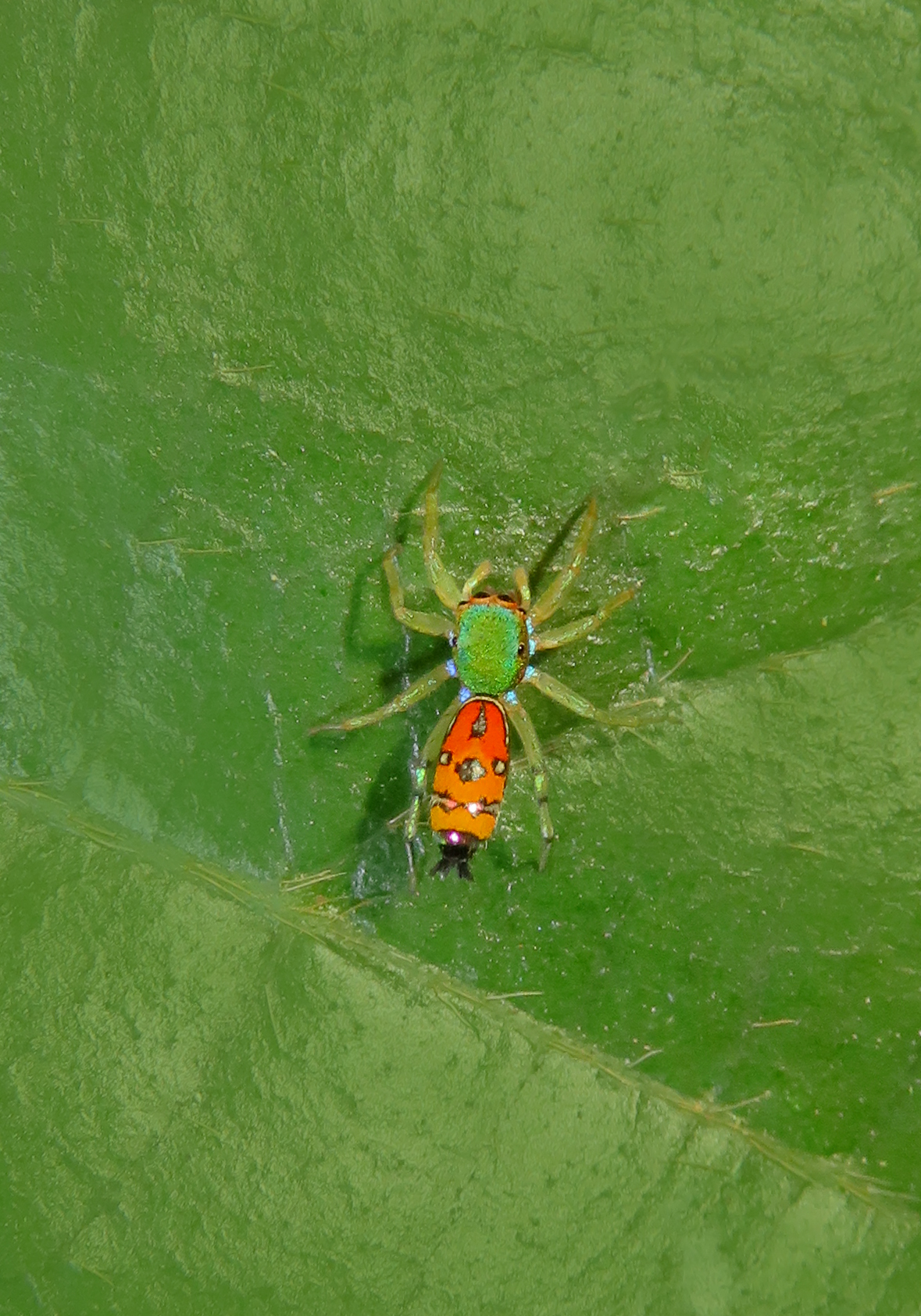
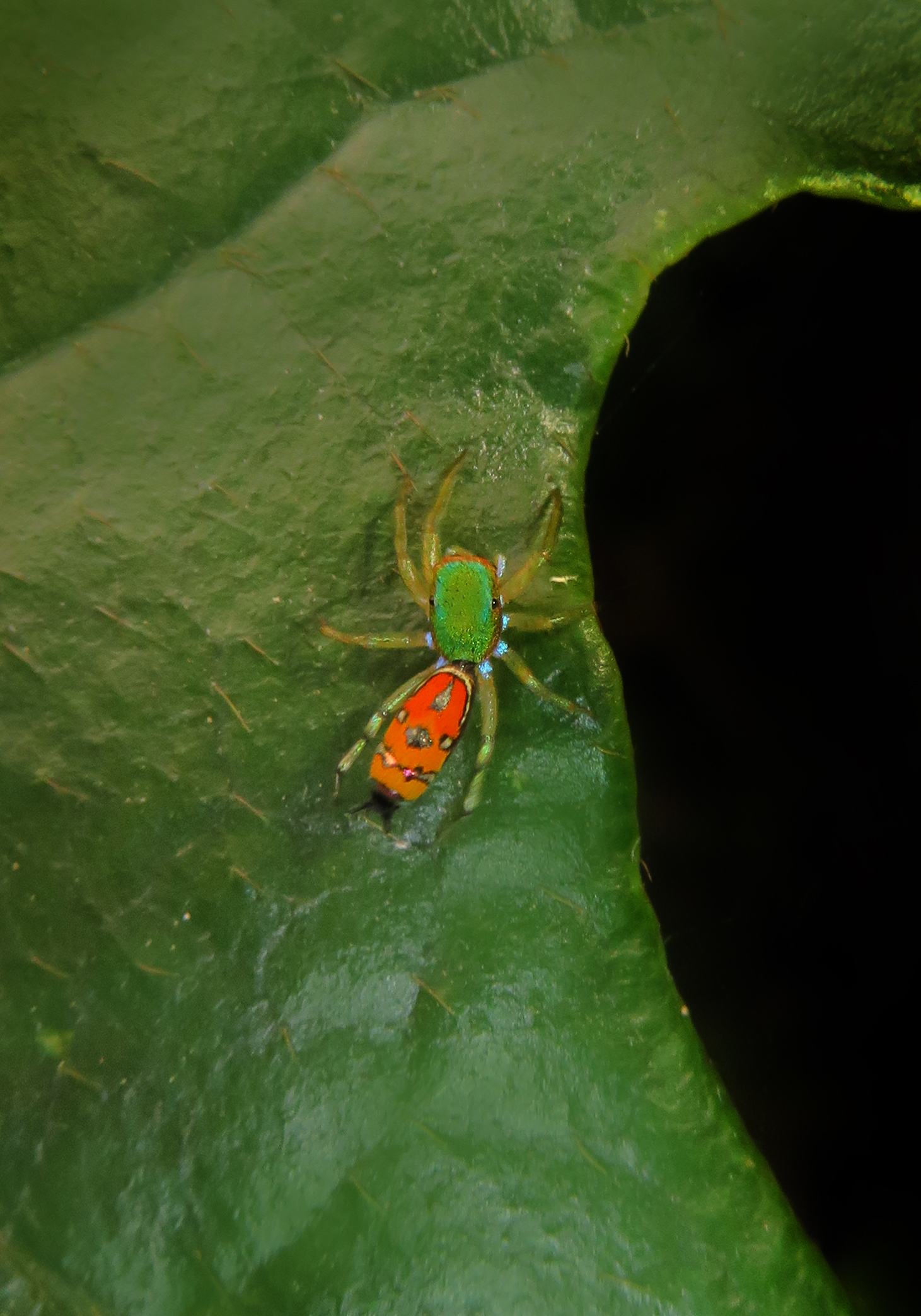
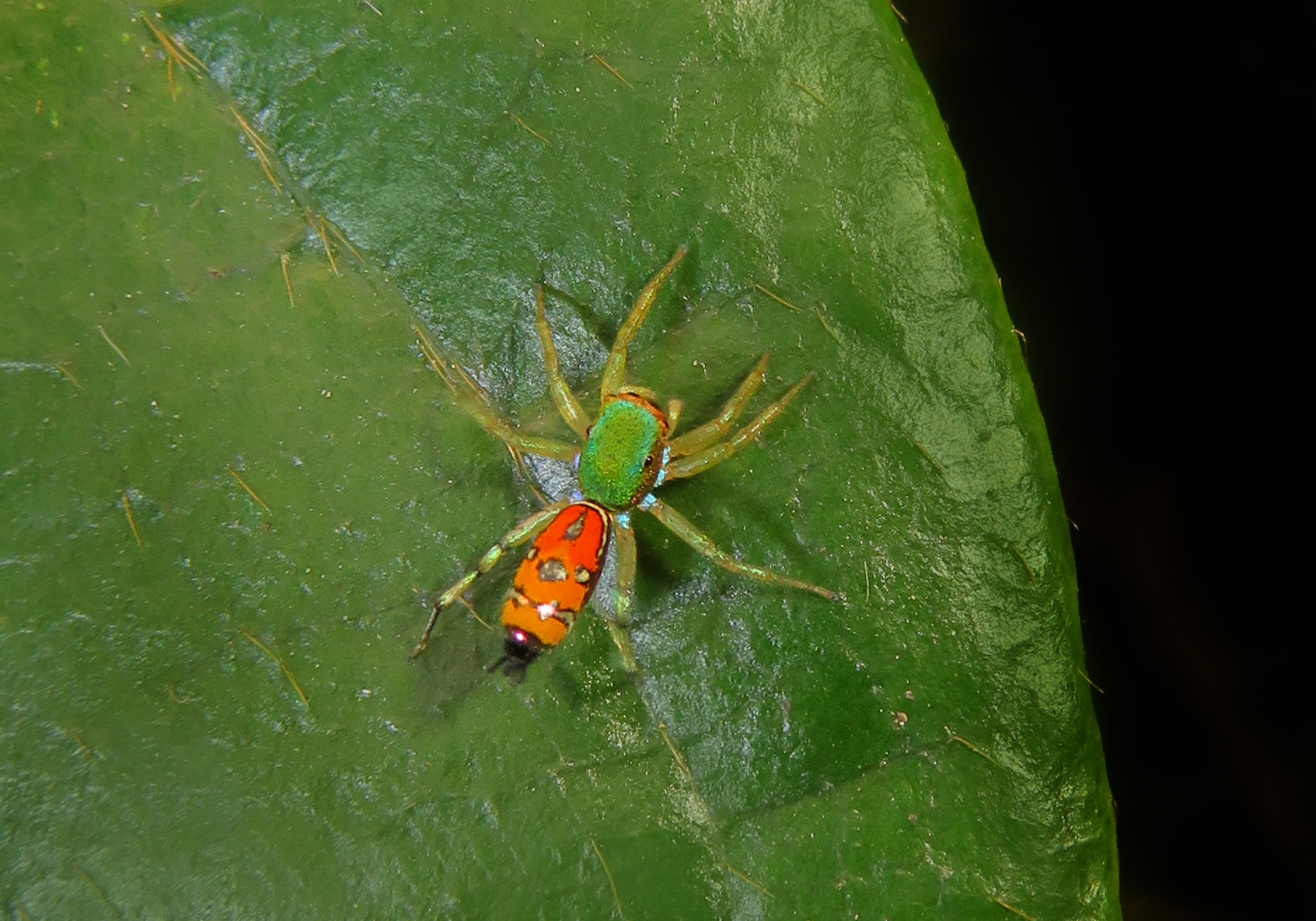
Cosmophasis valerieae is a species of jumping spider belonging to the genus Cosmophasis (Subfamily Salticinae, Family Salticidae, Order Araneae, Class Arachnida). The species is known from Southeast Asia, where it inhabits tropical rainforests, secondary forests, forest edges, gardens, plantations, and other vegetation-rich environments. Like other members of the genus, it is typically found on leaves, shrubs, tree trunks, and low vegetation, where it actively hunts during the day.
Cosmophasis valerieae is a small jumping spider, with a compact body and relatively short, sturdy legs typical of the family Salticidae. Its body is covered with fine hairs and scales, and coloration generally consists of combinations of black, brown, gray, and metallic iridescent hues, often accented by white or pale markings. Like other jumping spiders, it possesses eight eyes, with the enlarged forward-facing anterior median eyes providing exceptional binocular vision that enables precise depth perception and accurate prey detection. Males and females may differ in body size, coloration, and ornamental markings, with males often exhibiting more contrasting patterns.
Adults are diurnal and rely primarily on their excellent eyesight rather than webs to locate prey. They move with quick, deliberate movements across leaves and branches, pausing frequently to scan their surroundings. Before making a leap, the spider attaches a silken safety line to the substrate, allowing it to recover if the jump is unsuccessful. Courtship involves elaborate visual displays by the male, including leg waving, body movements, and vibrations to attract females and reduce the risk of being mistaken for prey.
Cosmophasis valerieae is a carnivorous predator, feeding mainly on small insects and other arthropods such as flies, mosquitoes, aphids, leafhoppers, ants, and tiny moths. It stalks its prey with remarkable precision before capturing it in a rapid leap and delivering venom through its chelicerae. The venom is highly effective against small arthropods but is harmless to humans, with bites being extremely uncommon and causing only minor local effects if they occur.
The life cycle consists of egg, spiderling, juvenile, and adult stages. Females deposit eggs within a silken retreat constructed beneath leaves, inside curled foliage, or in other sheltered locations. The female usually guards the egg sac until the spiderlings hatch. Juveniles undergo several molts before reaching maturity, gradually developing the coloration and body proportions characteristic of adults.
Ecologically, Cosmophasis valerieae is an important predator of small arthropods, helping regulate insect populations in tropical ecosystems. It also serves as prey for birds, lizards, frogs, larger spiders, and predatory insects. Because it depends on healthy vegetation and structurally diverse habitats, Cosmophasis valerieae contributes to the ecological balance of forest and garden ecosystems and serves as a useful indicator of habitat quality and local biodiversity.