Bali Wildlife
Every Spices Matter


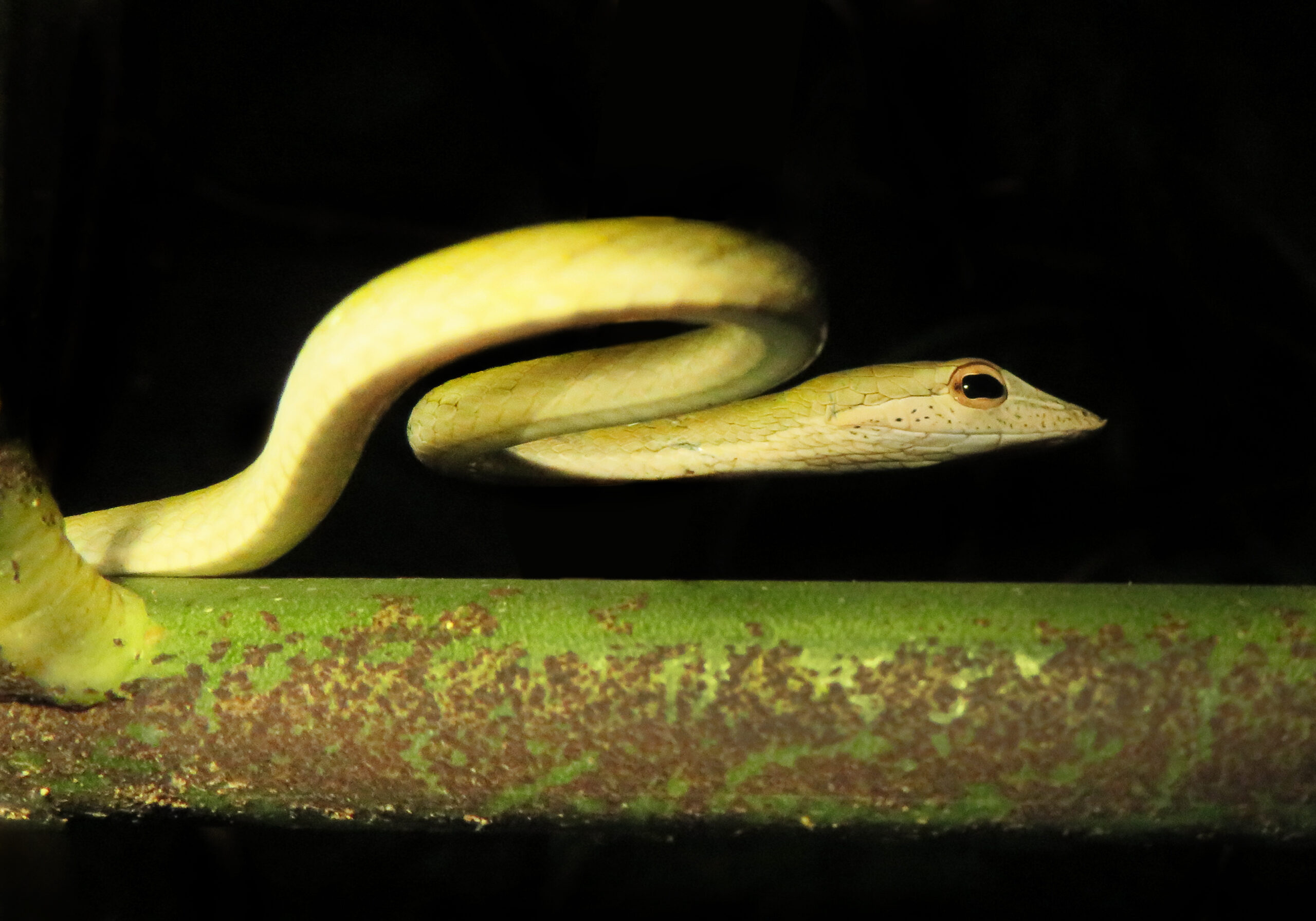
Colubridae is the largest family of snakes within the order Squamata and the suborder Serpentes. It represents one of the most diverse and widely distributed groups of reptiles in the world, occurring on every continent except Antarctica.
Colubrids occupy a remarkable range of habitats, including forests, grasslands, deserts, wetlands, freshwater systems, and even marine environments. They are especially abundant in tropical and subtropical regions but also thrive in temperate zones.
Morphologically, members of Colubridae display great variation in size, body shape, and coloration. Most species are slender with smooth or keeled scales and well-developed heads distinct from the neck. Dentition varies considerably: many species are non-venomous, while others possess rear-fanged (opisthoglyphous) dentition capable of delivering mild venom. In general, their venom is not considered medically significant to humans, though exceptions exist.
Colubrids exhibit diverse ecological roles. They may be terrestrial, arboreal, fossorial, aquatic, or semi-aquatic. Their diets include amphibians, reptiles, birds, mammals, fish, and invertebrates, depending on species and habitat. Reproductive strategies vary, with most species being oviparous (egg-laying), though some are ovoviviparous or viviparous.
Due to their adaptability and diversity, Colubridae plays a crucial role in regulating prey populations and maintaining ecological balance in many ecosystems.