

Colobines (Subfamily Colobinae)
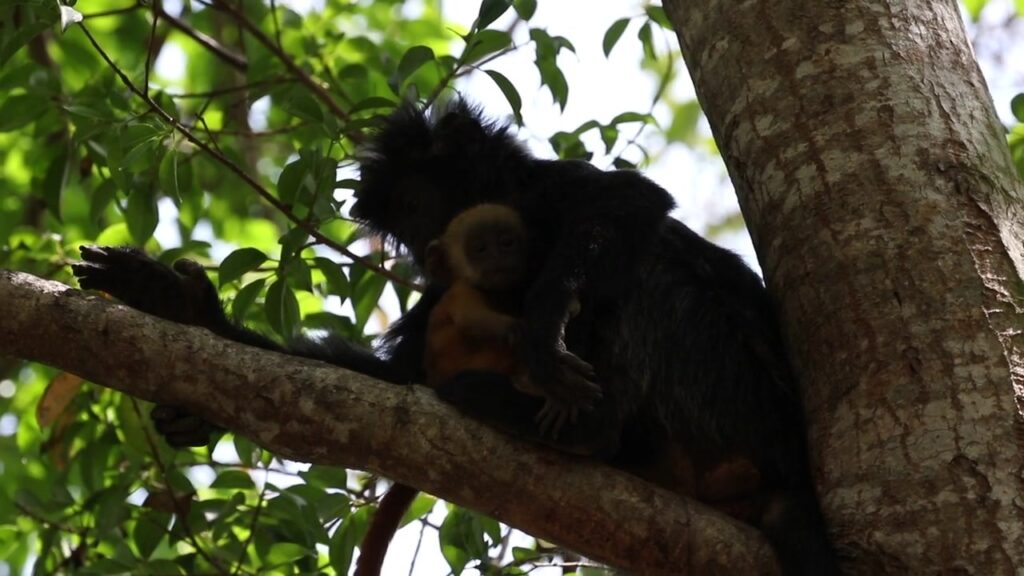
The subfamily Colobinae comprises a diverse group of Old World monkeys belonging to the family Cercopithecidae within the order Primates. Commonly known as colobine monkeys or leaf monkeys, its members are native to Africa and Asia, where they inhabit tropical rainforests, subtropical forests, montane woodlands, and other environments with sufficient tree cover. The group includes colobus monkeys, langurs, lutungs, surilis, and several other closely related forms. Colobines are particularly notable for their specialized digestive systems, which allow them to consume substantial quantities of leaves and other fibrous plant material. Their arboreal lifestyles, varied social systems, and adaptations to different forest environments make them an important component of primate diversity.
Members of Colobinae vary considerably in body size, coloration, and external appearance. African colobus monkeys often have contrasting black and white fur, with some species possessing long white mantles or flowing tail tufts. Asian colobines, including langurs and lutungs, display a wider range of colours, such as grey, brown, black, golden, orange, and cream. Some species have distinctive facial markings, coloured crowns, pale underparts, or contrasting patterns on their limbs. Infants of several species are born with coats that differ markedly from those of adults, gradually changing colour as they mature. These differences help distinguish species and may also play roles in recognition and social interactions.
Colobines generally have slender bodies, long limbs, and long tails that assist with balance during movement through trees. Their hands are adapted for grasping branches, although the thumb is often reduced compared with that of many other primates. This feature is particularly pronounced in several African colobus monkeys and is associated with their specialized arboreal locomotion. Asian colobines show greater variation in hand structure and movement patterns, reflecting differences in habitat and feeding behaviour. Their limbs enable them to climb, leap between branches, and travel through the forest canopy while searching for food and avoiding ground-based predators.
One of the most important characteristics of Colobinae is its specialized digestive system. Unlike many other monkeys, colobines possess a complex, multi-chambered stomach in which microbial fermentation helps break down cellulose and other components of fibrous vegetation. This adaptation allows them to digest mature leaves and extract nutrients from foods that are difficult for many mammals to process efficiently. Their stomachs also help neutralize certain plant compounds and manage the effects of toxins found in some leaves. However, fermentation and digestion require time, so colobines often have relatively low-energy lifestyles compared with primates that consume more fruit. Their activity patterns, resting behaviour, and feeding schedules are closely linked to the demands of processing a leaf-rich diet.
The geographic distribution of Colobinae extends across sub-Saharan Africa and large parts of South, East, and Southeast Asia. African representatives include red colobus monkeys, black-and-white colobus monkeys, and olive colobus monkeys. Asian representatives include langurs, lutungs, surilis, and the proboscis monkey. Their habitats range from lowland rainforests and riverine forests to mountainous forests, mangroves, and seasonal woodlands. Many species depend heavily on continuous tree cover, although some can use fragmented forests or wooded landscapes when food and shelter remain available. Their distributions are influenced by climate, vegetation, elevation, geographic barriers, and the availability of preferred food plants.
The diet of colobines consists primarily of leaves, but most species also consume flowers, fruits, buds, seeds, and young shoots. The relative importance of these foods varies among species and seasons. Some rely heavily on mature leaves, while others select young leaves or supplement their diet with substantial quantities of fruit when it is available. Certain species specialize in particular plant groups or occupy habitats where only a limited range of food resources is accessible. Their digestive adaptations allow them to exploit vegetation that may be less attractive to more fruit-dependent primates. Through their feeding activities, colobines influence leaf consumption, plant growth, and, in some cases, the dispersal of seeds from fruits they ingest.
Social organization within Colobinae varies considerably. Many species live in groups containing multiple females and one or more adult males, while others form larger multimale, multifemale groups or exhibit more complex social arrangements. Group members communicate through vocalizations, facial expressions, body postures, grooming, and physical contact. Grooming helps maintain social bonds and may reduce tension between individuals. Some species establish territories or defend important feeding areas, whereas others use overlapping home ranges. Group size and structure are influenced by food distribution, predation risk, habitat conditions, and species-specific behaviour. In several colobines, vocal calls are especially important for maintaining contact among individuals moving through dense forest vegetation.
Reproduction in Colobinae generally involves the birth of a single infant after a gestation period lasting several months. Females provide the majority of parental care, nursing their young and protecting them during early development. In some species, other group members may show interest in infants or participate in limited forms of social care. Young colobines gradually develop the coordination and strength required for climbing, leaping, and travelling through the canopy. They learn feeding preferences and social behaviours through observation and interaction with adults. The timing of sexual maturity and the interval between births differ among species and are influenced by food availability, habitat quality, and social conditions.
Colobines play important ecological roles in forest ecosystems. By consuming leaves and other plant parts, they influence vegetation structure and the growth of individual plants. Species that eat fruit may contribute to seed dispersal, while their droppings return nutrients to the forest floor. As prey for predators such as leopards, large eagles, and other carnivores, they also form part of forest food webs. Their dependence on trees makes many species sensitive to deforestation and habitat fragmentation. Changes in canopy structure can restrict movement, isolate groups, reduce food availability, and increase exposure to human disturbance. Consequently, the presence and abundance of colobines can reflect important aspects of forest condition, although their suitability as ecological indicators varies by species and environment.
The subfamily Colobinae is commonly divided into African and Asian lineages, reflecting a long evolutionary history of diversification across different continents. African colobines include several groups of colobus monkeys, while Asian colobines include langurs and related genera. Molecular studies have improved understanding of relationships within the subfamily and have led to revisions in the classification of certain species and genera. Differences in skull structure, dentition, fur patterns, digestive anatomy, and genetic characteristics help researchers distinguish among these lineages. Despite their varied appearance, colobines share key adaptations associated with leaf eating and arboreal life.
Many colobine species face significant conservation challenges. Habitat loss caused by logging, agricultural expansion, mining, road construction, and urban development has reduced or fragmented populations in many regions. Hunting for meat, traditional uses, and illegal wildlife trade also threatens some species. Restricted-range species are particularly vulnerable when their remaining habitats are small or isolated. Conservation measures include protecting forest reserves, restoring degraded habitats, maintaining connections between forest patches, enforcing wildlife protection laws, and monitoring populations. Community-based conservation and sustainable land management can also help reduce conflicts between people and primates. Because conservation status varies widely across Colobinae, each species requires an assessment based on its distribution, population trends, and specific threats.
Overall, Colobinae represents a distinctive subfamily of Old World monkeys characterized by specialized leaf-eating adaptations, complex social behaviour, and a predominantly arboreal lifestyle. Its members occupy diverse forest environments across Africa and Asia and contribute to vegetation dynamics, nutrient cycling, and food-web relationships. Their specialized digestive systems allow them to exploit fibrous plant resources, while their social and locomotor adaptations support life in the forest canopy. Protecting colobines and their habitats is essential for preserving primate diversity and maintaining the ecological integrity of tropical and subtropical forests.