Bali Wildlife
Every Spices Matter


Cicadidae is the largest family of cicadas within the superfamily Cicadoidea (Infraorder Cicadomorpha, Order Hemiptera). The family comprises more than 3,000 described species distributed throughout tropical, subtropical, and temperate regions on every continent except Antarctica. Cicadids inhabit forests, woodlands, savannas, grasslands, orchards, plantations, parks, gardens, and urban environments, where they are closely associated with trees, shrubs, and other vascular plants.
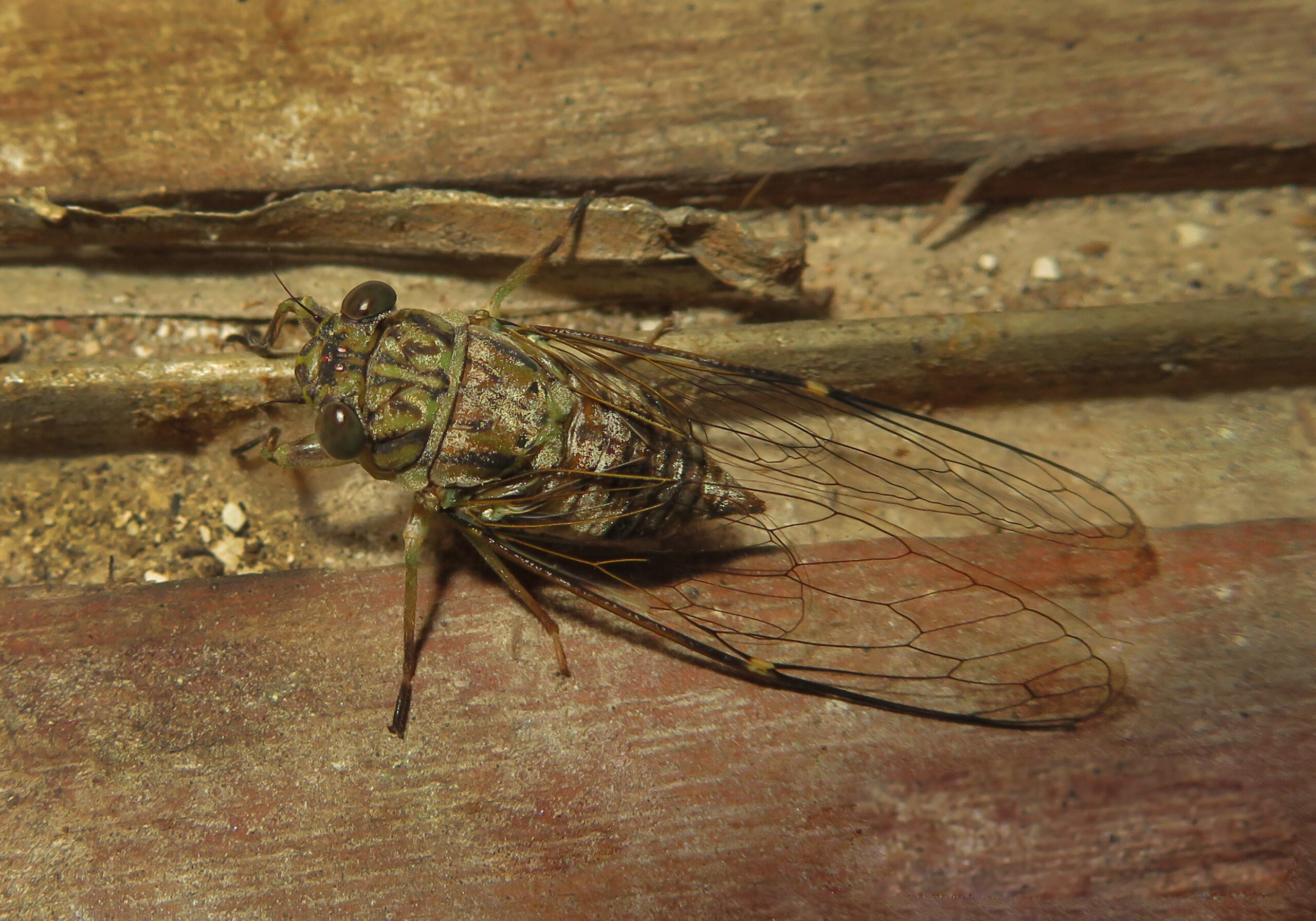
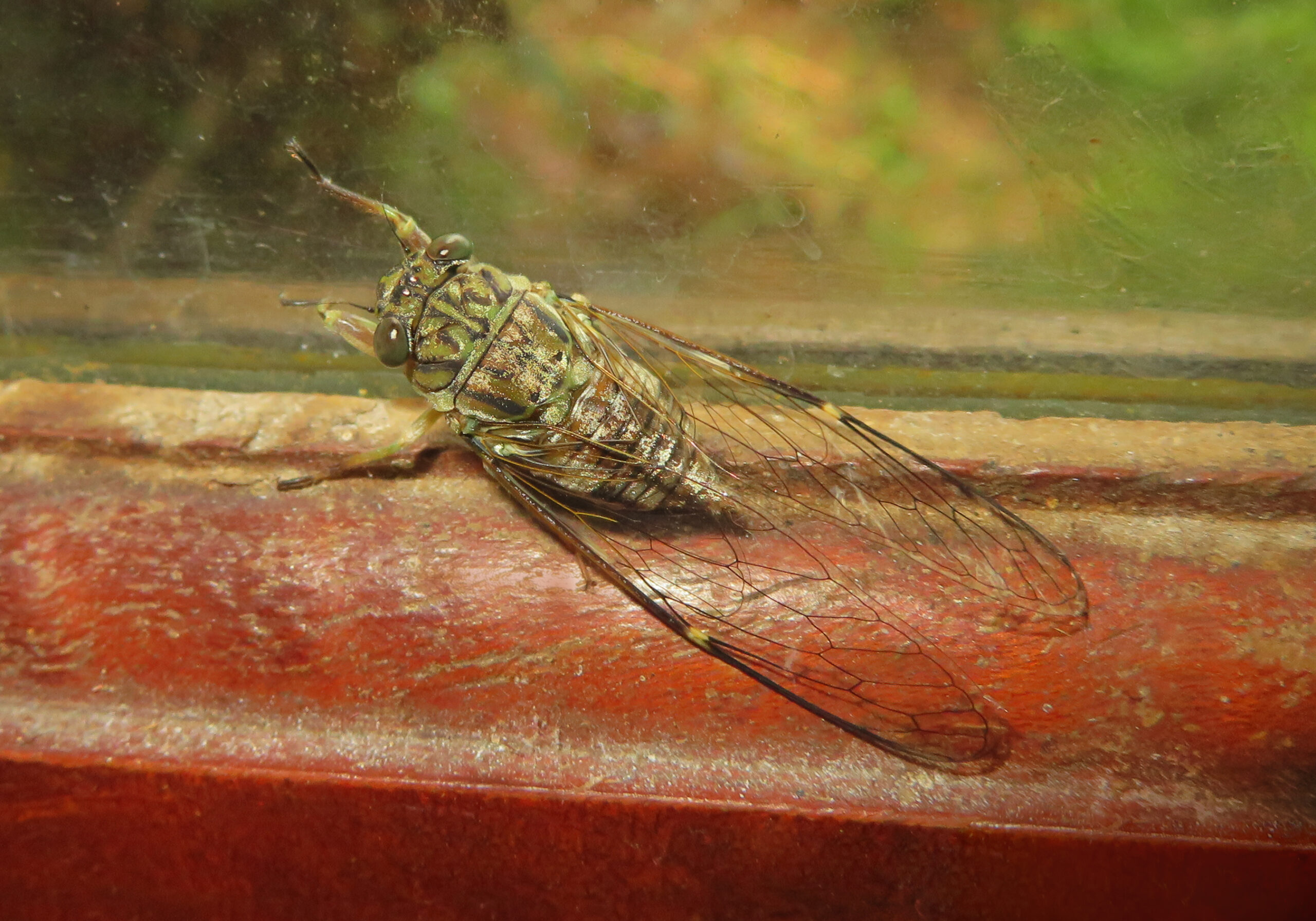
Members of the family Cicadidae are medium to very large insects characterized by a robust body, broad head, prominent compound eyes, and two pairs of transparent membranous wings with well-developed venation. They possess short, bristle-like antennae and piercing-sucking mouthparts adapted for feeding on plant sap. Their coloration ranges from green, brown, gray, and black to vivid combinations of yellow, orange, blue, and metallic hues, often providing excellent camouflage against bark, branches, and foliage.
Adult cicadas are primarily diurnal, although some species are crepuscular or nocturnal. Males are renowned for producing loud, species-specific calling songs using paired sound-producing organs known as tymbals, located on the sides of the first abdominal segment. These acoustic signals are used primarily to attract females and establish species recognition, making cicadas among the loudest insects in the world.
Both nymphs and adults feed on xylem sap using their elongated stylets. Adults obtain sap from stems and branches of trees and shrubs, while nymphs feed underground on the roots of host plants. Because xylem sap is nutrient-poor, cicadas consume large quantities and excrete excess water as dilute fluid.
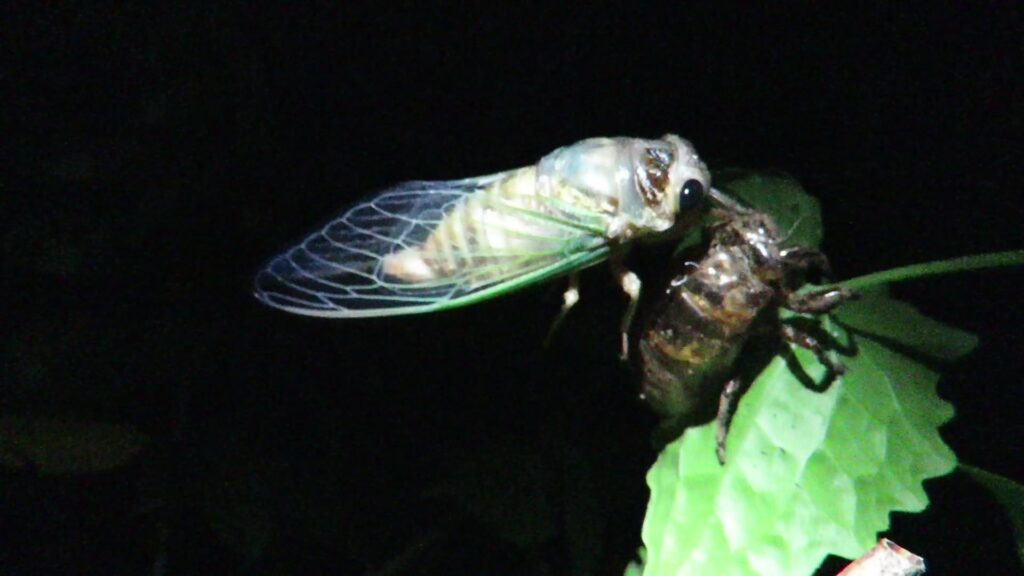
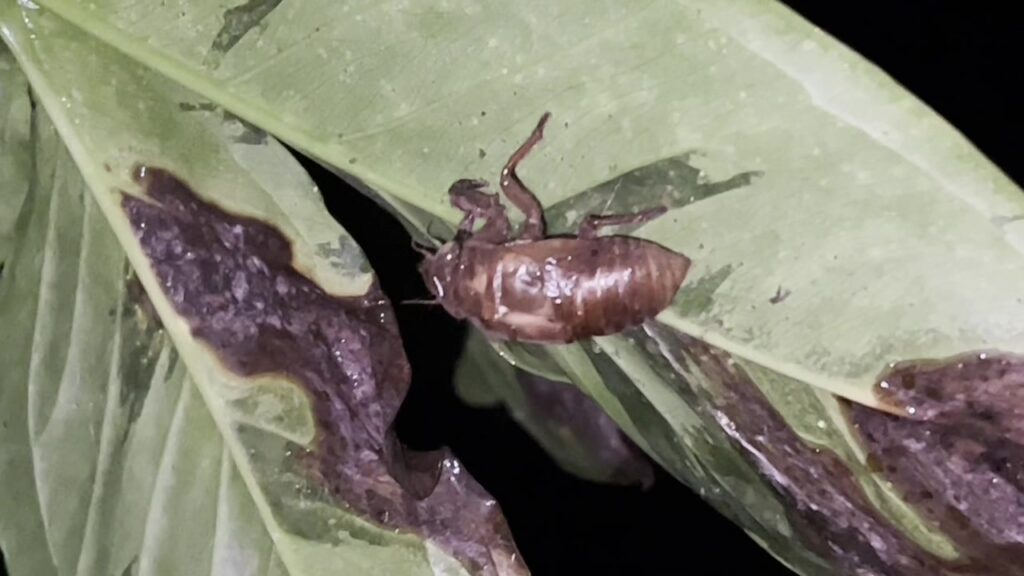
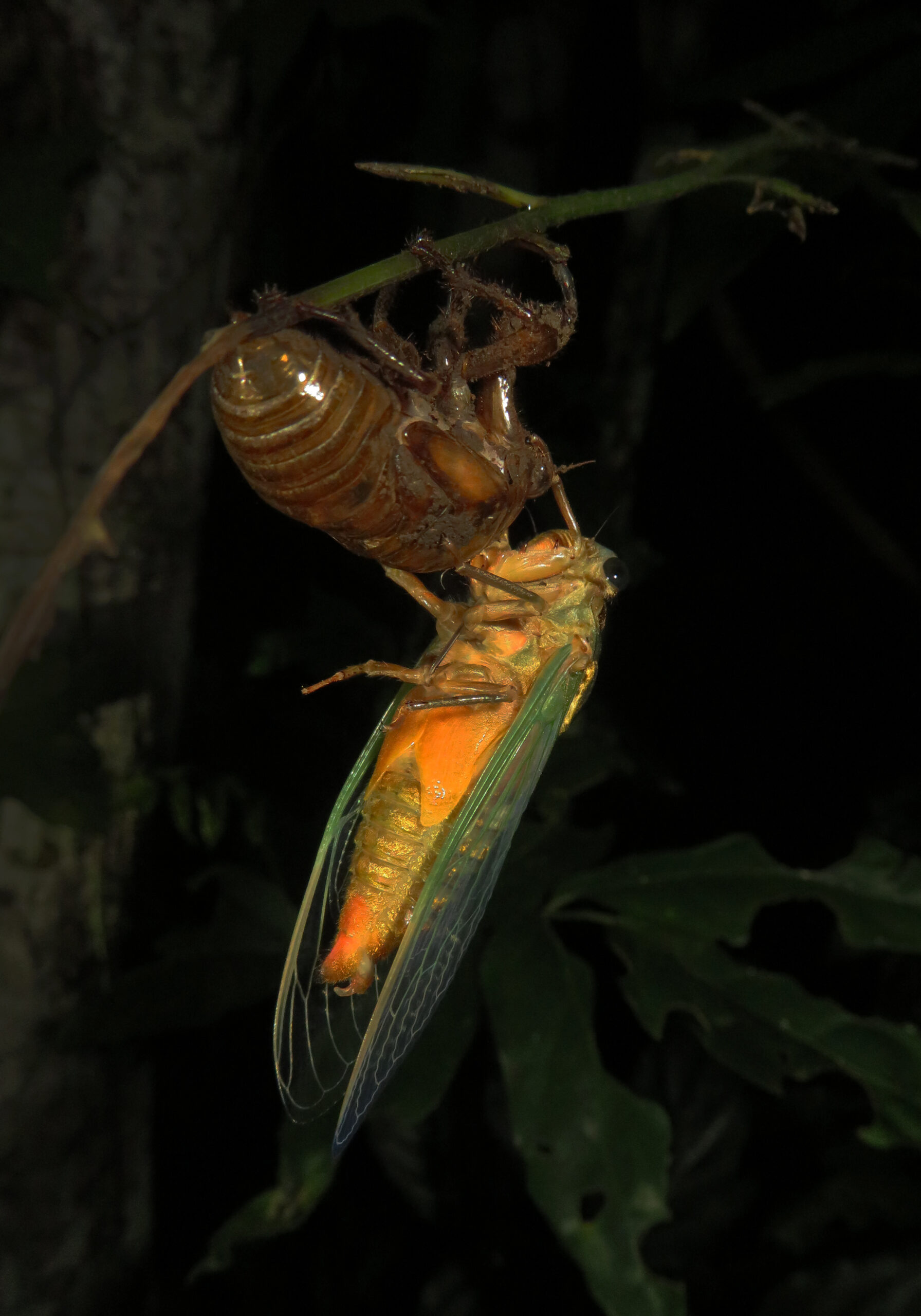
The life cycle involves incomplete metamorphosis, consisting of egg, nymph, and adult stages. Females insert eggs into slits cut in twigs or stems with their ovipositor. After hatching, the nymphs fall to the ground and burrow into the soil, where they feed on root sap for periods ranging from one to several years, depending on the species. Mature nymphs emerge from the soil, climb nearby vegetation, and molt into winged adults, leaving behind the characteristic empty exuviae attached to tree trunks and other surfaces.
The family includes numerous well-known genera, such as Cicada, Cryptotympana, Dundubia, Pomponia, Tacua, Platypleura, Magicicada, and Huechys. While most species have annual or multi-year life cycles, some, such as species of Magicicada, are famous for their synchronized emergences after 13 or 17 years, one of the longest known developmental cycles among insects.
Ecologically, Cicadidae play important roles in terrestrial ecosystems. Their nymphs aerate the soil and contribute to nutrient cycling through extensive underground feeding, while mass adult emergences provide abundant food for birds, mammals, reptiles, amphibians, spiders, and predatory insects. Adults also contribute organic matter to forest ecosystems after death. Because many species are closely associated with mature vegetation and stable habitats, cicadas are widely regarded as valuable indicators of ecosystem health, habitat continuity, and biodiversity.