Bali Wildlife
Every Spices Matter


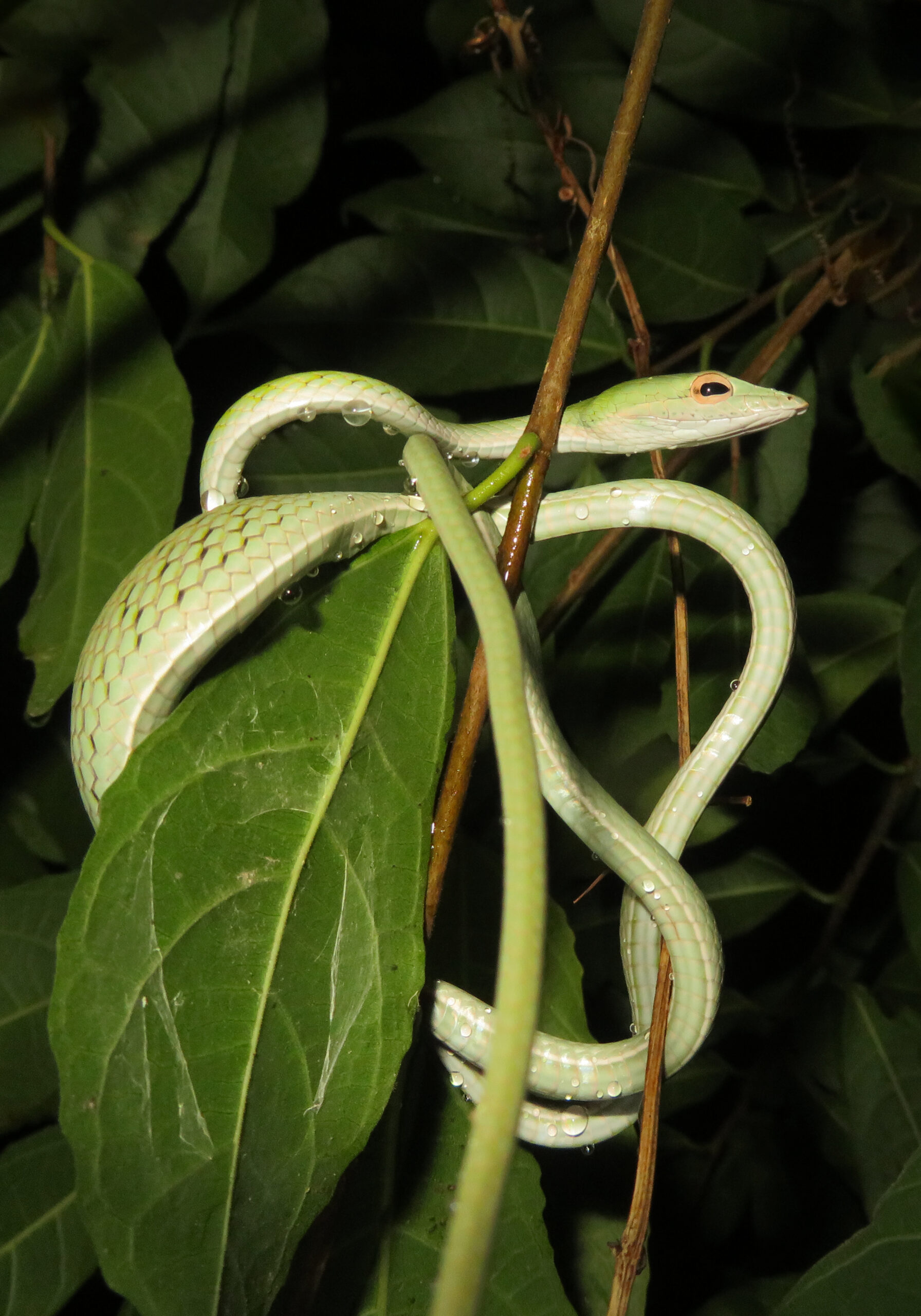
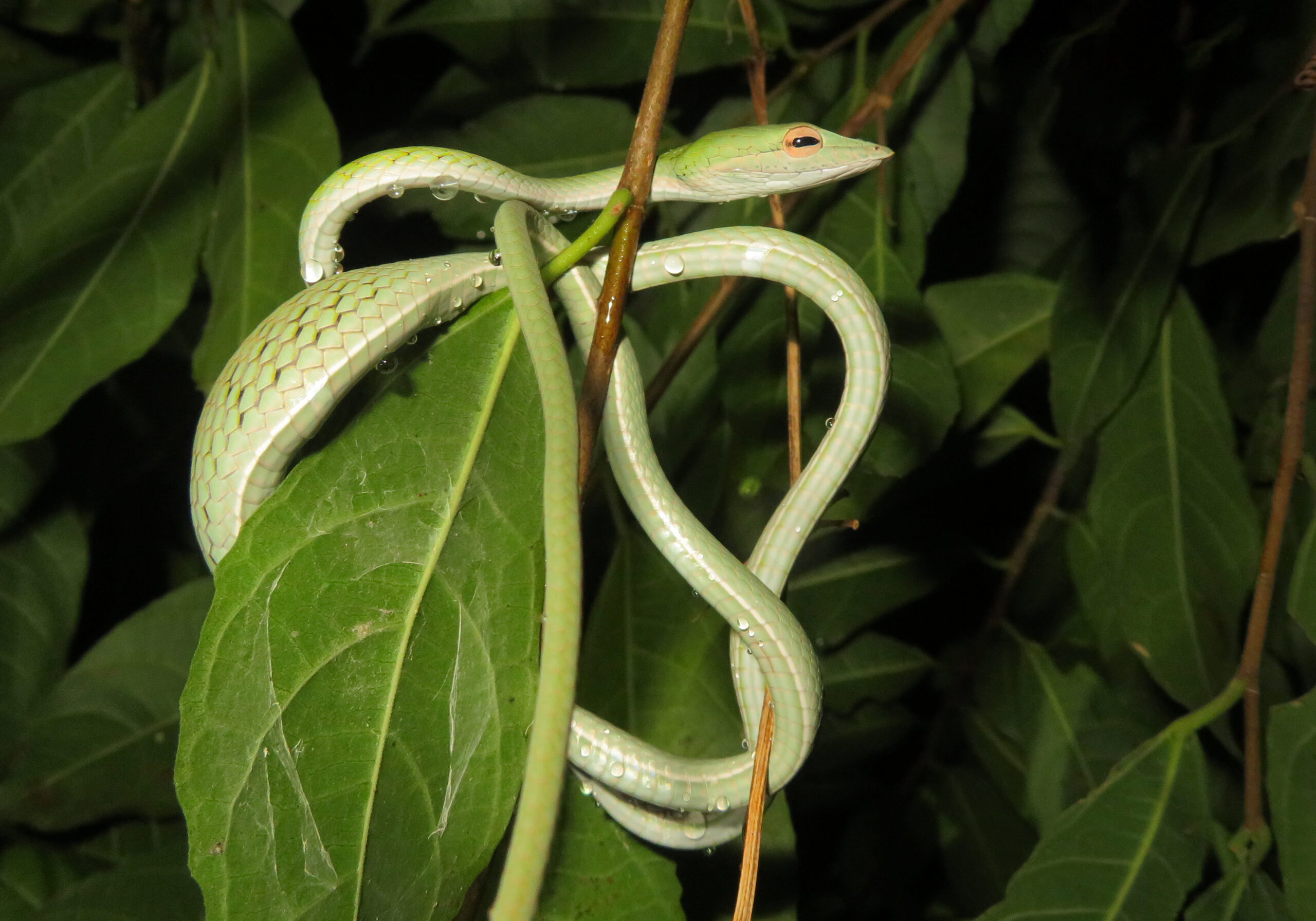
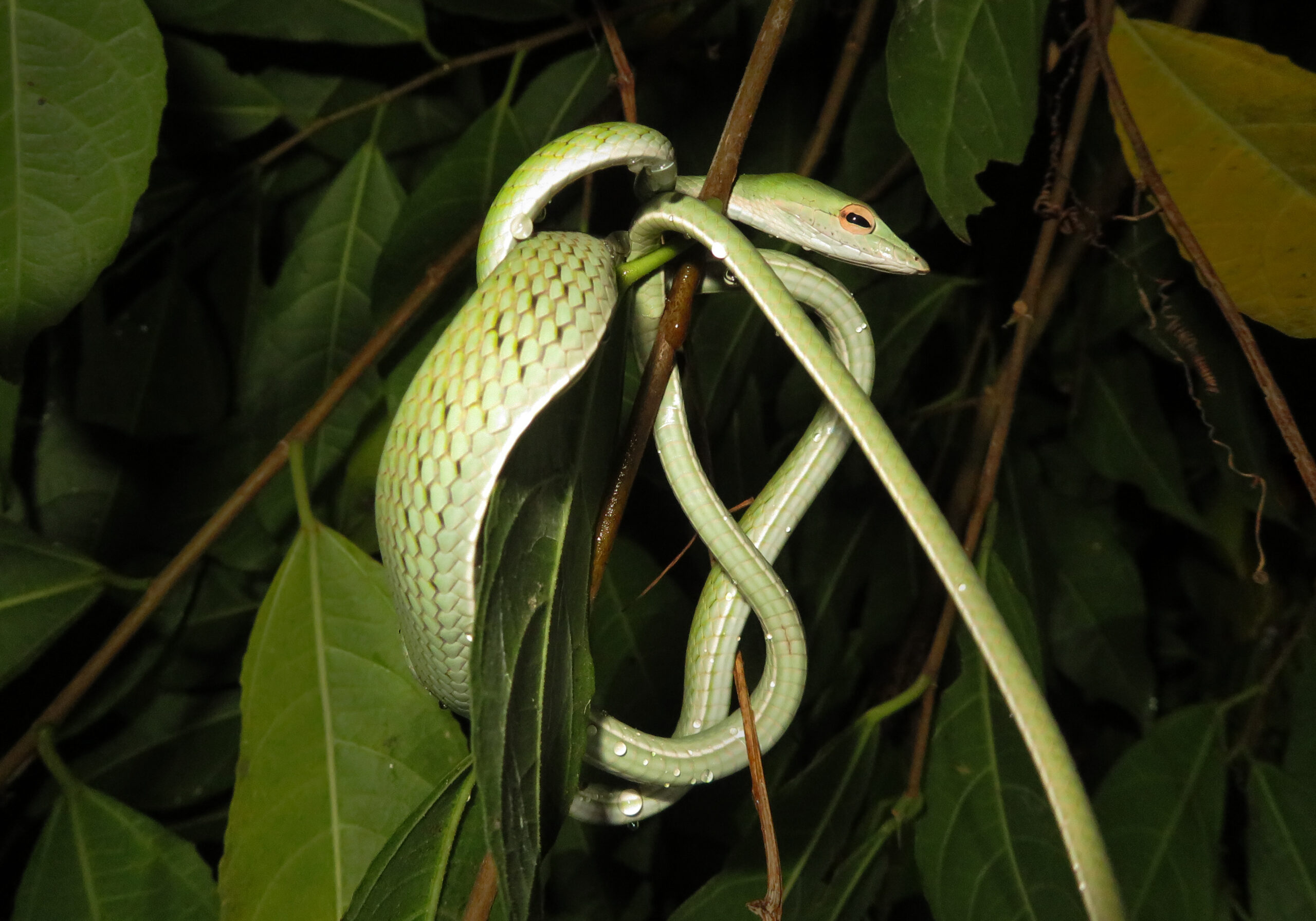
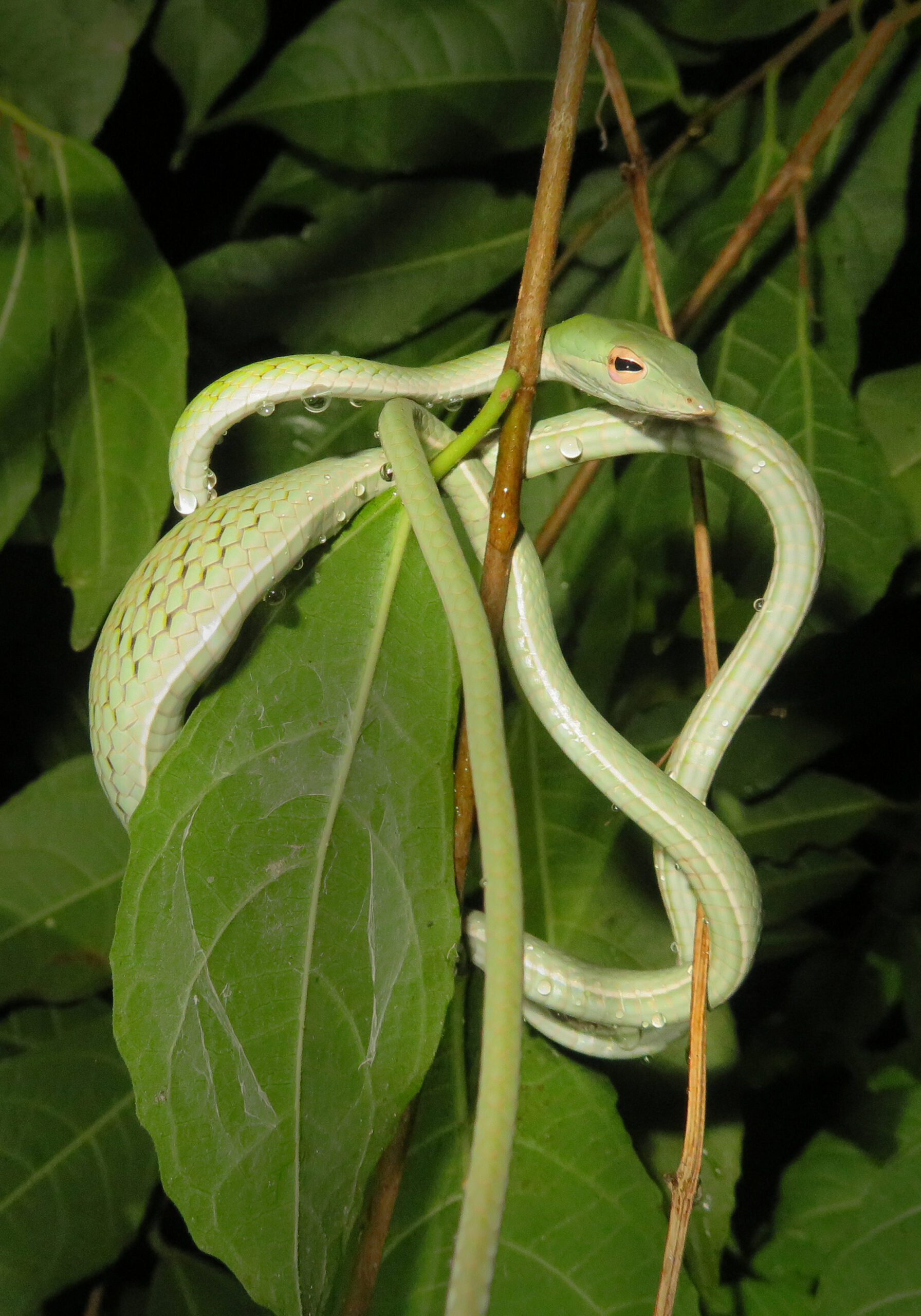
Chrysopeleinae is a subfamily of arboreal snakes within the family Colubridae, order Squamata, and suborder Serpentes. This group is best known for including the so-called “flying snakes,” which are capable of gliding through the air.
Members of Chrysopeleinae are distributed mainly in South and Southeast Asia, inhabiting tropical forests, woodlands, plantations, and sometimes suburban areas. They are highly arboreal and spend most of their lives in trees, descending to the ground primarily for hunting or dispersal.
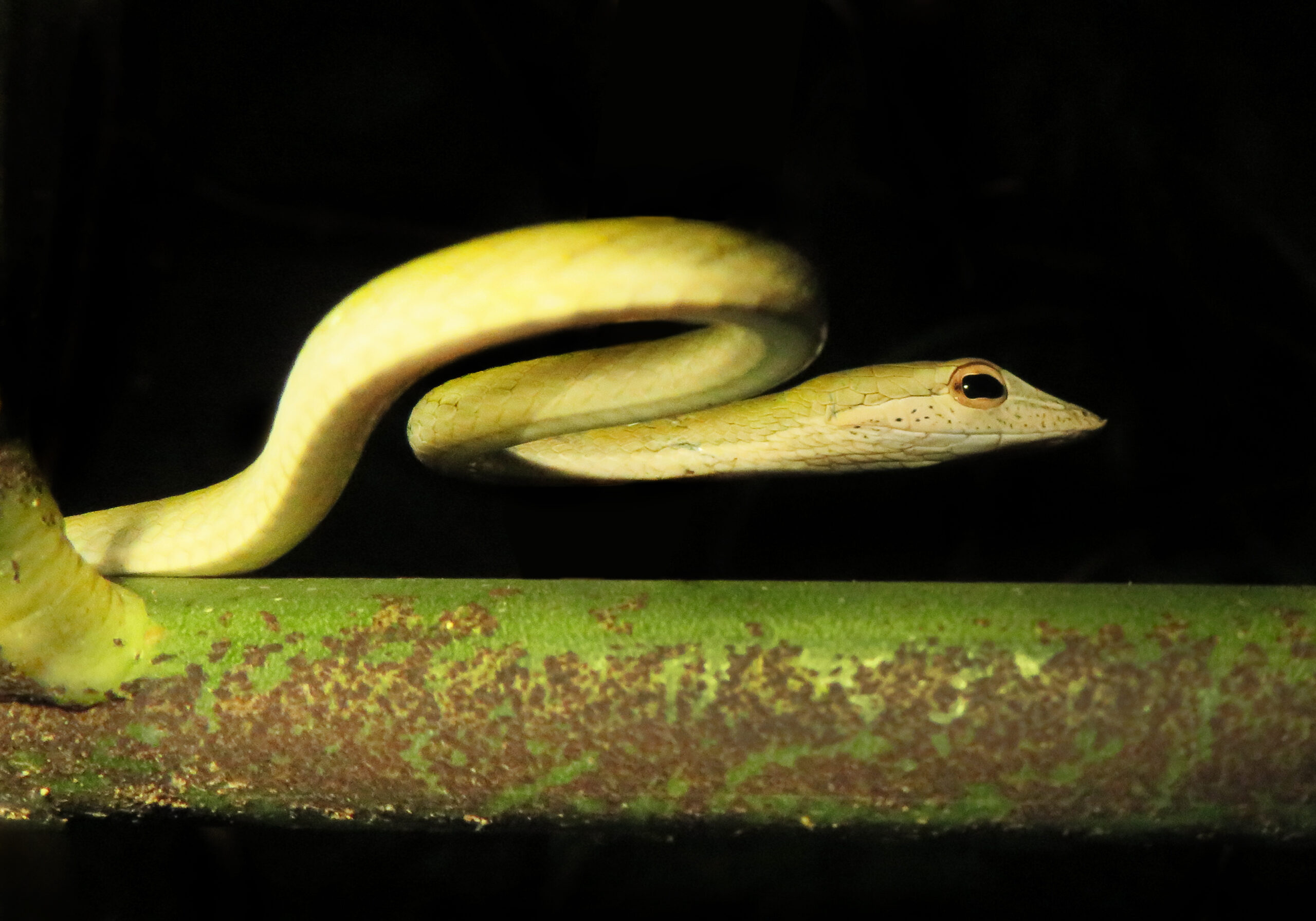
Morphologically, these snakes are slender with elongated bodies, large eyes adapted for visual hunting, and strongly keeled scales. A distinctive feature is their ability to flatten the body laterally by expanding their ribs, forming a concave, wing-like shape that allows controlled gliding from tree to tree. Coloration is often bright and patterned, providing camouflage among foliage.
Chrysopeleinae species are diurnal predators that feed mainly on lizards, frogs, birds, bats, and small mammals. They are rear-fanged (opisthoglyphous) and possess mild venom used primarily to subdue prey; they are generally not considered dangerous to humans.
Reproduction is oviparous, with females laying eggs in concealed, protected locations. Ecologically, Chrysopeleinae play an important role in forest ecosystems as agile arboreal predators and as part of complex food webs.